The network for creativity
Join 1.25M professional creatives like you
Connect with clients, get discovered, and run your business 100% commission-free
Creatives on Contra have earned over $150M and we are just getting started
Back to feedPost

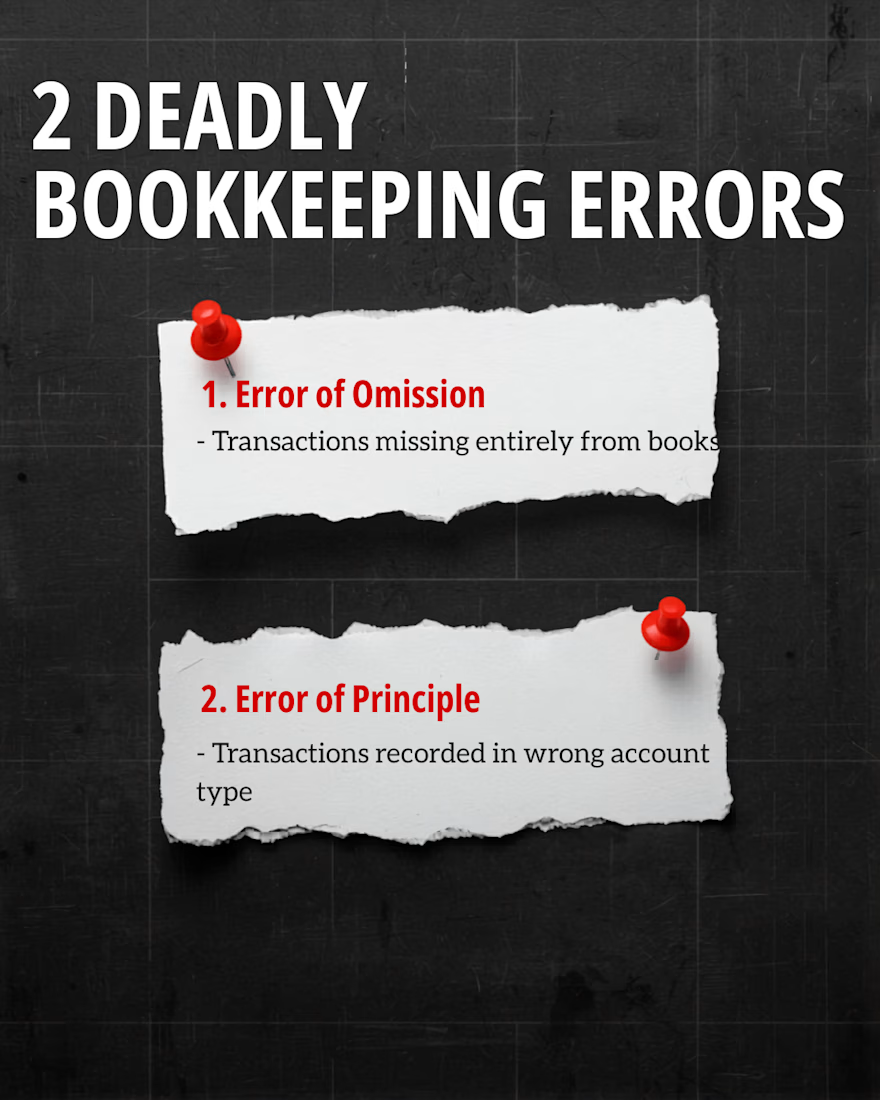
❌ 2 Bookkeeping Errors That Silently Destroy Your Financial Records!
Most business owners don't even know these exist — until it's too late. 😨
Error of Omission = A transaction that is completely MISSING from your books
Error of Principle = A transaction recorded in the WRONG type of account
Both are dangerous. Both are fixable. But only if you catch them in time! ⚠️
The scary part? These errors don't always show up in your Trial Balance — meaning your books can LOOK correct but be completely wrong underneath. 📊
✅ Regular bank reconciliation catches omissions
✅ Proper chart of accounts prevents principle errors
✅ A skilled bookkeeper spots both before they become a problem
💼 This is exactly why I review every transaction carefully in my bookkeeping projects.
📩 Is your business free from these errors? DM me or find me on Freelancer.com — let's make sure your books are clean & accurate!
#Bookkeeping #ErrorOfOmission #ErrorOfPrinciple #Accounting #BookkeepingTips #Finance #SmallBusiness #Freelancer #FinancialReporting #Reconciliation #AccountingErrors #BankReconciliation #BusinessFinance #Entrepreneur #AuditReady #BookkeepingExpert #FinanceTips #LinkedInFinance

The network for creativity
Join 1.25M professional creatives like you
Connect with clients, get discovered, and run your business 100% commission-free
Creatives on Contra have earned over $150M and we are just getting started



Related posts

A mobile business banking experience designed to make sending money feel clear, controlled, and reassuring.


Clean designs

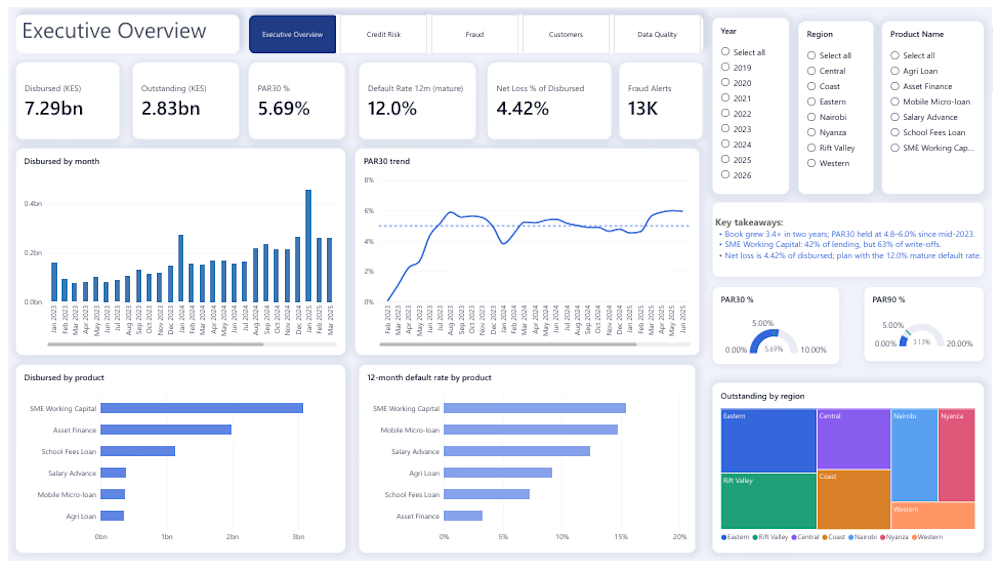
I spent the last few weeks building an end-to-end analytics project for a fictional Kenyan lender: from 45 messy CSV files to a Power BI dashboard.
The brief: the loan book grew 3.4× in two years. Leadership wanted four answers:
→ Is the growth safe?
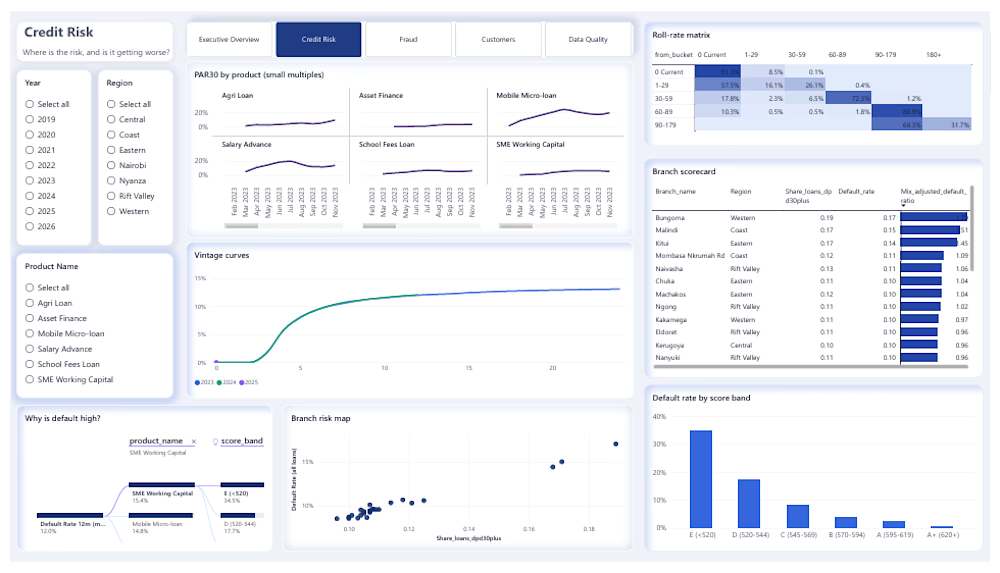
→ Who will default?
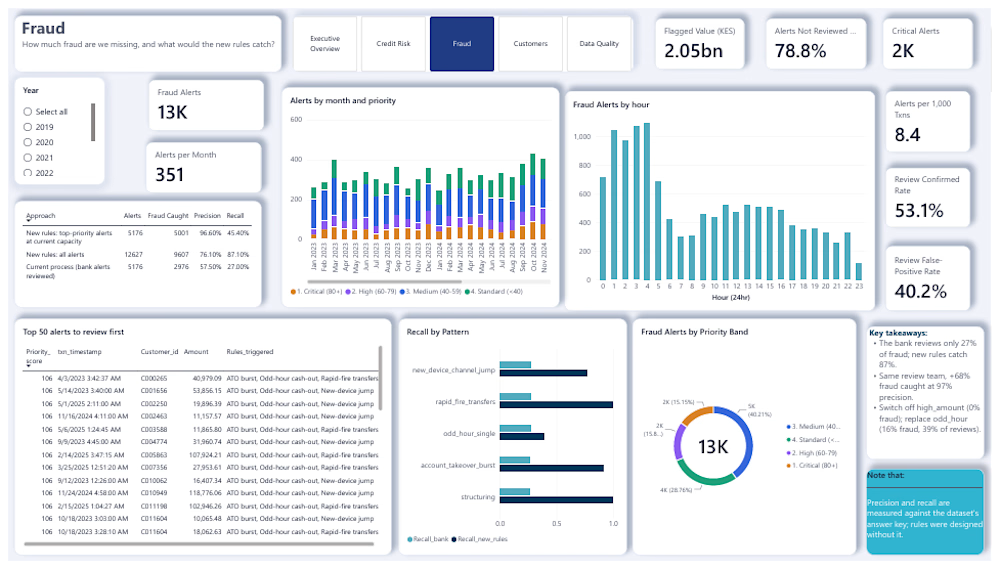
→ How much fraud is being missed?
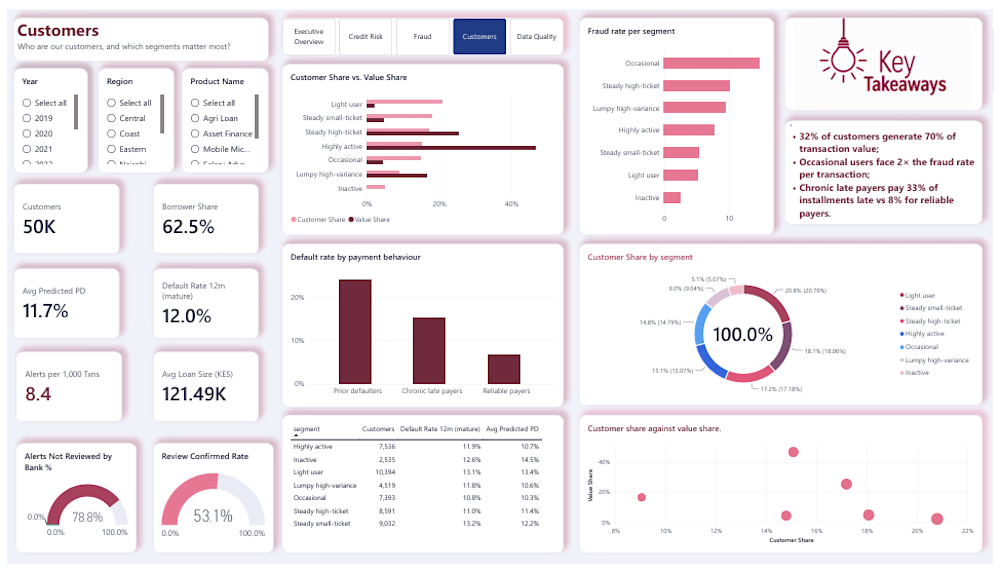
→ Who are the customers?
What I found:
• One product is 42% of lending but 63% of write-offs
• 30 days late is the point of no return: 57% of late loans recover before it, 18% after
• A scorecard that would cut the bad-loan rate from 12.5% to 9.0%
• Fraud rules that catch 68% more fraud with the same review team
Stack: PostgreSQL, SQL, Python (pandas, scikit-learn), Power BI.
The data is synthetic, generated with deliberate defects and a hidden answer key, so I could score every step of my work.
The full slides are attached. Code, write-ups and the dashboard are on GitHub (link in the first comment).
If you could ask this bank one more question, what would it be?
#DataAnalytics #PowerBI #SQL #CreditRisk #PortfolioProject


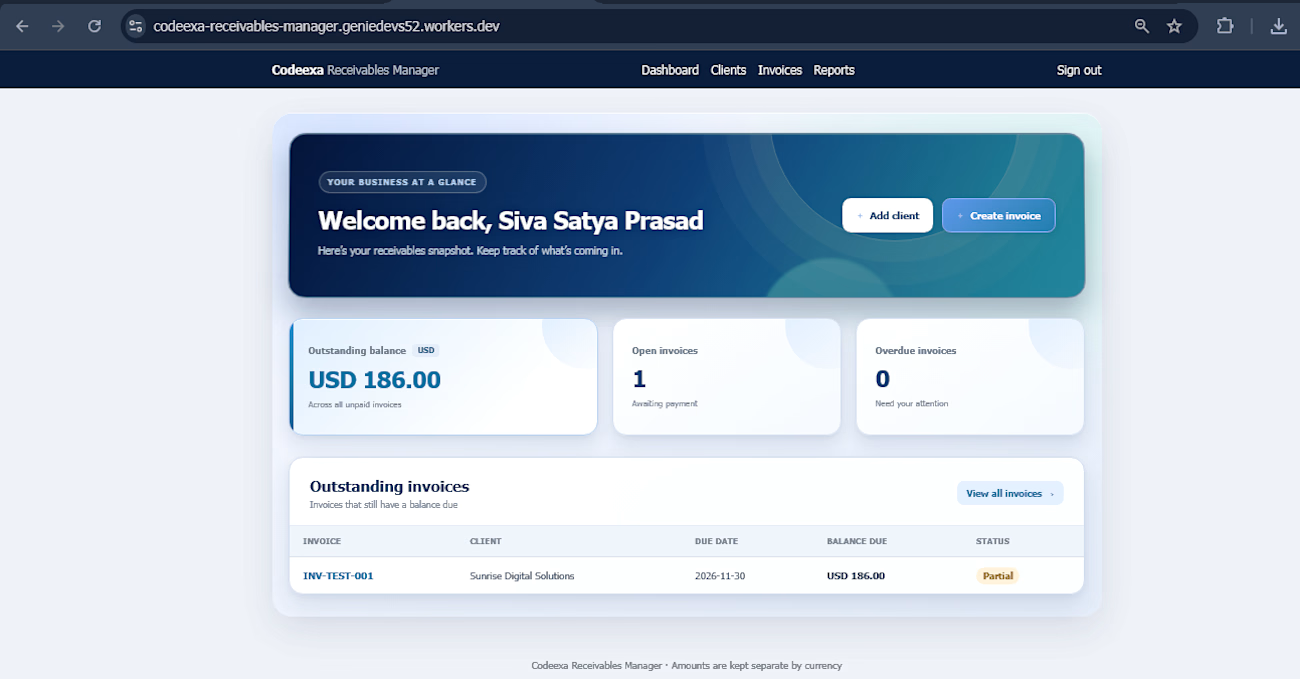
🚀 Introducing Codeexa Receivables Manager!
Managing invoices, payments and outstanding balances shouldn't be complicated.
I built Codeexa Receivables Manager to simplify everyday business receivables management.
✨ Client Management
✨ Invoice Management
✨ Payment Tracking
✨ Outstanding Balance Reports
✨ Email Reminders
✨ CSV Export
Looking for a ready-made business management application?
Explore the product:
🛒 Contra Product: https://contra.com/products/bhndS7Bf-codeexa-receivables-manager
Built for businesses, freelancers and developers.
#SaaS #WebDevelopment #BusinessSoftware #SourceCode