The network for creativity
Join 1.25M professional creatives like you
Connect with clients, get discovered, and run your business 100% commission-free
Creatives on Contra have earned over $150M and we are just getting started
Back to feedPost
Housiefy – Real Estate Brokerage Platform:
Housiefy is a full-stack real estate brokerage website designed to showcase property projects and allow users to explore residential developments in a modern, responsive interface. The platform provides detailed property listings, project galleries, and an integrated contact system for lead generation.
The frontend of the application was developed using React and Bootstrap to ensure a clean, responsive, and user-friendly interface. The backend was built with Django and Django REST Framework, which manages APIs, contact form submissions, and the admin dashboard.
The project was deployed on a VPS server using Gunicorn as the application server and Nginx as the reverse proxy, with SSL configured for secure HTTPS access. Static files and media are properly managed to ensure optimal performance and scalability.
The platform also includes a secure Django Admin panel that allows administrators to manage contact inquiries and backend data efficiently.
Key Features:
• Responsive real estate listing website
• Modern UI with property project sections
• Contact form storing inquiries in the database
• Secure Django Admin dashboard for data management
• REST API integration between frontend and backend
• Production deployment on VPS with Nginx and Gunicorn
• HTTPS security using SSL certificates
Technologies Used:
React, Bootstrap, Django, Django REST Framework, Python, Nginx, Gunicorn, VPS Deployment, HTML, CSS, JavaScript
Live Project: https://housiefy.in


The Django REST + React stack for a real estate platform makes a lot of sense. Handling lead capture at the backend level keeps the contact data secure and manageable. Did you build the admin dashboard from scratch or use DRF's browsable API for internal management?


Yes, I built it from scratch using Django REST Framework and React. I implemented the lead capture system on the backend for secure data management and created custom admin functionalities instead of relying only on DRF's browsable API.

Thank you for posting this
The network for creativity
Join 1.25M professional creatives like you
Connect with clients, get discovered, and run your business 100% commission-free
Creatives on Contra have earned over $150M and we are just getting started



Related posts

Noise Reveal, a premium reveal component for Framer
I built a component that gives Framer sites cinematic reveals for images, video and live layouts. It has a soft, film-like edge with glow and grain, and can play on load, on view, from a variant or scrubbed by scroll.
It’s built for production: the reveal is prepared before it scrolls in, it’s accessible with reduced-motion support, it falls back when WebGL isn’t available, and pages stay plain HTML when nothing is moving.
Launched on the Framer Marketplace. Open to custom Framer and interaction work.


The WebGL fallback and reduced-motion support are the parts most reveal effects skip, so it's great to see them called out. Does the fallback keep some of the grain edge with CSS, or does it drop to a simple fade?

Zencastr came to us with a complex mix: they hosted their homepage on a custom server, blog on a separate platform and the rest of the pages on Webflow.
They had 3 days before the launch to tie it all together. This is their review:

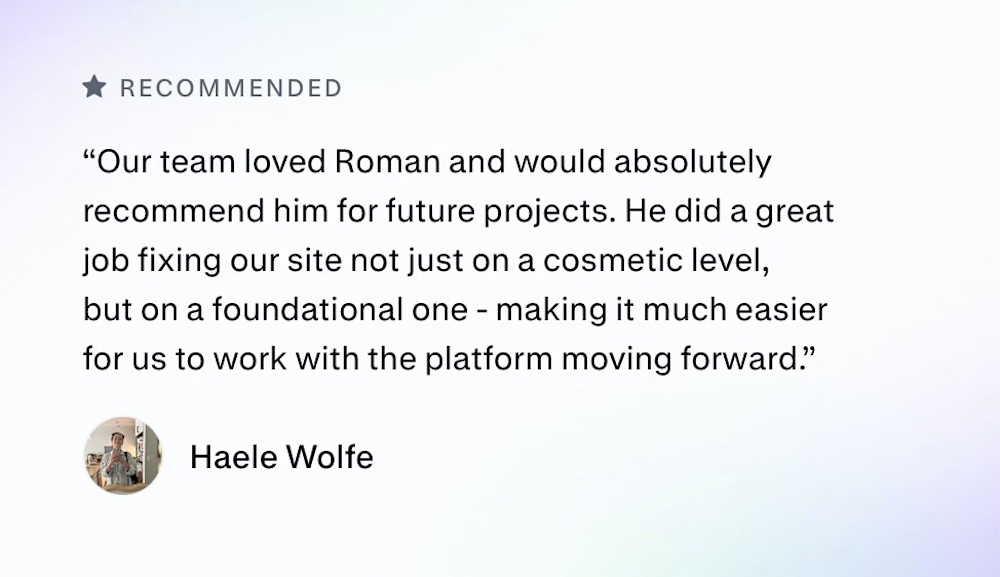
Three platforms behind one domain in three days is a real test. I'd guess the reverse proxy and keeping the nav and footer identical across all three took more care than any of the page building. Did you match the shared header in Webflow or pull it from one source?

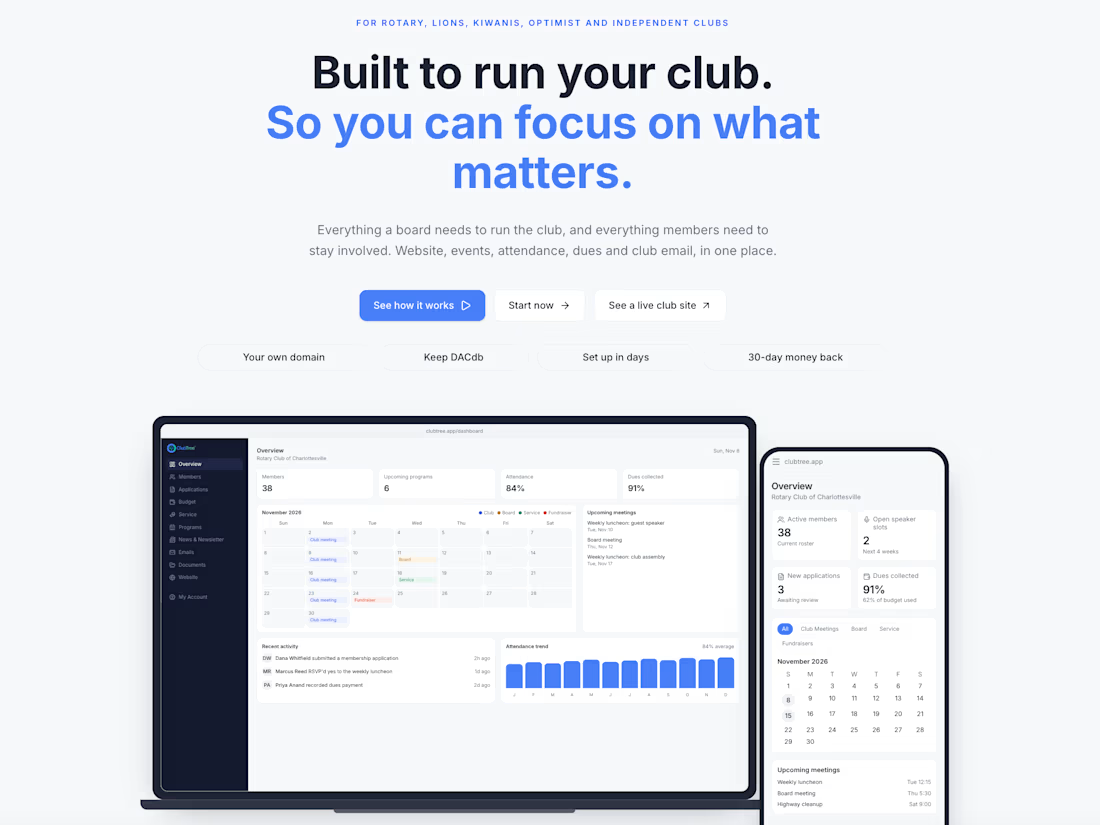
ClubTree | All-in-One Membership Management SaaS
Designed and developed ClubTree, a SaaS platform that helps membership organizations manage their websites, members, events, and communications from one centralized system.
ClubTree combines a public-facing website with an administrative dashboard, giving organizations the tools to manage membership applications, member directories, attendance, newsletters, documents, and organizational workflows.
The platform was designed around real-world service club needs, with an emphasis on intuitive navigation, role-based access, and simplifying administrative tasks.
My role: Product strategy, user research, UI/UX design, full-stack development, testing, and launch.
Key features:
- Membership applications and directories
- Event and attendance management
- Website content management
- Newsletters and member communications
- Role-based access and administrative dashboards
- Integrated organizational workflows
Outcome: A functional membership management platform with a live implementation for the Rotary Club of Charlottesville.



Going live with one real club in Charlottesville and building around how they actually run is the right way to do it. Club admin tools usually feel stuck in 2010, so this looks like a big upgrade. How did you land them, through someone in the club?