The network for creativity
Join 1.25M professional creatives like you
Connect with clients, get discovered, and run your business 100% commission-free
Creatives on Contra have earned over $150M and we are just getting started
Back to feedPost
The hidden value of monthly bookkeeping
Monthly bookkeeping is more than recording transactions. It's financial control. 📚
When your books are updated consistently, you can:
✅ Track income and expenses.
✅ Identify unusual transactions earlier.
✅ Monitor outstanding customer invoices.
✅ Reconcile bank balances.
✅ Prepare more reliable financial reports.
✅ Spend less time searching for financial documents.
When bookkeeping is delayed for months, even simple questions can become difficult to answer.
How much did we spend last month?
Which customers still owe us money?
Are our expenses increasing?
These answers should not require guesswork.
I provide accounting support to help businesses maintain organized records and gain better visibility into their finances.
📩 Message me if you're looking for dependable bookkeeping and accounting support.
#MonthlyBookkeeping #AccountingSupport #FinancialControl #SmallBusinessAccounting


Clean books mean more confidence in your numbers and ultimately better decision making
The network for creativity
Join 1.25M professional creatives like you
Connect with clients, get discovered, and run your business 100% commission-free
Creatives on Contra have earned over $150M and we are just getting started





Related posts

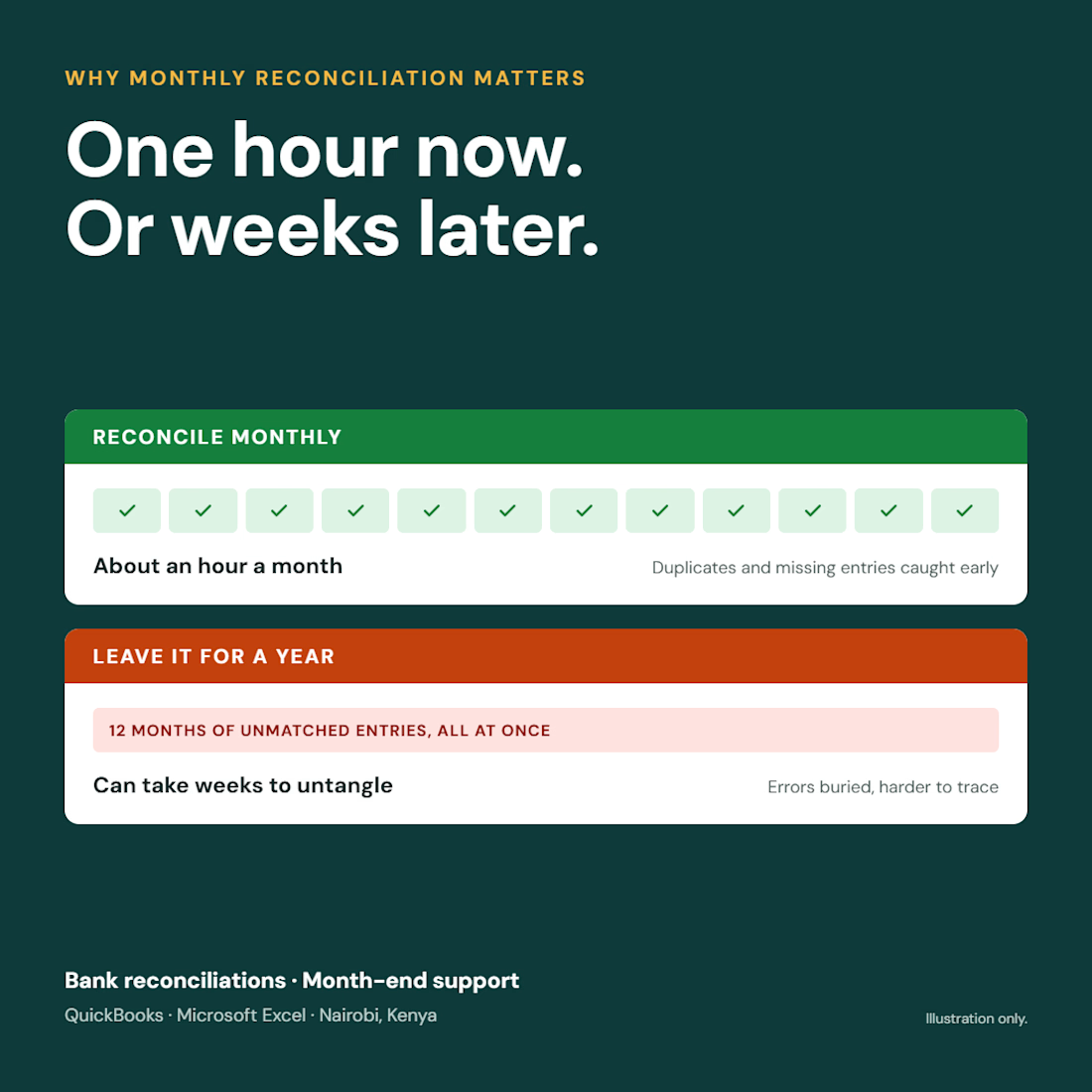
One hour now, or weeks later. ⏳
A bank reconciliation done every month usually takes about an hour. Left for a whole year, it can take weeks to untangle, and by then errors are buried and harder to trace.
Reconciling monthly helps you:
✅ Catch duplicate payments early
✅ Spot missing entries before they pile up
✅ Know your real cash position at any time
✅ Go into month-end and tax time without surprises
Challenge
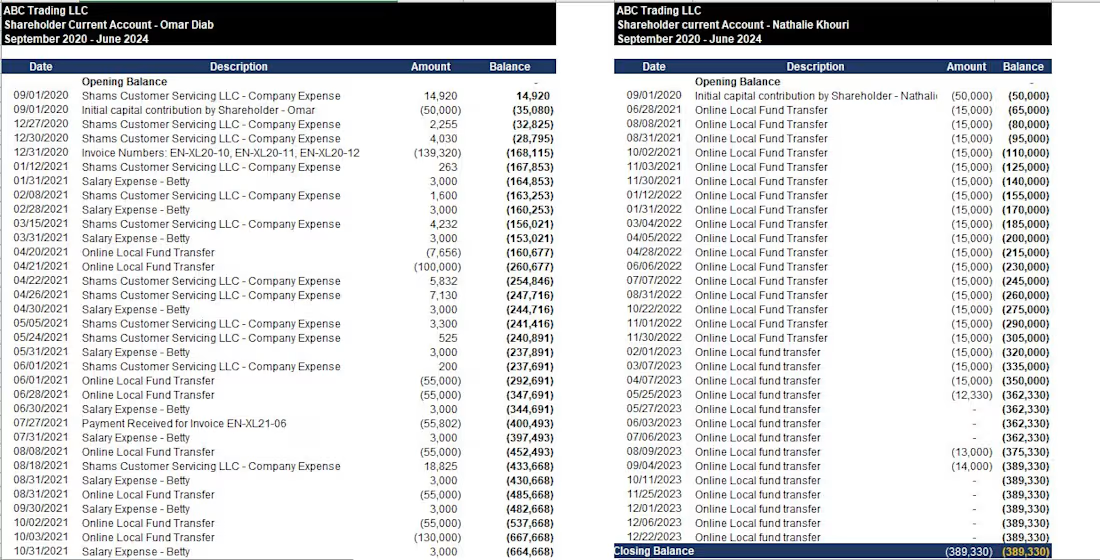
A director approached me wanting full visibility of personal transactions made through the company’s bank account. Personal and business spending had been mixed, making it hard to see what belonged to whom. He needed to know exactly where his money went, without it distorting the company’s financial position.
Solution
I reviewed the full bank statements and identified every personal transaction. Each one was categorised and recorded against the director’s personal account, keeping it separate from the company’s balance. Company transactions were left untouched, so the business accounts stayed accurate. I then prepared a clear, transaction-by-transaction report showing dates, amounts, payees and the running balance.
Result
The director received an in-depth view of every personal spend, with a clean separation from company funds. This gave him clarity over his own balance, supported accurate company books, and made future reporting and tax compliance simpler. It also gave him a clear record to refer back to whenever questions arise.
Services: Bookkeeping, Management Reports


very organzied way to record all transactions.
Episode 7: Your bank balance is not your income. 💸
As a designer, money reaches you from Stripe, PayPal, Wise, direct transfers and Contra. By the time it lands, fees, currency conversion and delays have already taken a cut, and some of it never gets recorded.
That’s why a monthly bank reconciliation matters. It means matching your bank statement to your books, line by line, so you can:
✅ Spot the client invoice that was never paid
✅ Catch the software subscription you forgot to cancel
✅ Find the processor fees nobody recorded
✅ Know your real profit per project
✅ Reach tax time with clean numbers instead of a panic
It takes about 30 minutes a month. A gap you catch in October is easy to fix. A gap you find a year later is expensive.
#bookkeeping #freelancedesigner #designbusiness #freelancefinance #smallbusiness


You are giving real concepts how finances can be handled