The network for creativity
Join 1.25M professional creatives like you
Connect with clients, get discovered, and run your business 100% commission-free
Creatives on Contra have earned over $150M and we are just getting started
Back to feedPost

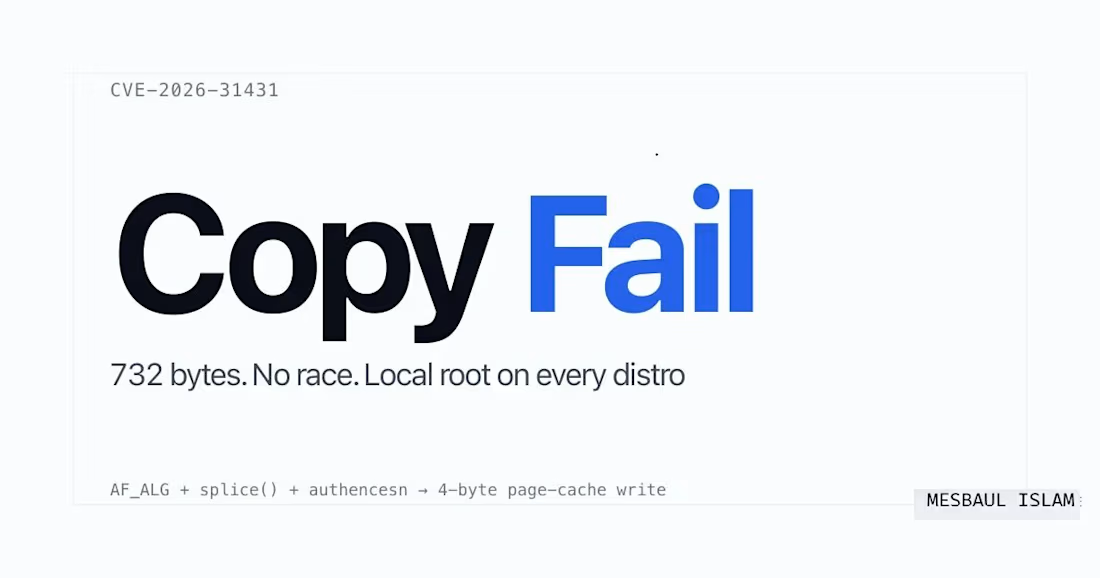
The recently discussed CVE-2026-31431 highlights how subtle kernel-level issues can translate into significant security impact.
I conducted a controlled lab analysis using a standard Linux environment to validate its behavior. The findings were noteworthy:
• The vulnerable condition was reproducible under controlled settings
• The test scenario started from a low-privileged user context
• Under specific conditions, the issue resulted in a clear privilege boundary escalation
What makes this case particularly interesting is not the complexity of exploitation, but the simplicity of the underlying flaw. It reinforces a critical point in system security — small inconsistencies in core components can lead to complete trust boundary breakdowns.
I’ve documented the full technical breakdown, lab observations, and analysis here: https://mesbahinfo.com/notes/copy_fail.html
I’d be interested to hear thoughts from other security professionals on this.
#CyberSecurity #Copy_Fail #vulnerability_assessment #Penetration_testing
The network for creativity
Join 1.25M professional creatives like you
Connect with clients, get discovered, and run your business 100% commission-free
Creatives on Contra have earned over $150M and we are just getting started







Related posts

An independently built SOC platform combining host telemetry, rule-based detection, machine-learning anomaly detection, real-time incident management, and analyst collaboration in a unified interface.



Cybersecurity tools can feel overwhelming for small teams.
Shielda explores a cleaner dashboard experience that helps businesses monitor their digital footprint across domains, email, and social channels.
The interface surfaces password leaks, phishing clones, suspicious mentions, and brand abuse through a clear Security Score, compact threat cards, severity tags, and AI-powered summaries.
Instead of forcing users to interpret complex security data, Shielda helps them understand what happened, how serious it is, and what to do next.


Just wrapped up testing a multi-tenant SaaS build: signup, invites, company switching, role permissions. Found the kind of bugs that hide behind a working screen, like a table showing record numbers from another company's account instead of starting at 1.
If your app is close to launch and needs a second pair of eyes before real users find the bugs, happy to help.


Great example of testing beyond the happy path.