The network for creativity
Join 1.25M professional creatives like you
Connect with clients, get discovered, and run your business 100% commission-free
Creatives on Contra have earned over $150M and we are just getting started
Back to feedPost


The network for creativity
Join 1.25M professional creatives like you
Connect with clients, get discovered, and run your business 100% commission-free
Creatives on Contra have earned over $150M and we are just getting started







Related posts

🚀 Weekend challenge:
1. Go look at some templates and demos at no-code.supply
2. Tell me what looks like "ai slop" and why
One rule: don't say "looks generic"
The best argument gets the All-Access pass for free.

no-code.supply
no-code.supply — code templates for no-code builders
HTML and React templates built for no-code and low-code builders: two editions, AI-ready docs, no third-party requests.

🚀 New project added to my Contra portfolio - Dynamiq AI!
I’ve just added Dynamiq AI to my portfolio, a project in the AI space that gave me another opportunity to explore the intersection of technology, product design, and user experience.
When designing digital products, I believe the goal goes beyond creating an attractive interface. It’s about making complex ideas easier to understand, helping users navigate the experience intuitively, and presenting information in a way that feels clear and purposeful.
🤖 What makes the product interesting:
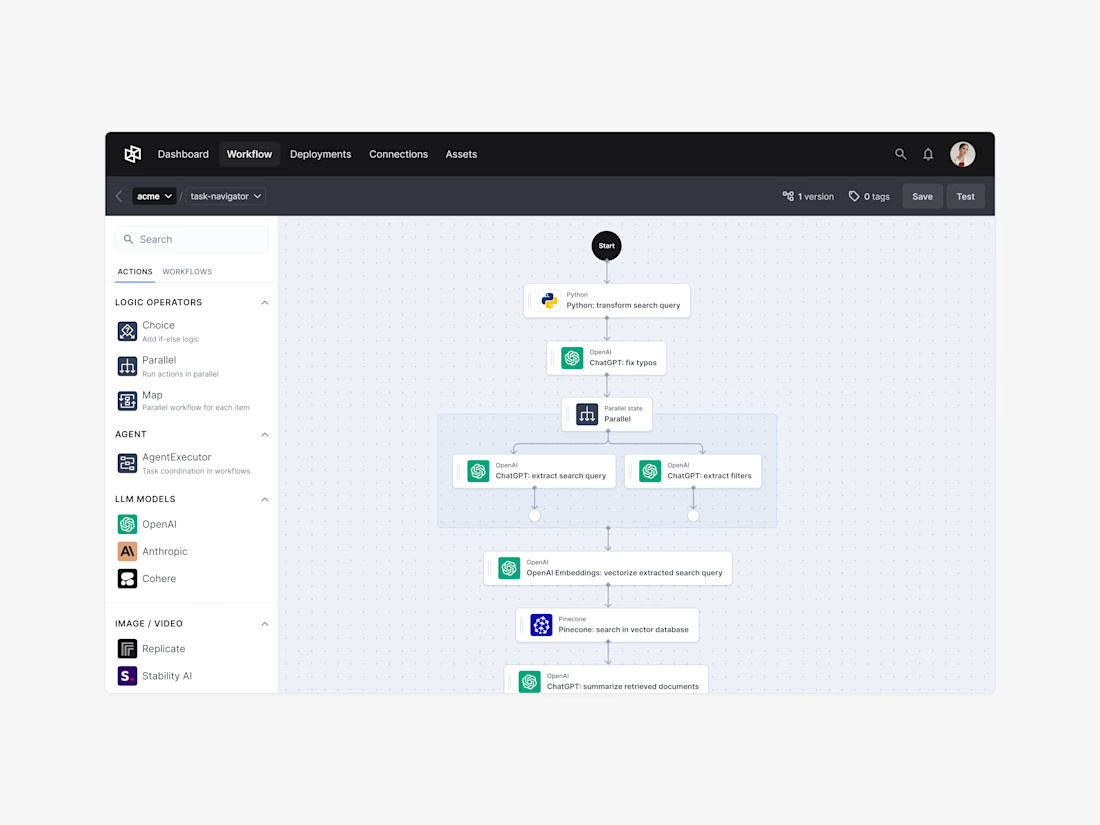
→ Building AI agents and automating complex workflows
→ Connecting AI to business tools, knowledge bases, and data
→ Managing AI agents with security controls and human approvals
→ Monitoring performance and evaluating results
These are the kinds of challenges that make product design exciting for me — turning complex functionality into experiences that feel simple and natural to use.
✨ Always happy to explore new ideas, experiment with different approaches, and share more of my work along the way.
🔗 Check out Dynamiq AI: https://www.getdynamiq.ai/



The interviews with engineers and compliance reviewers caught my attention. What did the reviewers need to see before approving an agent action, and how did that change the approval screen?

I Built an AI-Powered Quiz Platform in 3 Day Using Only My Phone. The Odds Were (and are) Against Me.
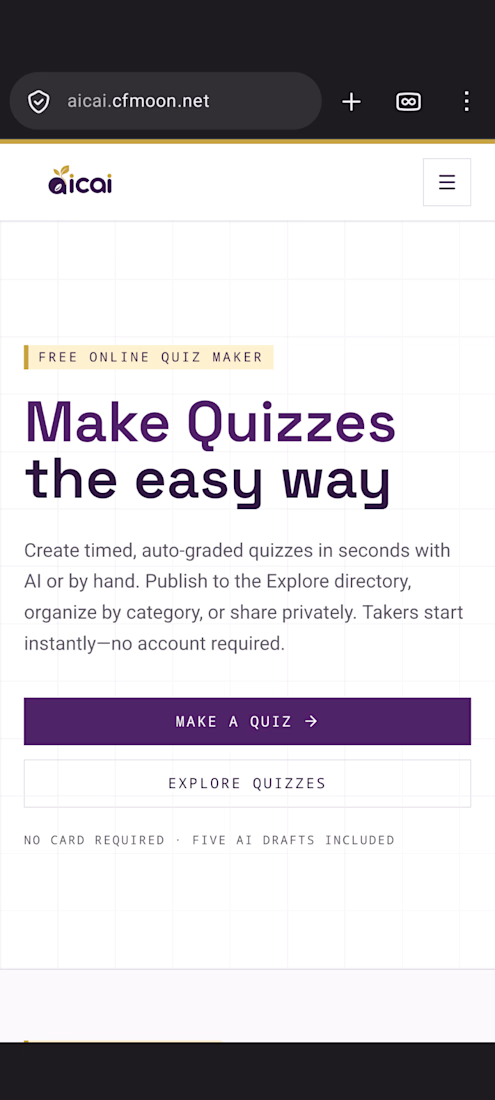
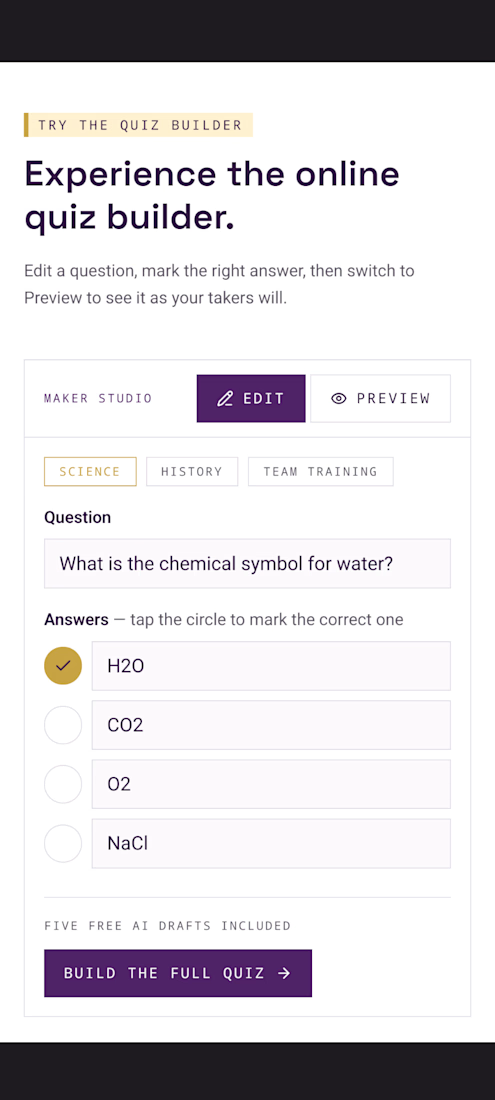
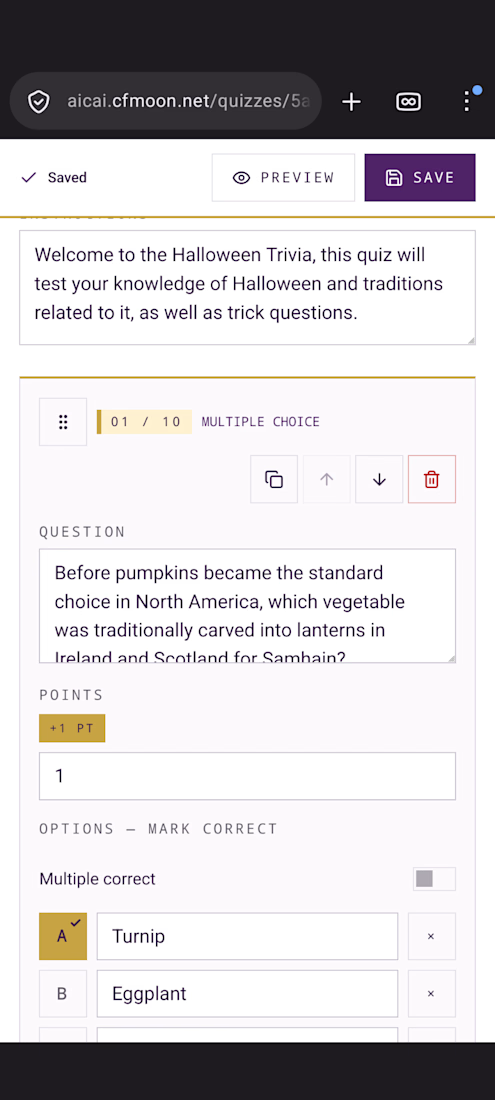
Meet Aicai Quizzes by CFMoon, a quiz creation and exploration platform I built in just three days.
🔗 Try it here: https://aicai.cfmoon.net
Aicai lets you generate quizzes with AI, share them with others, and automatically grade answers using AI, especially useful for open-ended and paragraph-length responses.
But the interesting part isn't just what I built. It's how I built it, and under what circumstances.
1. Building from outside the usual startup ecosystem
I'm not based in the US or another major tech hub. That means dealing with a different set of constraints, from limited access to payment infrastructure like Stripe to fewer opportunities, no access to GoFundMe, Kickstarter, or startup funding and other resources that developers in more privileged ecosystems often take for granted.
Building software is global. Access to the infrastructure surrounding it isn't always so convenient.
2. One person, one laptop, one phone, and AI
I did this entirely on my own.
No co-founder, no team of developers, no marketing department, and no established professional network to lean on. Just my experience as a software engineer, AI tools, and the hardware I already had: an aging laptop and a smartphone.
3. I built Aicai using only my phone. Yeah, why not use my computer? With the little time I have each day, it is hard to sit down and code, so I built it on the go, while on the street, connecting to public WiFi, all while running my already strenuous life.
AI didn't replace my engineering experience. It amplified what I could do with the resources available to me, and it really made the whole thing easier.
4. Almost no runway
I had very little money left to work with. This wasn't a project backed by investment or a comfortable financial cushion.
The Lovable free trial, made possible through Contra Challenges and Lovable, gave me the opportunity to build and ship the product without spending money I couldn't afford to spend.
A big thank-you to both for making that possible.
5. Building while technically homeless
There's one more detail worth mentioning: I'm currently living in a hotel and paying for accommodation by the day.
In other words, I built and shipped a software product while dealing with housing insecurity and the uncertainty that comes with it.
It's very difficult, and I wouldn't recommend it.
Why I'm proud of Aicai
The platform was built with proper software engineering practices and attention to code quality, maintainability, and reliability. Whop, a great platform, handles payments checkout, and Lovable Cloud handles users, registrations and AI features, which I hope to get enough runway to keep it online.
Three days is a short development window, but shipping something meaningful in that time takes more than prompting an AI to generate an application. It takes knowing what to build, making architectural decisions, evaluating the output, and getting the product ready for users, all while dealing with an already difficult life.
Aicai is a small product, but it's also a demonstration of what's possible when willpower beats the odds. That's where my experience as an engineer and tinkerer mattered, I could do it under pressure, under actual constrains and difficulties, and no degree will ever teach you that, only life.
No funding round. No team. No fancy setup. No rich uncle. Just an idea, the skills to execute it, and the willingness to make something with what I had.
This is what I'm building at CFMoon: useful software, built with professional expertise and quality in mind, always.
Explore Aicai: https://aicai.cfmoon.net