The network for creativity
Join 1.25M professional creatives like you
Connect with clients, get discovered, and run your business 100% commission-free
Creatives on Contra have earned over $150M and we are just getting started
Back to feedPost

Salish Fleet — Heavy Equipment Maintenance & Offline PWA
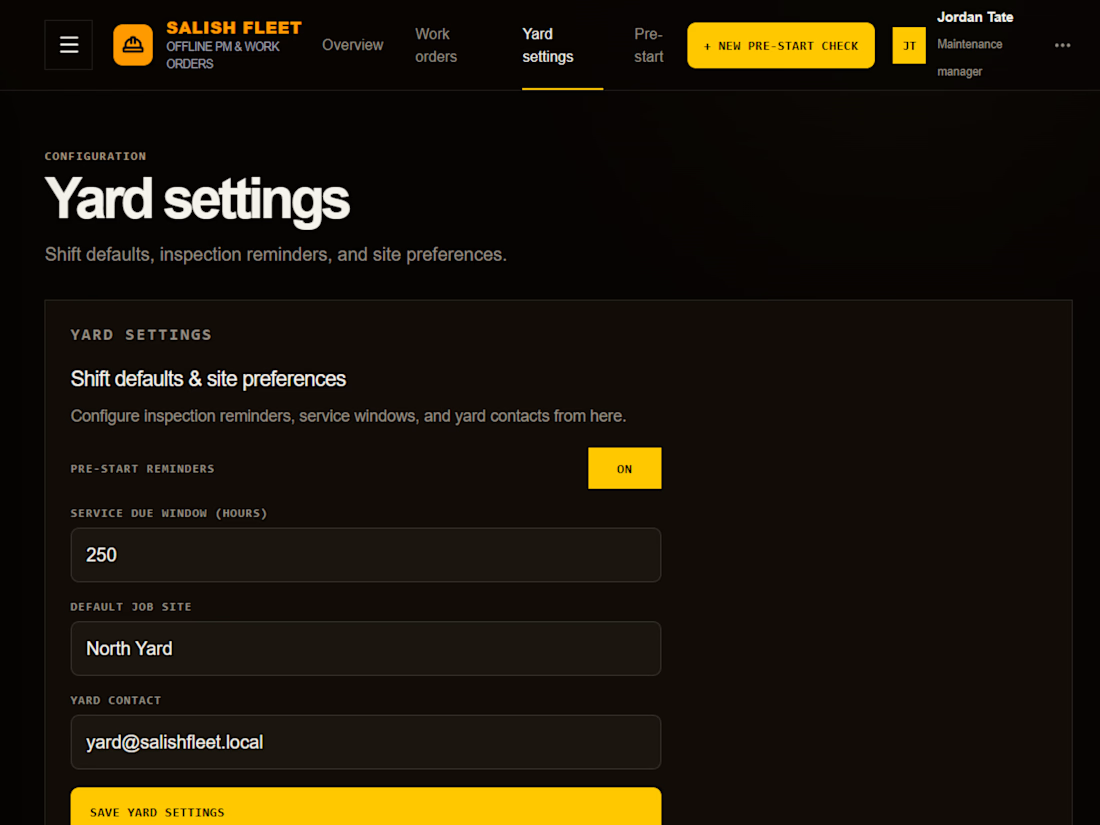
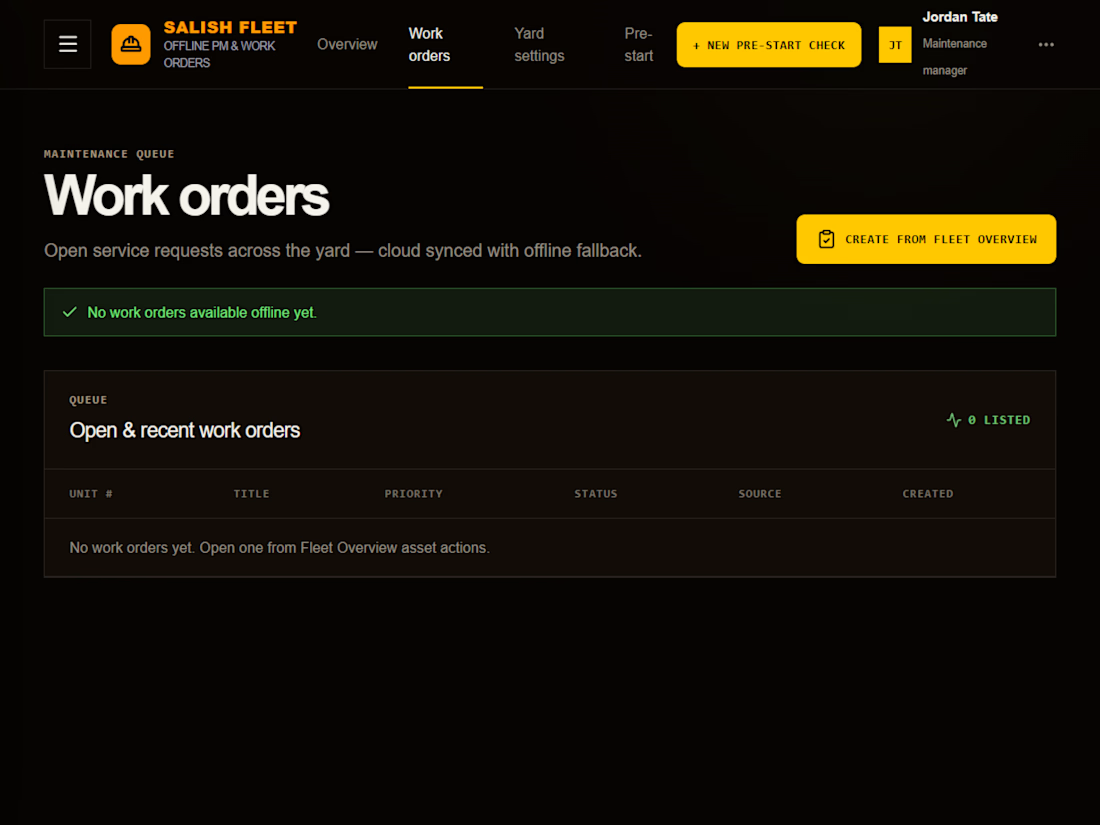
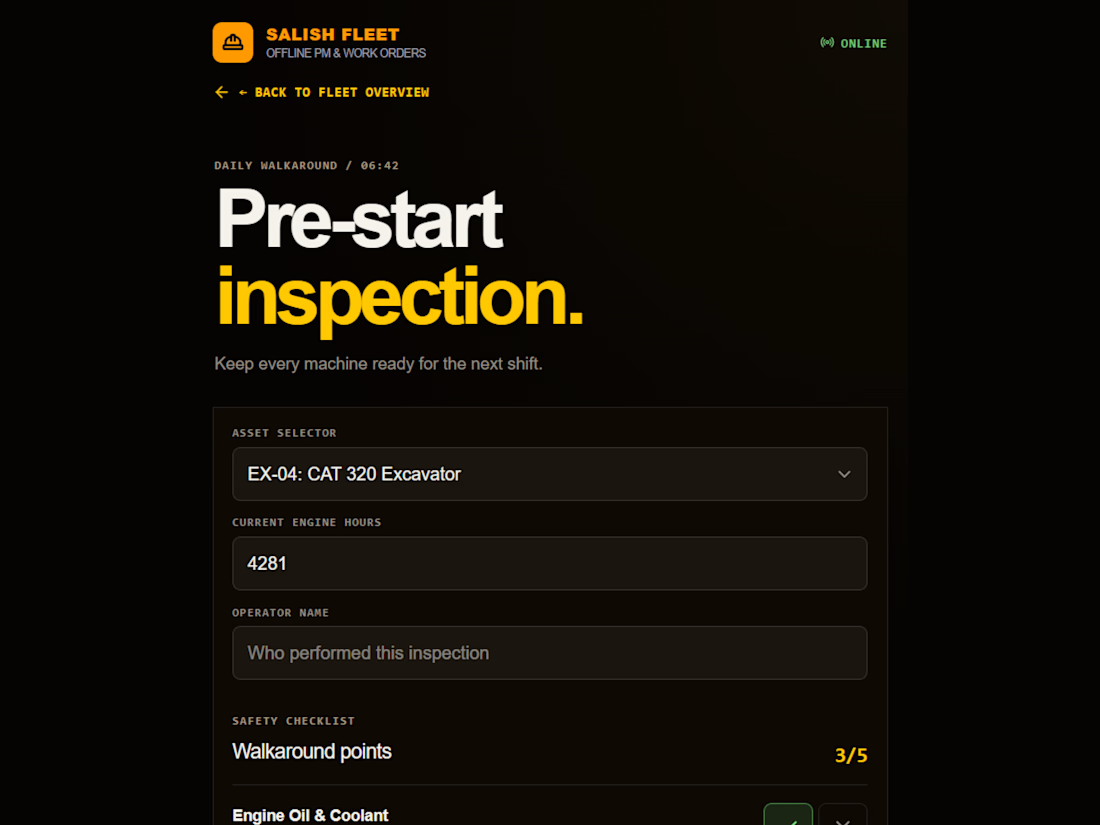
Project Overview: A mobile-first, offline-capable Progressive Web App (PWA) designed for heavy equipment yards, excavation crews, and local contractors to log pre-start safety checklists, track engine hours, and manage maintenance work orders.
The Problem: Traditional CMMS platforms are bloated, expensive, and charge per-seat fees that penalize trade businesses for adding operators. Furthermore, crews working on remote job sites frequently lose cellular connection, causing standard web apps to fail.
The Solution: Engineered a robust offline-first architecture using Next.js, Tailwind CSS, Supabase (PostgreSQL), and Dexie (IndexedDB). If an operator's internet connection drops in the field, inspection logs and maintenance requests are safely captured locally and automatically synced when reconnected.
Key Features:
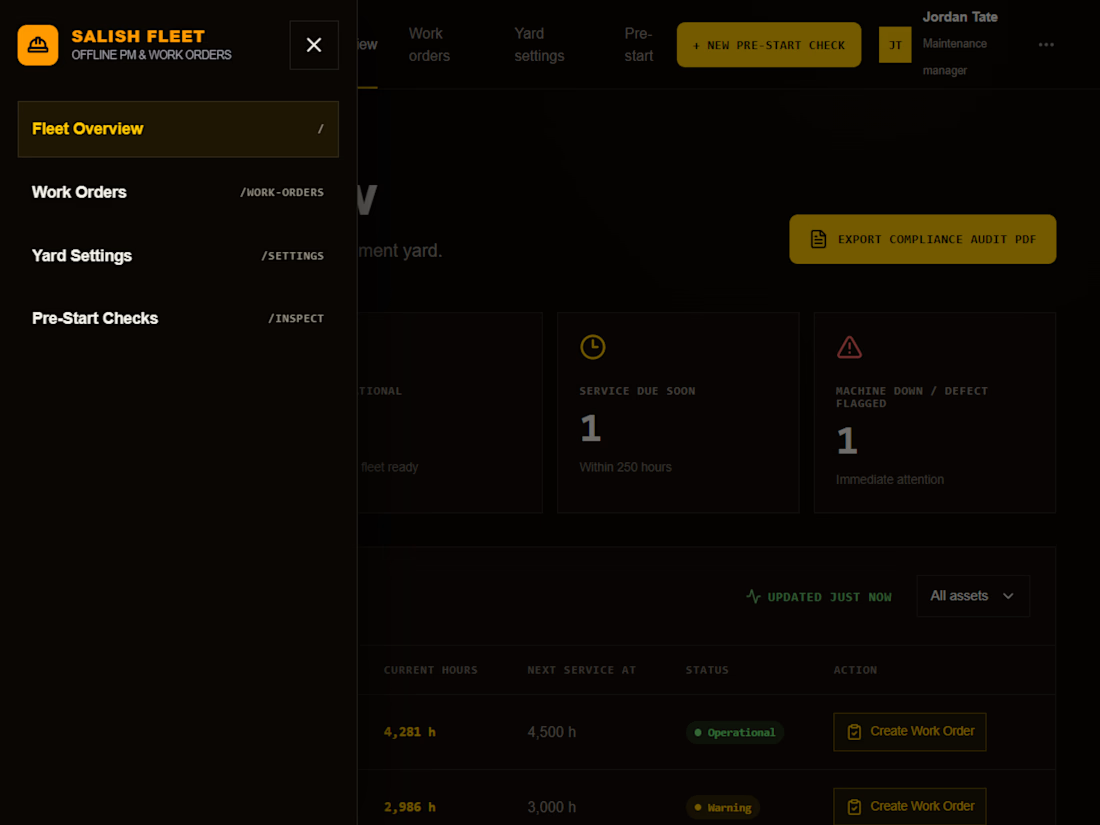
Dark industrial UI designed for mobile and tablet use on job sites.
Offline-first pre-start safety inspections with instantaneous fallback caching.
Live fleet readiness metrics, status filters, and instant PDF compliance report exports.
Flat-rate utility model tailored for independent local contractors.
Tech Stack: Next.js, React, Tailwind CSS, Supabase, Dexie.js (IndexedDB), Vercel.


The network for creativity
Join 1.25M professional creatives like you
Connect with clients, get discovered, and run your business 100% commission-free
Creatives on Contra have earned over $150M and we are just getting started





Related posts

Pawline: booking built around the van, for mobile pet groomers
Pawline is a booking system for a small mobile pet grooming business: one van, two groomers, three Austin zones.
Most booking tools treat a mobile groomer like a salon. The real problem is logistics: travel fees by zone, visits with several pets that take different amounts of time, and one van that can't be double-booked.
What it does:
🐾 ZIP check with instant zone travel fees
🐾 Live pricing and visit length for up to 4 pets, including add-ons and setup time
🐾 Only shows time slots the van can actually fit, and respects the owner's blocked time
🐾 Private links so customers can reschedule or cancel without an account
🐾 Owner dashboard with a daily van timeline
🐾 Public demo mode with fictional bookings and hidden customer details
Built for real use: owner-only data access, leaked-password protection, and full end-to-end testing on desktop and mobile.
Try the owner demo: Owner → "Try the demo dashboard"
Live: https://pawline-grooming-app.lovable.app


Designing around travel zones instead of a salon schedule is the right call. The demo mode is a nice touch for people testing it.

I'd like some outside eyes on a choice in my booking chat for a driving school.
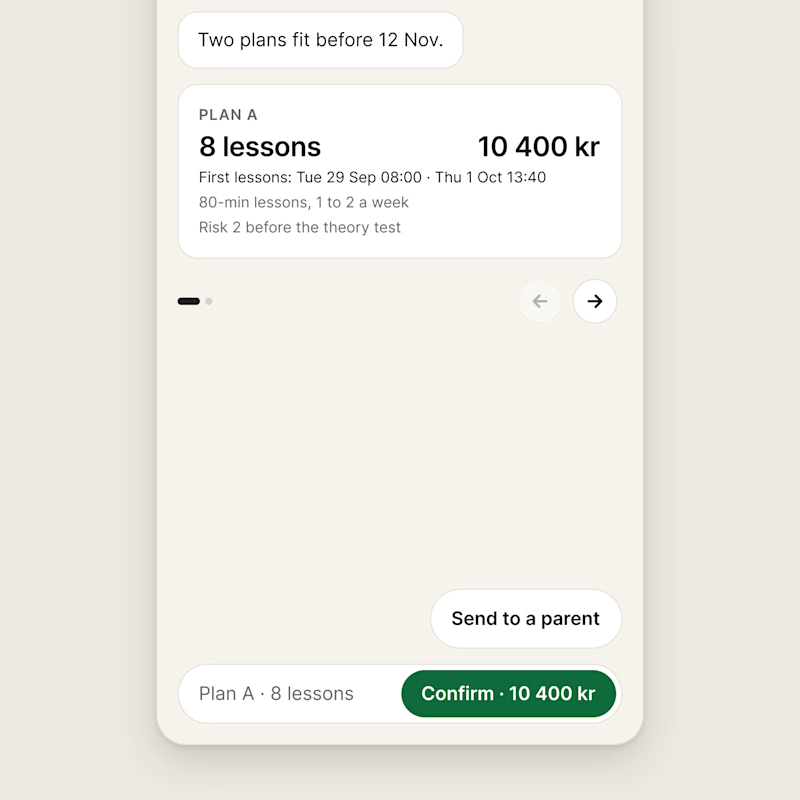
After a few questions, the chat offers the plans that fit before the learner's driving test. In this case two plans fit.
A shows both plans at once, one under the other.
B shows one plan at a time with a pager, and the Confirm button carries the price of the plan in view. B is what's live now.
Which one would you rather pick a plan from?
Try it yourself: https://halvkoppling.lovable.app
6 voted
67%
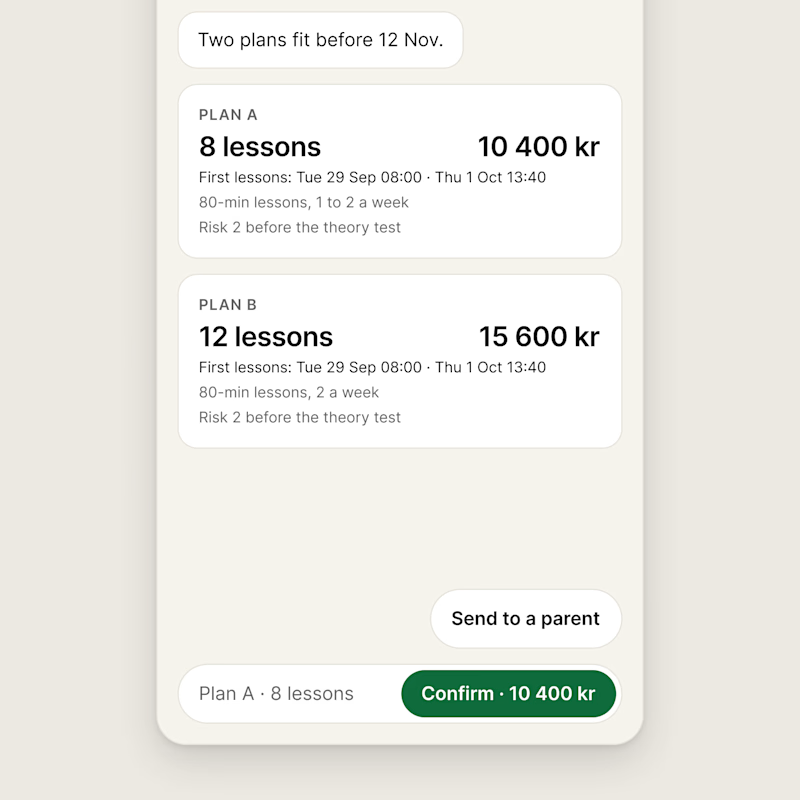
3 voted
33%
9 votes
Closed

stacked for convenience and pager for aesthetic


Consistency means every touchpoint feels like it belongs to the same brand. Uniformity means every touchpoint looks identical. The first builds trust. The second kills flexibility.



Your shot is exceptional. I'm overwhelmed with the quality of work!