The network for creativity
Join 1.25M professional creatives like you
Connect with clients, get discovered, and run your business 100% commission-free
Creatives on Contra have earned over $150M and we are just getting started
Back to feedPost

Customer Retention Intelligence is a deployed interactive analytics application built to turn 7,043 telecom customer records into actionable retention insights.
I designed the project as a modular data product rather than a static dashboard. It combines customer data preparation with dynamic segmentation, a tenure × contract churn risk matrix, churn-driver exploration, priority segment analysis, reported churn reasons, financial exposure metrics, and filtered CSV/Excel exports.
The analysis surfaced a clear contract pattern: observed churn was 45.8% among Month-to-Month customers, compared with 10.7% for One Year and 2.5% for Two Year contracts. These results are presented as observed associations rather than causal claims.
The codebase separates data processing, analytics, visualization, and export logic for maintainability. The application was built with Python, Pandas, Streamlit, Plotly, and openpyxl and deployed as a live Streamlit application.


The network for creativity
Join 1.25M professional creatives like you
Connect with clients, get discovered, and run your business 100% commission-free
Creatives on Contra have earned over $150M and we are just getting started
Related posts



We designed and built a high-converting Framer landing page and Figma web dashboard for Streamline, turning unstructured B2B data and legal intake into an efficient, automated experience.
Check out the full case study on Contra and let's scale your SaaS platform: https://contra.com/p/WBeOsvBQ-streamline-legal-intelligence-platform-design?r=airzon_agency 🚀


Having him overlap the big Streamline wordmark is a nice touch.

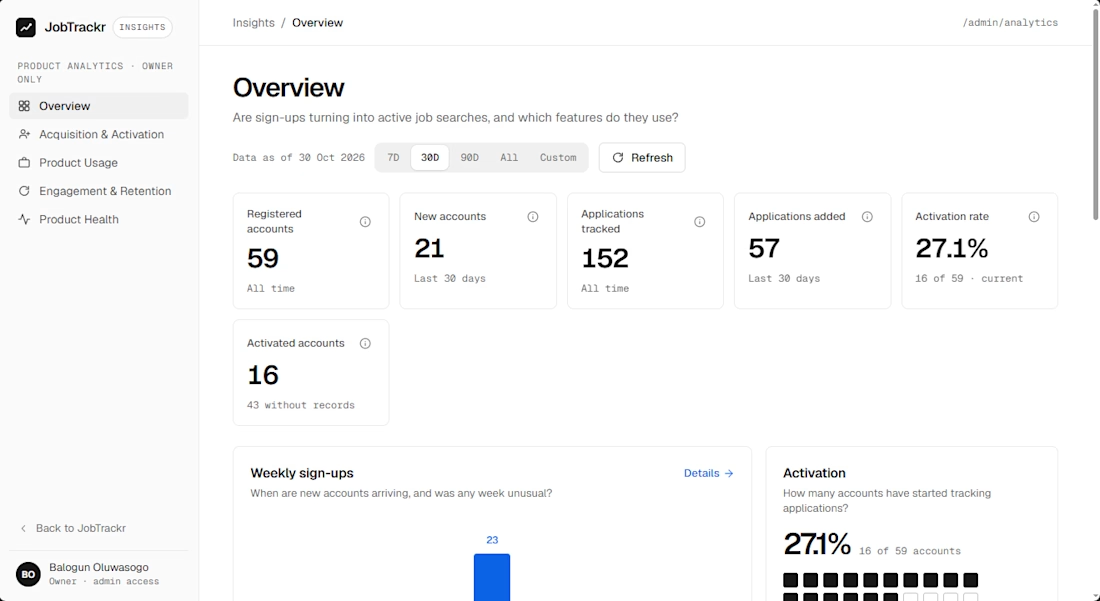
I’ve been building JobTrackr, a job application tracker that helps people organise their whole job search in one place.
One of my recent additions is Insights, a private product analytics dashboard. I wanted to go beyond counting sign-ups and understand whether people were actually getting value from the product.
I set a few rules for it:
- Every metric comes from read-only database queries.
- Anything that isn’t measured shows as “Not tracked”, never zero.
- Activity counts things people saved, not page visits.
The early numbers:
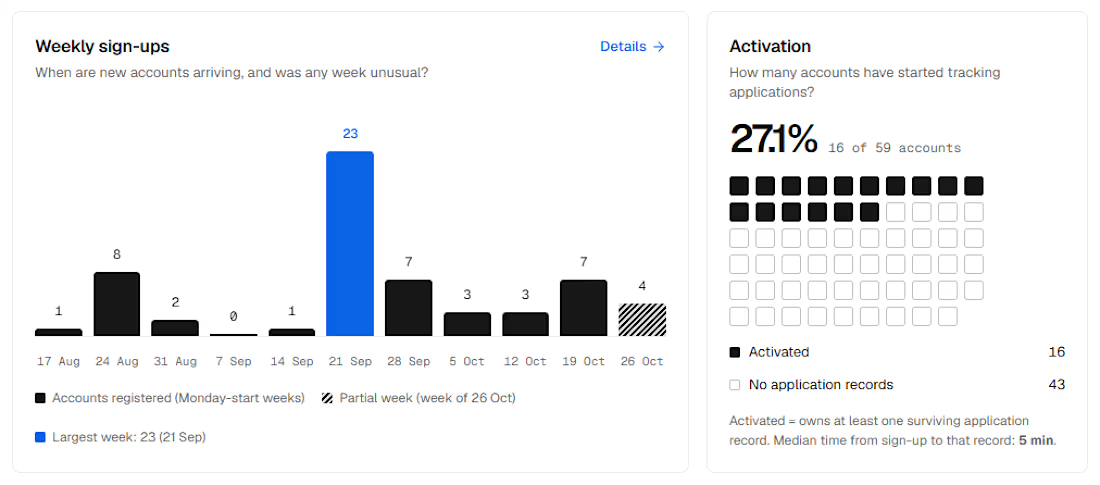
- 59 registered accounts
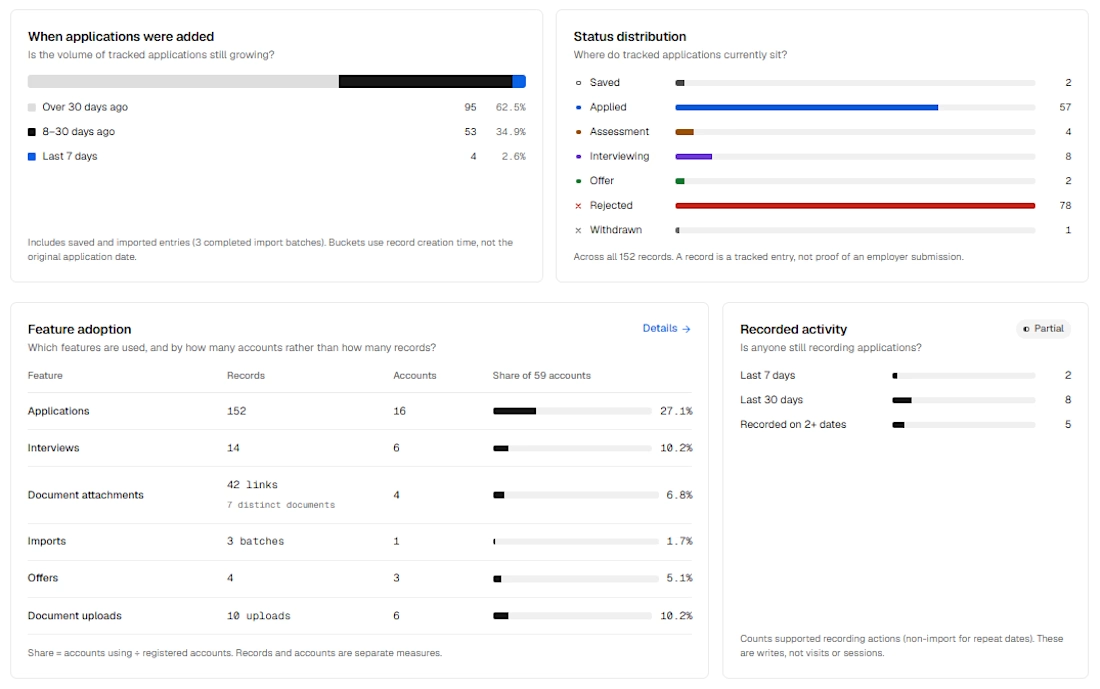
- 152 tracked applications
- A 27.1% activation rate
- A median of 5 minutes from sign-up to first application, for accounts that start
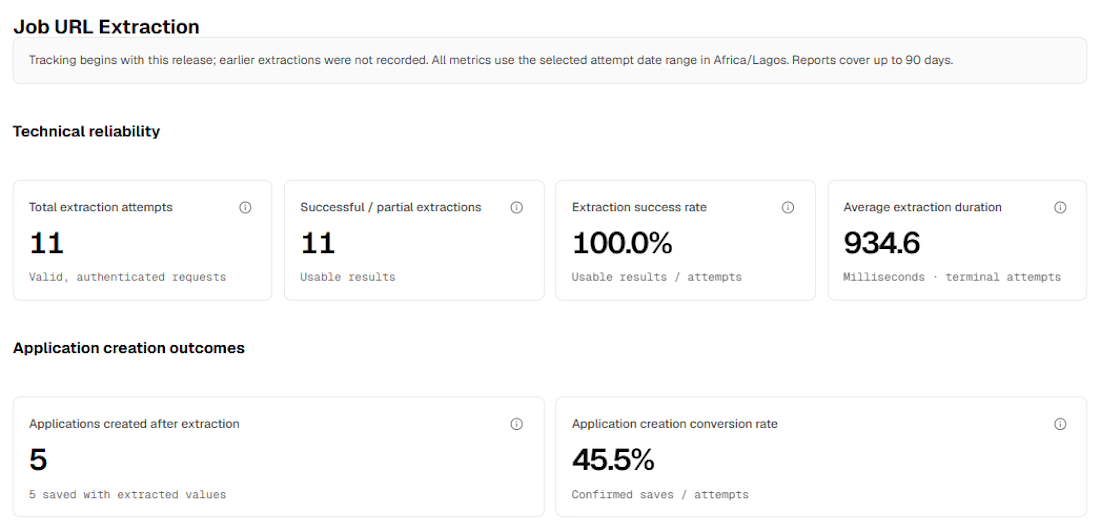
- Job URL extraction: 11 attempts, all with usable results, and 5 became saved applications
The takeaway is that people who start, start quickly. The work now is helping the other 73% take that first step. Instead of just adding features, I’m using these numbers to find where people get stuck.
It’s been a good chance to work across product design, frontend engineering, backend integrations and product analytics, and to see how those decisions hold up with real users.
Live product: https://jobtrackr.site
Still improving it based on what I learn. If you’re job hunting, I’d love your feedback.

glad we could have a collaboration on this