The network for creativity
Join 1.25M professional creatives like you
Connect with clients, get discovered, and run your business 100% commission-free
Creatives on Contra have earned over $150M and we are just getting started
Back to feedPost

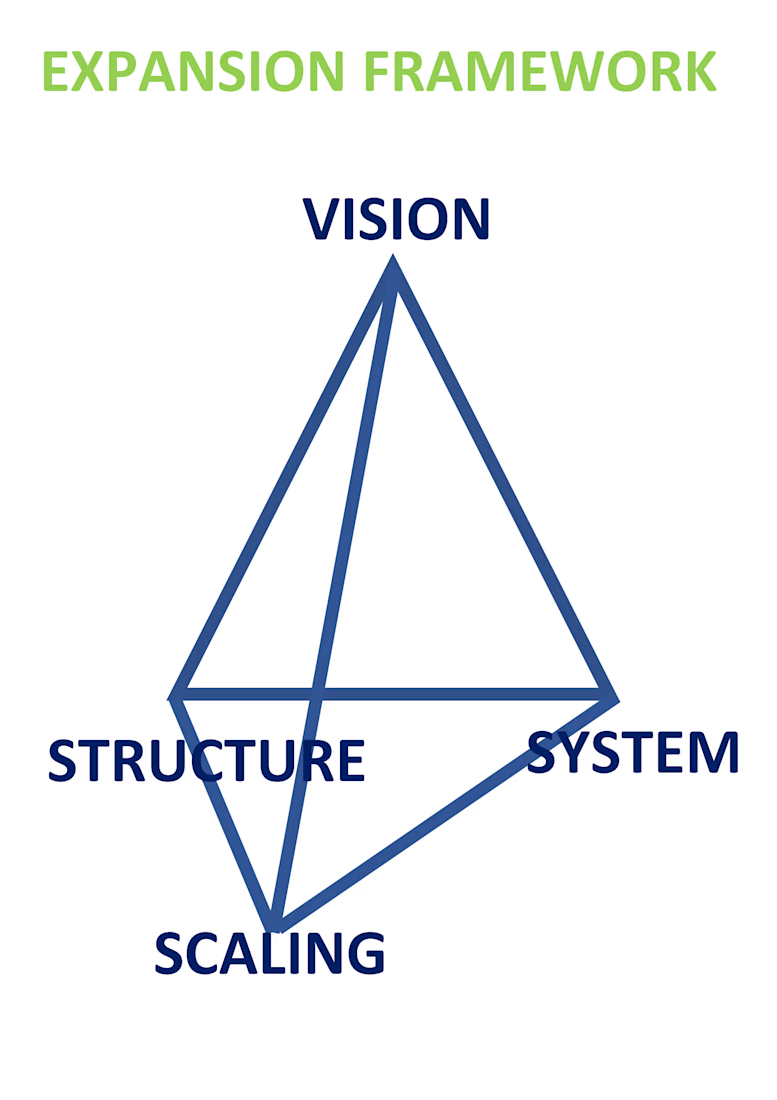
Great product strategy starts with deep customer understanding. It starts with discovering the real problem—not the surface-level symptom, but the underlying pain that's worth solving.


The network for creativity
Join 1.25M professional creatives like you
Connect with clients, get discovered, and run your business 100% commission-free
Creatives on Contra have earned over $150M and we are just getting started





Related posts

Elaro Solar - From solar enquiry to a meaningful next step
Business: Elaro Solar | A small residential rooftop solar installer serving Pune, with a lean field team and a mix of homeowners who range from “I want solar now” to “I’m still comparing my options".
Location: Pune, India
Approach: Front door + follow-through
💯 The problem
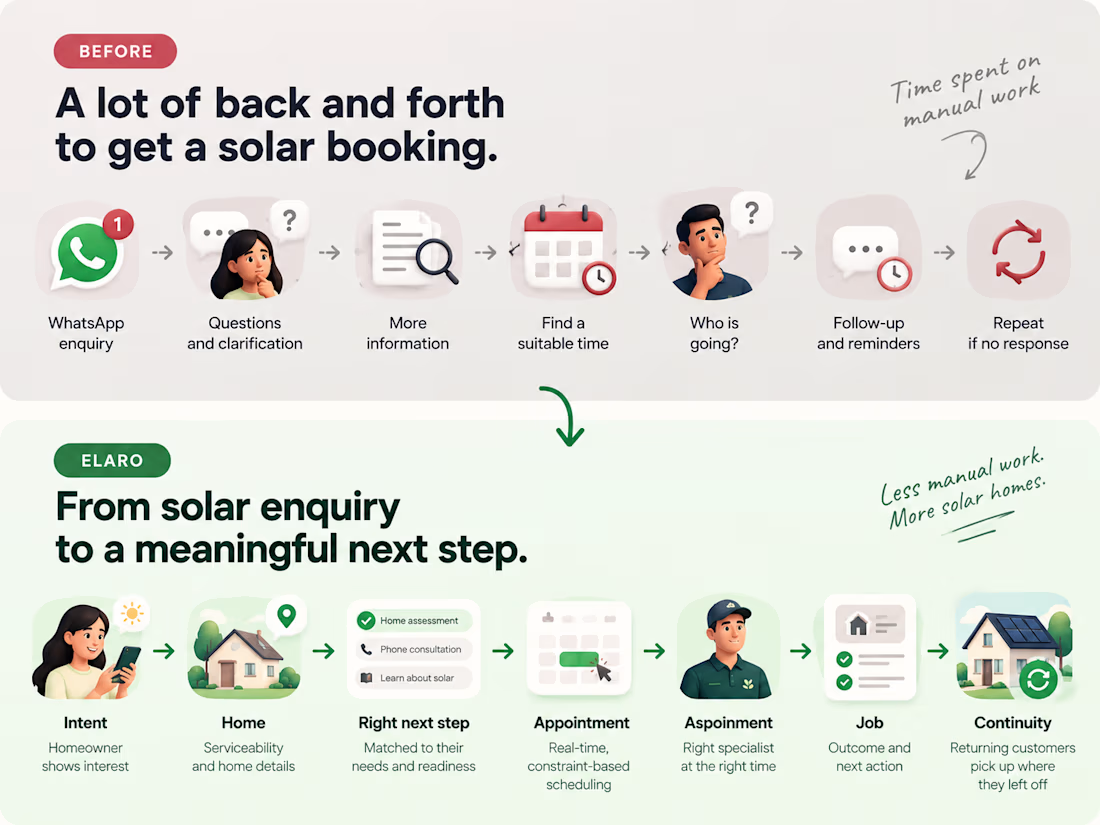
For a homeowner, going solar starts with a simple question. For the installer, turning that interest into a real appointment means figuring out whether the home is serviceable, understanding what the homeowner actually needs, finding the right time, assigning the right specialist, and knowing what happens after the visit.
I wanted to remove that operational friction without building another generic booking form or another all-in-one solar CRM.
🧠 The solution
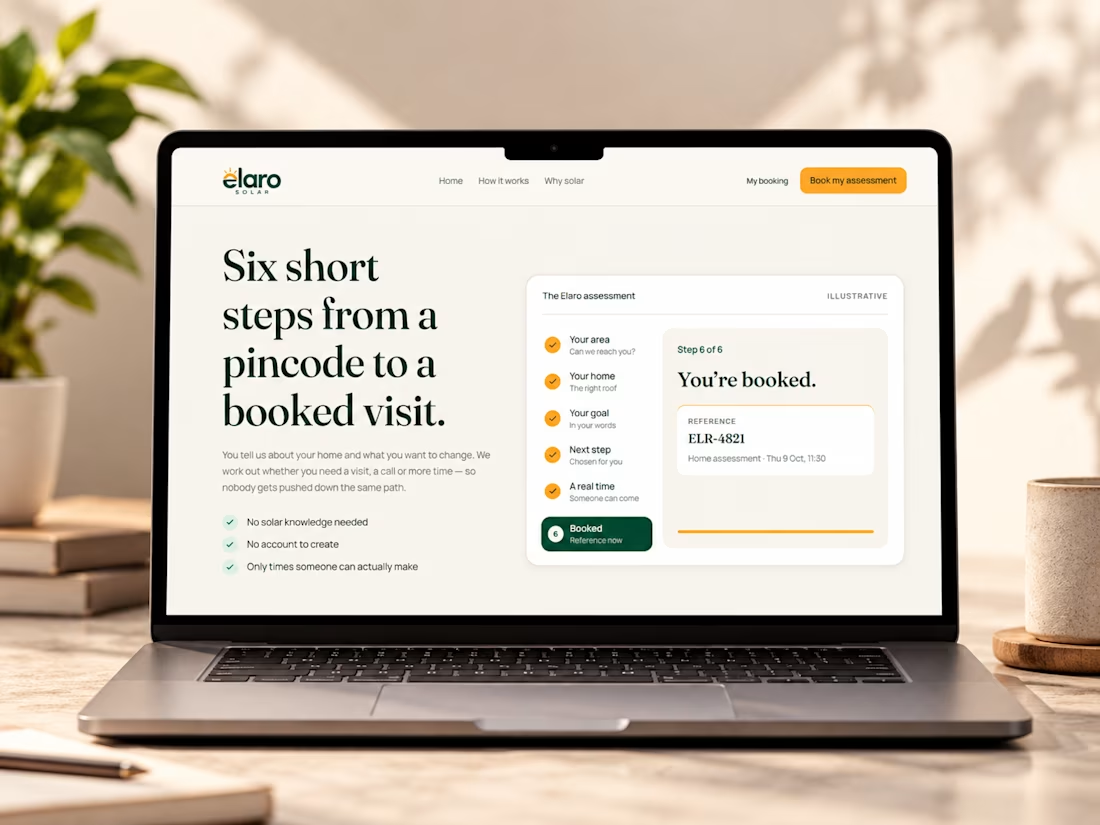
Elaro turns an uncertain solar enquiry into a structured, confirmed appointment, and keeps the work moving afterward.
The homeowner goes through a short, contextual assessment instead of a long form. Questions are introduced only when they change the next decision. Serviceability, home details, ownership, goals, and timing determine whether the customer gets :
- a home assessment
- a phone consultation, or
- a learning path.
The calendar is not just a list of available times. It uses a mechanism that considers technicians' capability, working hours, appointment duration, service area, scheduling buffers, and conflicts before confirming a slot.
On the owner side, the model is deliberately simple:
Customer → Home → Job → Appointment
That lets the team see the customer relationship, the work being done, and the appointment itself as separate but connected things. A completed appointment can create the next action instead of becoming a dead end.
🙌 The part I pushed further
I kept asking: what happens when this customer comes back months later?
Elaro remembers the home and the work associated with it. After phone verification, it can recognise a previously assessed home, reconnect the customer with the appropriate job, and let them move forward without repeating the entire process.
When the system isn't certain that it's the same home, it asks instead of guessing.
Elaro remembers the work that happened, not just the appointment that happened.
That also meant solving the underlying rules for matching homes, preventing duplicate open jobs, safely reopening previous work, and keeping the customer and owner experiences in sync.
🚀 How I approached it
The build started with competitor and workflow research rather than UI. Existing solar products already cover areas such as bill analysis, satellite roof design, proposals, and payments, while established intake flows can become lengthy and information-heavy.
So I deliberately focused on the layer before and around the appointment.
I mapped the journey, defined the system model and interaction rules, designed the visual system, considered accessibility across the experience, and then implemented and tested the product iteratively in Lovable.
🎉 What I built :
A complete customer-to-owner experience spanning:
Intelligent assessment → serviceability → appointment routing → constraint-based scheduling → specialist assignment → Jobs & Appointments → follow-through → returning customer → Home Memory → Solar Journey
See it in action here: https://elarosolar.lovable.app/
🙌 Owner Team sign-in
email: owner@elarosolar.example
password: ElaroDemo2026
lovablechallengeProduct StrategyUX DesignBusiness StrategyProduct DesignWeb DevelopmentFigmaGoogle DocsLovable



Liked the thinking behind problem solving. 💯


The Lovable Challenge asked for a simple booking fix: get a client from "Can I book?" to "You're booked."
And yet the feed is packed with custom 3D galleries, brand identity packs, and AI mascots. Did everyone miss the point?
No, they simply understood what the real game was.
A working calendar widget shows you can write logic. A fully branded experience shows you can build a product. When judges score “Craft & Execution” and “Storytelling,” a bare-bones form will always lose out to a showcase that looks ready to launch.
Branding isn’t extra work here, it removes friction. It builds trust, sets expectations, and keeps people from dropping off before they book.
Build a basic form, and you’ve solved a ticket. The winners, though, are building complete products.
Good luck everyone.

Great insight Ahtisham, totally agree.
For my entry - Salon Booking Suite - I learned this exact lesson. I started with a bare-bones form, then rebuilt it as a complete product: Auth with real signed-in users, backend logic for bookings, Google Maps integration, and full branding.

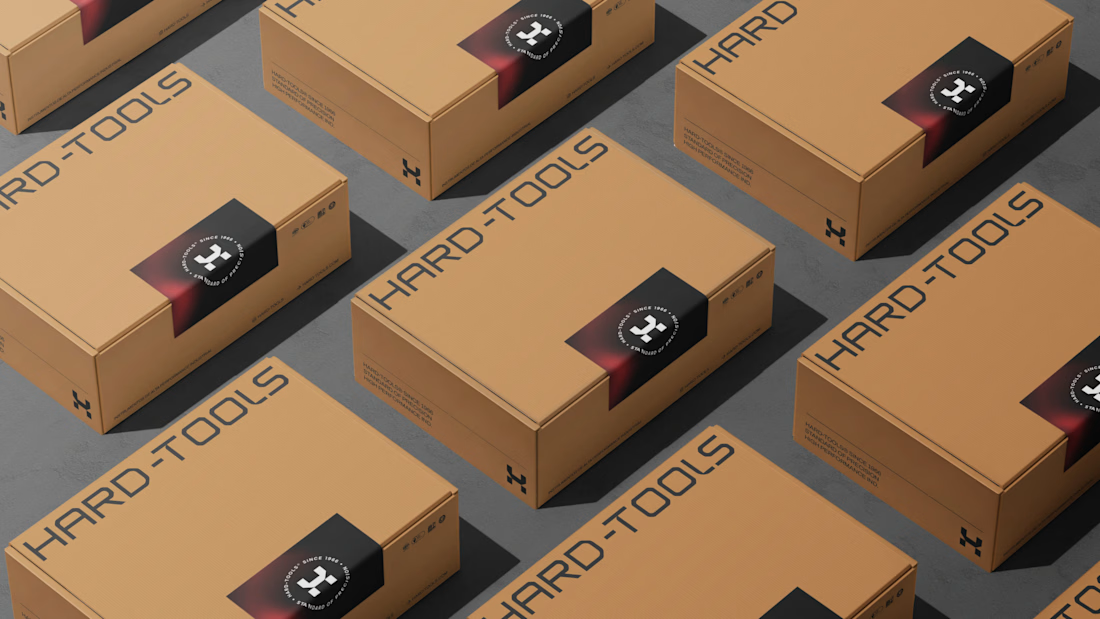
Hard-Tools needed to strengthen its brand presence and turn its communication into a clearer, more consistent, and more professional expression of the business.
The project started with a central question: how can a tools and equipment brand communicate strength, reliability, and expertise without falling into the generic visual language of the category?
The strategy focused on three main objectives:
01 — Strengthen perceived value
Build a visual communication system that conveys solidity, quality, and authority, bringing the brand’s perceived professionalism closer to the level it aims to occupy in the market.
02 — Create consistency across communication
Develop a visual language that could work across different touchpoints — campaigns, commercial materials, social media, and promotional assets — while maintaining recognition and coherence.
03 — Turn products into brand communication
Rather than simply showcasing tools and products, the visual approach was designed to communicate the attributes behind the brand: performance, precision, durability, and reliability.
Based on this strategic direction, I developed the creative and visual direction and designed the communication materials, working across composition, hierarchy, typography, image treatment, identity application, and commercial layouts.





TOP!!