The network for creativity
Join 1.25M professional creatives like you
Connect with clients, get discovered, and run your business 100% commission-free
Creatives on Contra have earned over $150M and we are just getting started
Back to feedPost

AlooChat — Messaging, Calling, Payments & AI in One App
Lead mobile engineer, full application ownership · Live on the App Store and Google Play
The project
A consumer messaging app that is really four hard products under one icon. Chat is the easy part. Calling has to ring on a locked, force-quit phone or the product is broken. Payments touch real money and can't double-charge. An AI assistant has to be useful inside a conversation without being expensive or creepy. All of it in one codebase, passing two independent store reviews, on unreliable mobile networks.
I owned the whole thing — architecture, implementation, the rebrand across both stores, and the release train. There was no platform team to escalate to, which shaped most of the decisions.
The architecture rule
One Expo codebase, four subsystems that deliberately don't share a lifecycle. The rule holding it together: anything the operating system can present without JavaScript running — an incoming call, a push notification — is owned by the native layer, and JavaScript subscribes to it rather than driving it.
That single decision is why calls survive kill state. Anything that needs JS alive to work is a dropped call the moment the user force-quits.
Decisions worth explaining
VoIP push on iOS, high-priority FCM plus a foreground service on Android. One abstraction over two genuinely different platform contracts, rather than a lowest-common-denominator that fails on both.
Payments as an idempotent state machine, never request/response. Payment callbacks arrive late, twice, or not at all. Without explicit state and an idempotency key, someone eventually gets charged twice — and it's real money, not a retry counter.
The AI assistant runs server-side with scoped conversation context, not on the client. Model credentials stay off the device, cost and rate limiting are enforceable in one place, and the prompt contract can change without shipping a new build to two stores.
A hard cap of one active call, enforced natively. Telephony concurrency bugs surface as ghost calls the user can't dismiss. A cap enforced where the OS can see it is worth more than the feature it removes.
The hardest bug
Incoming calls worked in foreground and background but vanished when the app had been force-quit — the worst case, and the one users actually notice.
I built a diagnostic harness that injects synthetic VoIP pushes and traces the payload through the native handler, the token registry, and CallKit reporting, which isolated exactly where the chain broke: tokens were being registered during a launch phase where the JS bridge wasn't yet listening. Tokens now queue and replay once the bridge is live, and the harness stayed in the repo as a regression test for a class of bug that's otherwise invisible until a user complains.
Why this matters for your project
Most mobile developers have shipped a CRUD app with a login screen. Fewer have shipped native-grade calling, and fewer still have handled real money on a device. If your product touches telephony, payments, or an AI feature inside a live app, those are the areas where estimates fall apart — and where I've already found the bottom.
Built with: React Native, Expo, TypeScript, WebRTC, CallKit, ConnectionService, VoIP push/APNs, FCM, Payzah, LLM APIs, EAS Build


The network for creativity
Join 1.25M professional creatives like you
Connect with clients, get discovered, and run your business 100% commission-free
Creatives on Contra have earned over $150M and we are just getting started
Trending
retrofuturism
Share your favorite designs from the past exploring the distant future. Or your own take on the aesthetic 🚀
halftone
Dots. Texture. Grain. Let's see your designs using the halftone technique.

Midjourney
Creatives are showing off what they're making with Midjourney.
colorgrade
Video editors sound off: How do you enhance the mood of your video in color grading?
Related posts

Introducing a new mobile app concept for 𝙗𝙪𝙞𝙡𝙙𝙞𝙣𝙜 𝙝𝙚𝙖𝙡𝙩𝙝𝙮 𝙝𝙖𝙗𝙞𝙩𝙨 and 𝙗𝙚𝙖𝙩𝙞𝙣𝙜 𝙥𝙧𝙤𝙘𝙧𝙖𝙨𝙩𝙞𝙣𝙖𝙩𝙞𝙤𝙣. 😎
Check it out and share your feedback🫶
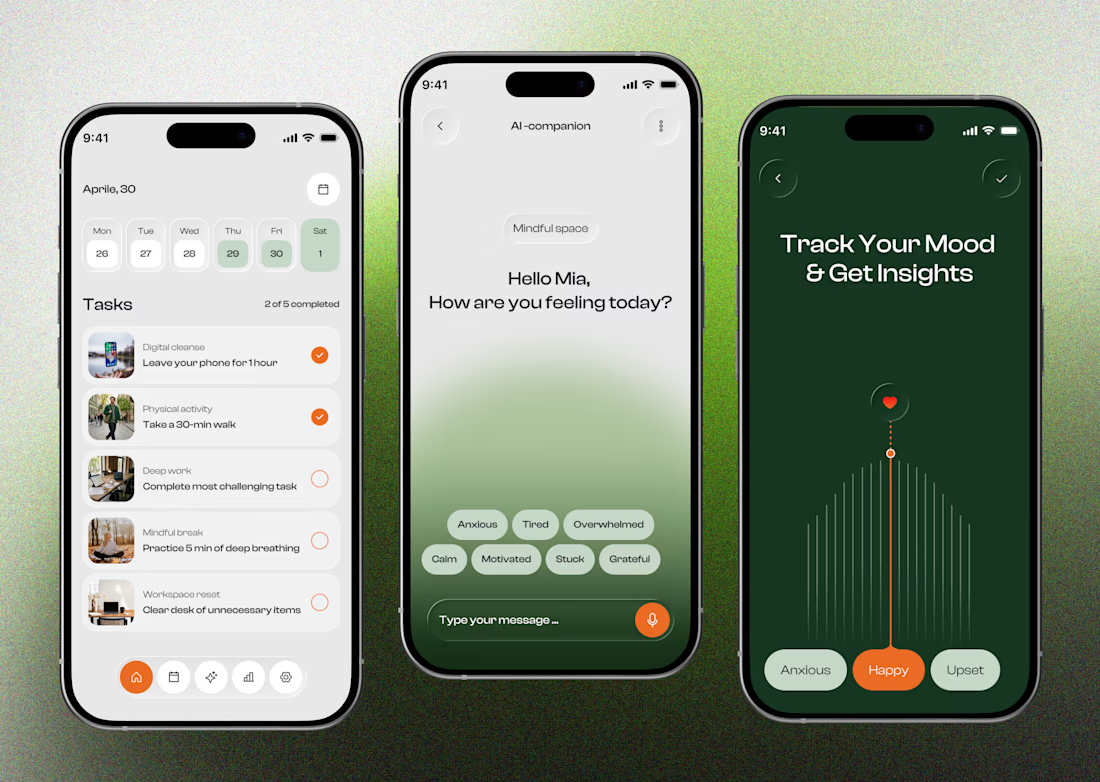
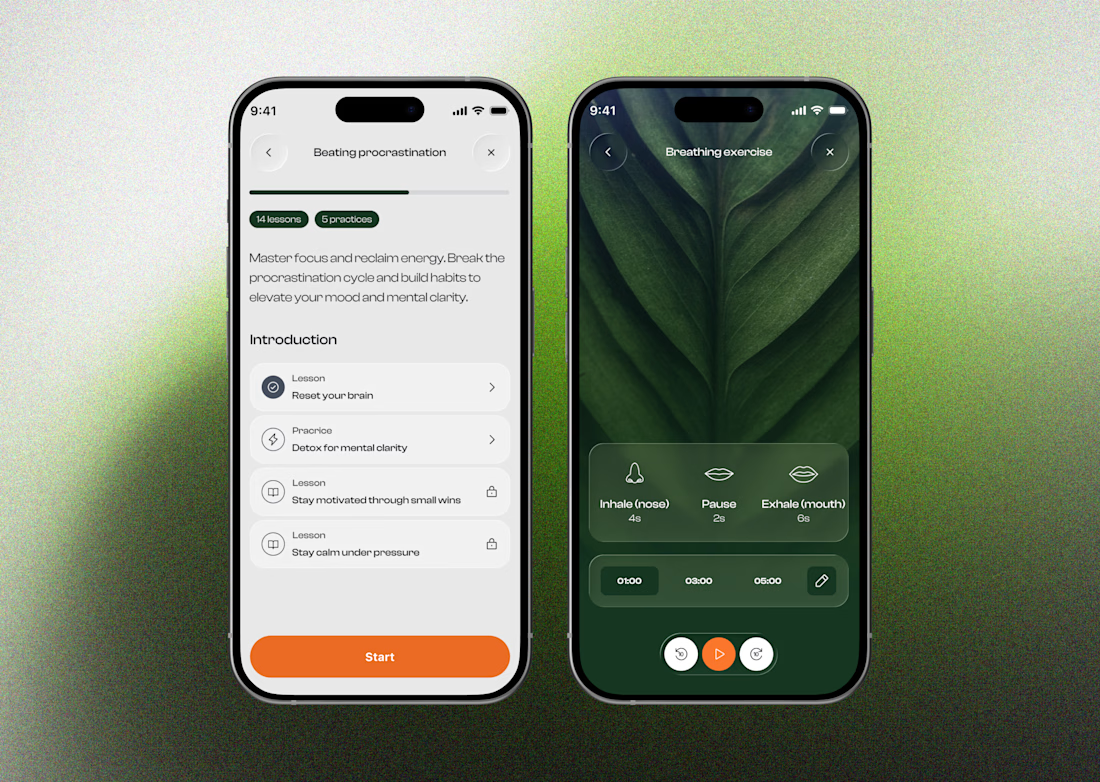

design very clean i like it


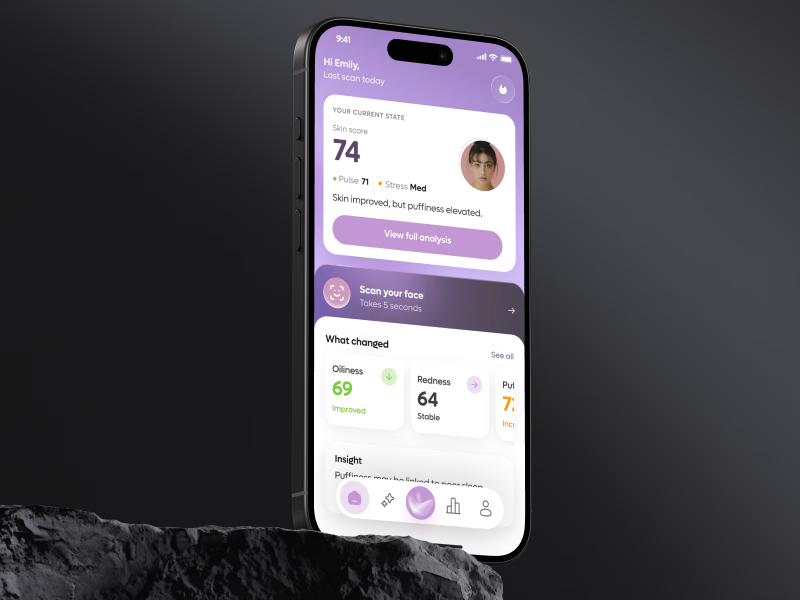
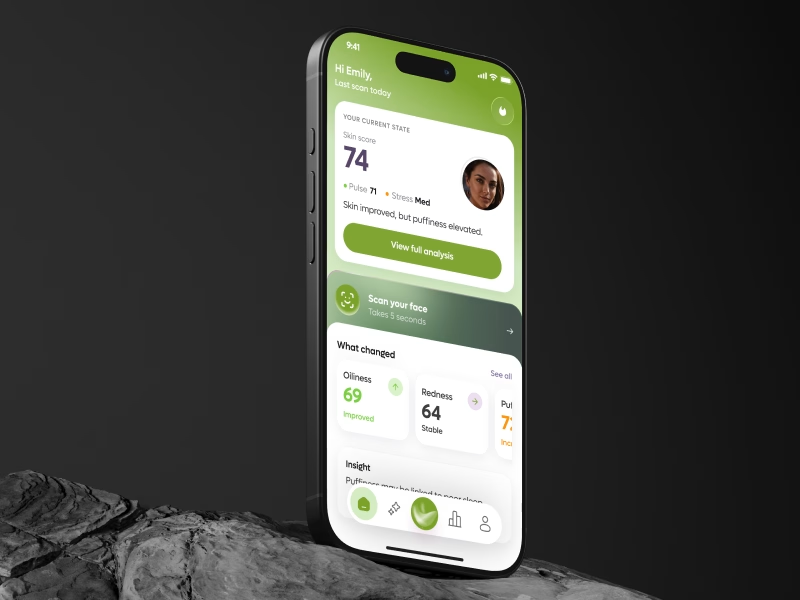
SAME AI SKIN APP.
SAME DATA.
DIFFERENT PERCEPTION.
Which version makes the result feel more trustworthy?
🟣 A - Purple
🟢 B -Green
At first glance, this looks like a color choice.
But in a health product, color can change more than aesthetics.
It can change what users believe the product is.
🟣 One direction feels closer to premium skincare and self-care.
🟢 Another feels closer to health monitoring and measurable progress.
That matters because each category creates different expectations.
If it feels too cosmetic, AI results may feel less credible.
If it feels too clinical, it may lose emotional comfort.
The real UX question is not:
“Which color looks better?”
It is:
Which visual system makes you trust the result enough to scan again tomorrow?
👇 Vote below:

41 voted
55%
34 voted
45%
75 votes
Closed

Interesting how quickly “health” can shift into “beauty” just through visual language.


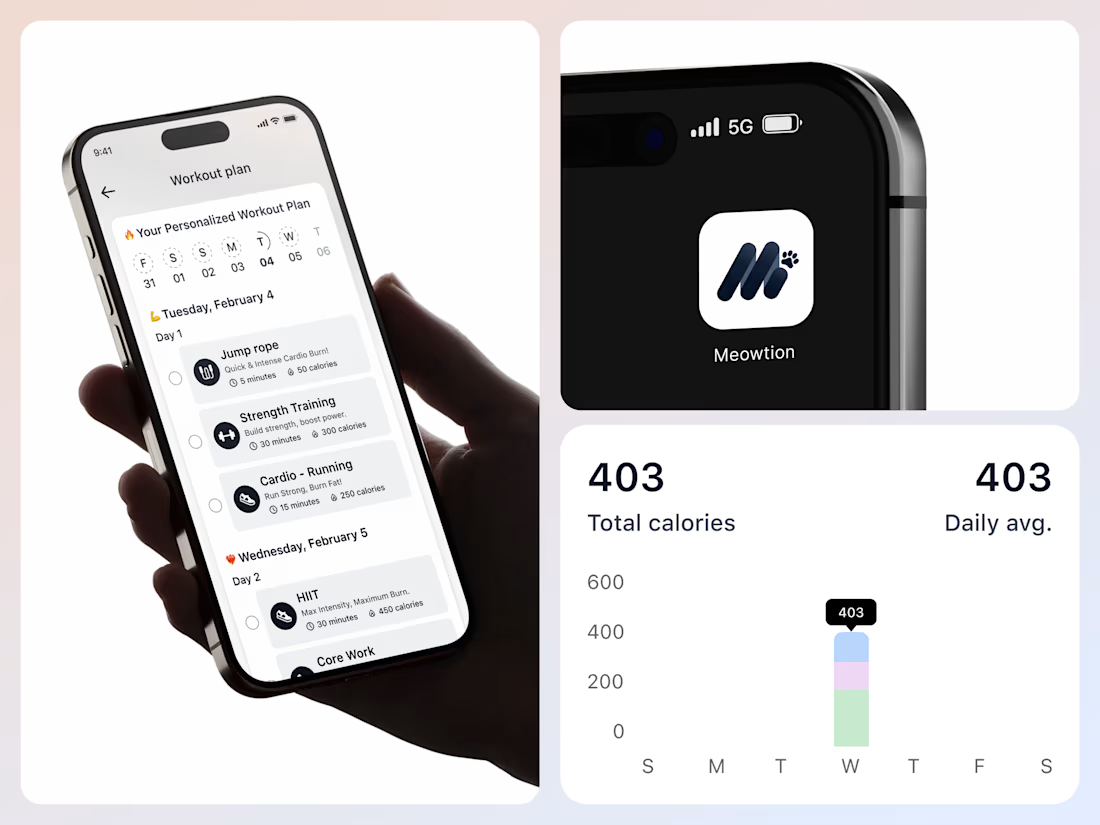
Meowtion, a fitness app that makes you want to come back 🐾
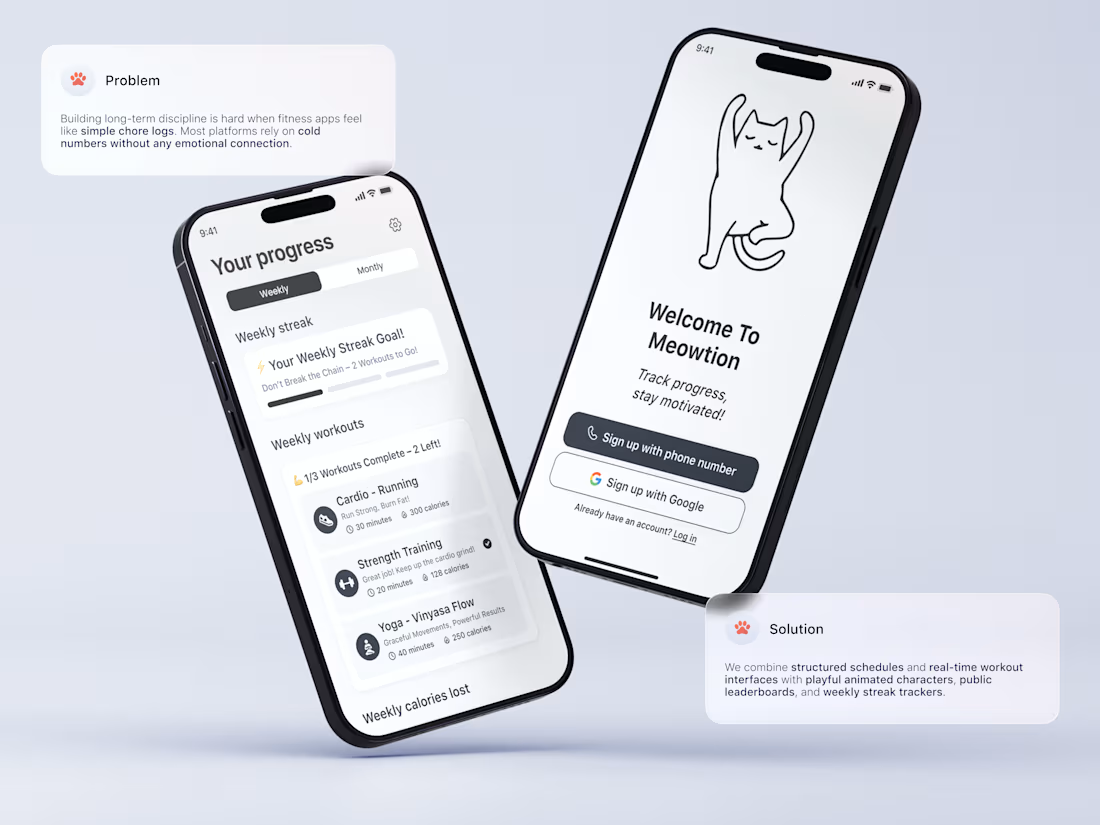
Most fitness apps die on the third home screen. They count reps, log calories… and feel like chore lists.
So we built the opposite a gamified workout companion where movement plays back:
🎮 Playful character that reacts to your progress
🔥 Weekly streaks that reward consistency, not perfection
🗣 Voice goal setting — no manual data entry
🏆 Leaderboards & challenges for friendly rivalry
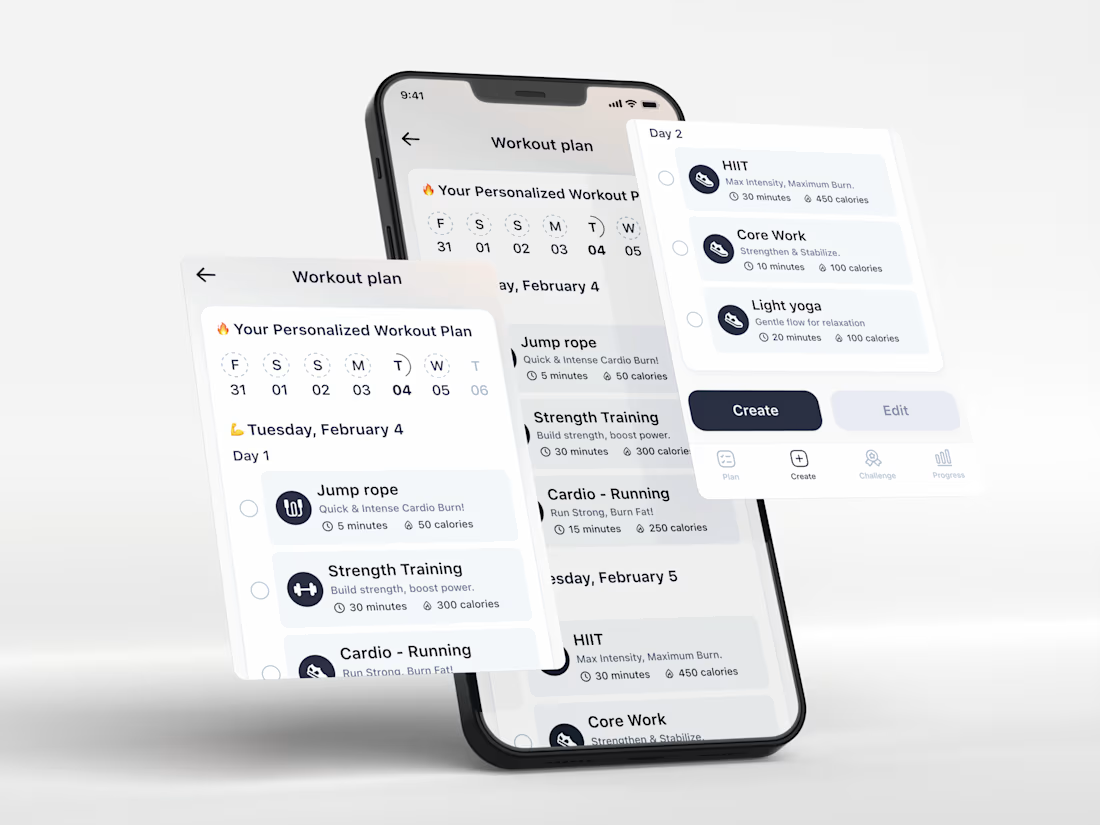
📋 Personalized workout plans with real-time tracking
The result? Users treat workouts like a game they don't want to lose, 1,000+ active users in the first month, zero paid acquisition.
Full case: design system → wireframes → production build.
Got an app idea? Let's talk, free consultation, link in profile.
#uxdesign #mobileapp #fitnessapp #gamification #productdesign


Such a fun app mascot, it adds so much personality to the product 👏