The network for creativity
Join 1.25M professional creatives like you
Connect with clients, get discovered, and run your business 100% commission-free
Creatives on Contra have earned over $150M and we are just getting started
Back to feedPost

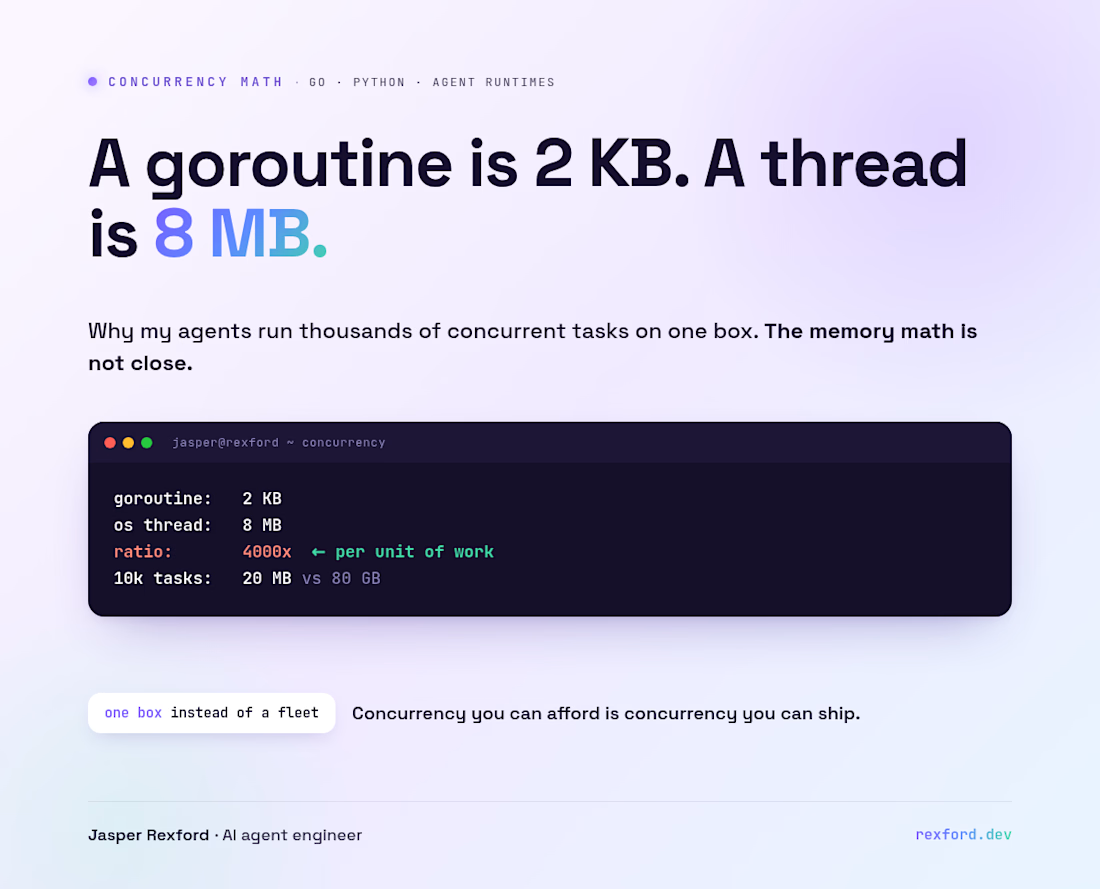
So here's the number that made me move all my agents to Go.
A goroutine uses about 2kb of memory. An OS thread uses about 8mb. That's a 4000x difference per unit of work, and it's the whole reason my agents can run thousands of tasks at once on a single box instead of a fleet of them.
Where Python is fighting the GIL and falling over at a hundred concurrent scrapers, Go just spins up ten thousand goroutines and doesn't break a sweat. 10k tasks is like 20mb of memory instead of 80gb. The math isn't close.
Concurrency you can actually afford is concurrency you can ship.
Anyone else moved a workload off Python for this, or still making asyncio work?


This deserves more than just liking, this deserves to be featured! 🏆 That 4000x memory efficiency comparison is a crazy statistic. Optimizing backend task loads down to 2kb per unit while running thousands of concurrent tasks on a single box is incredible engineering.
Appreciate that. The practical win is hosting: a whole agent fleet fits on one small box that costs less than most Vercel bills. Do you run Go in production yourself?
The network for creativity
Join 1.25M professional creatives like you
Connect with clients, get discovered, and run your business 100% commission-free
Creatives on Contra have earned over $150M and we are just getting started





Related posts

Take a vampire, a grim reaper and a bat for a midnight ride through a haunted town. Hold to boost over broken track, brake before the big hills, and grab candy to refill your boost. Push your luck too far and your passengers end up splattered across the screen.


Cute!!

Solene: skincare e commerce website, built in Framer
Skincare shopping should feel as good as the routine itself. For Solene, I designed and built a full online store with a soft, warm identity: a bold maroon and pink palette, big expressive type and real-skin photography.
What's inside:
A hero that sets the brand tone straight away
A Bestsellers section for quick browsing
Category pages for Cleanse, Hydrate and Protect
A shop page with price slider, filters, sorting and hover image previews
An Our Story page with brand values
A clean, confident footer
Need a website for your beauty or lifestyle brand? Let's talk.


The hover image previews on the shop page caught my eye - they let shoppers sense texture instantly without an extra click.

Flowlane 2.0, a launch video for a concept ops automation tool. Ops that run themselves.
The dashboard UI comes apart into layers to show each feature: live metrics, self-building reports and AI that drafts for you. It was built in Remotion and finished in After Effects.


Building the scenes in Remotion and hand-keying the light sweeps in After Effects is an interesting split. When a client asks for a late copy or colour change, which side ends up costing you more time?