The network for creativity
Join 1.25M professional creatives like you
Connect with clients, get discovered, and run your business 100% commission-free
Creatives on Contra have earned over $150M and we are just getting started
Back to feedPost

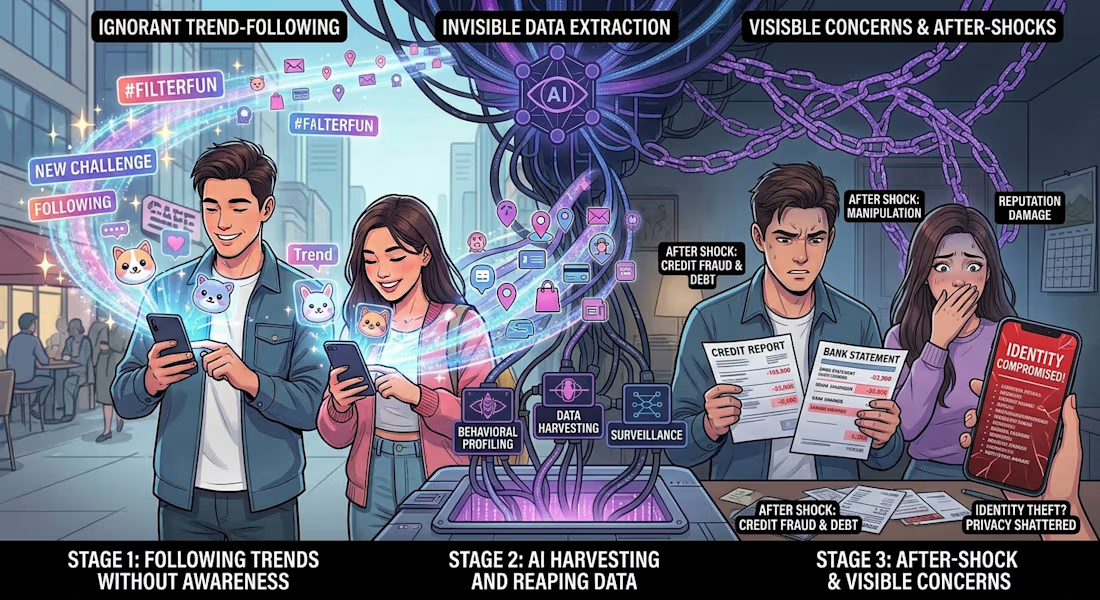
Ever wonder what happens to your data when you try that new viral "aging filter" or join the latest social media challenge? 🤔✨
We all love jumping on trends. It feels like harmless fun—a cute puppy filter here, a quick personality quiz there, all while scrolling and laughing. 🐾📱
But behind the screen, invisible AI systems are working overtime. They aren't just looking at your face; they are silently harvesting your behavioral data, mapping your routines, and profiling your habits to feed massive surveillance networks. 🕸️🤖
The real cost? It hits you when you least expect it.
The "after-shocks" of oversharing are devastating. People are waking up to drained bank accounts, ruined credit scores, and compromised identities—all stemming from data they willingly handed over for a few likes and a fleeting moment of internet fame. 📉💳🚫
It’s time to wake up and see the invisible strings. Don't let your privacy be the price you pay for staying trendy.
🛑 Protect yourself:
Check your app permissions today.
Stop giving third-party apps access to your camera and contacts.
Think twice before participating in data-mining "challenges."
Your digital footprint is permanent. Protect it! 🔒👇


The network for creativity
Join 1.25M professional creatives like you
Connect with clients, get discovered, and run your business 100% commission-free
Creatives on Contra have earned over $150M and we are just getting started





Related posts

This project focused on building and testing a practical AI security assessment lab for evaluating LLM defenses against prompt injection and jailbreak attacks.
I integrated Spikee by Reversec with a locally hosted cybersecurity model running through LM Studio, then added NVIDIA NeMo Guardrails to compare model behavior under three conditions: no guardrails, input filtering, and combined input/output protection.
The work included configuring the local model environment, building a custom FastAPI gateway, integrating NeMo Guardrails, troubleshooting model latency and timeout issues, creating a reusable Spikee target, and analyzing attack results using Spikee’s built-in reporting tools.
The project also explored different adversarial testing approaches, including prompt injection datasets, obfuscation, encoded attacks, Best-of-N testing, synthetic canary leakage tests, and structured benchmark comparisons.
The objective was to measure how much the guardrails reduced successful attacks while keeping the model, dataset, and testing conditions consistent.
Tools used: Spikee, NVIDIA NeMo Guardrails, LM Studio, Python, FastAPI, PowerShell, Parrot OS, local LLMs, JSONL datasets, and custom security testing scripts.
This project demonstrates a hands-on approach to LLM red teaming, AI safety testing, prompt-injection assessment, and guardrail validation for organizations deploying generative AI systems.


pretty cool tbh. testing the same attacks with different guardrail setups makes the results way more interesting.


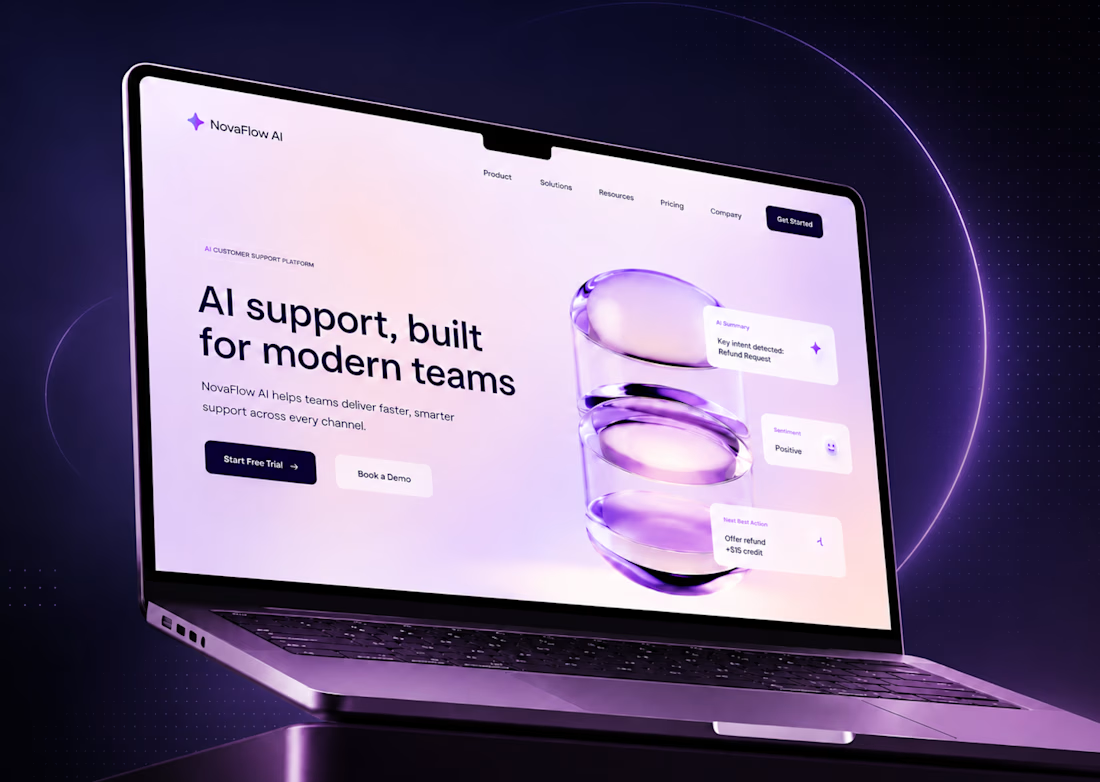

The product flow stays clear across the web and motion elements.


What if anyone on your team could ask your data a question and get a live dashboard back in under a minute?
That was the brief. Business users were locked out of their own data. Every question waited on someone who could write SQL, data sat across disconnected systems, and security teams refused to send sensitive records to third-party AI tools.
So we flipped the model. Instead of moving enterprise data to an AI product, we moved the AI analytics product into the customer's AWS account.
What we built:
• Natural-language querying that turns plain-English questions into governed dashboards in under 60 seconds
• Federated queries across SQL and NoSQL sources through Trino
• AI query generation on AWS Bedrock Agents, with Bedrock Guardrails keeping model output in bounds
• Dashboards generated with Apache Superset, plus proactive anomaly and trend alerts
• A white-label React widget that embeds in any product
• Role-based access, row-level security and enterprise SSO enforced at every layer
The result:
Zero data egress. The whole platform deploys inside the customer's VPC and is live on AWS Marketplace.
Building AI features for a data-heavy or regulated product? Let's talk about doing it without your data leaving your cloud.
