The network for creativity
Join 1.25M professional creatives like you
Connect with clients, get discovered, and run your business 100% commission-free
Creatives on Contra have earned over $150M and we are just getting started
Back to feedPost

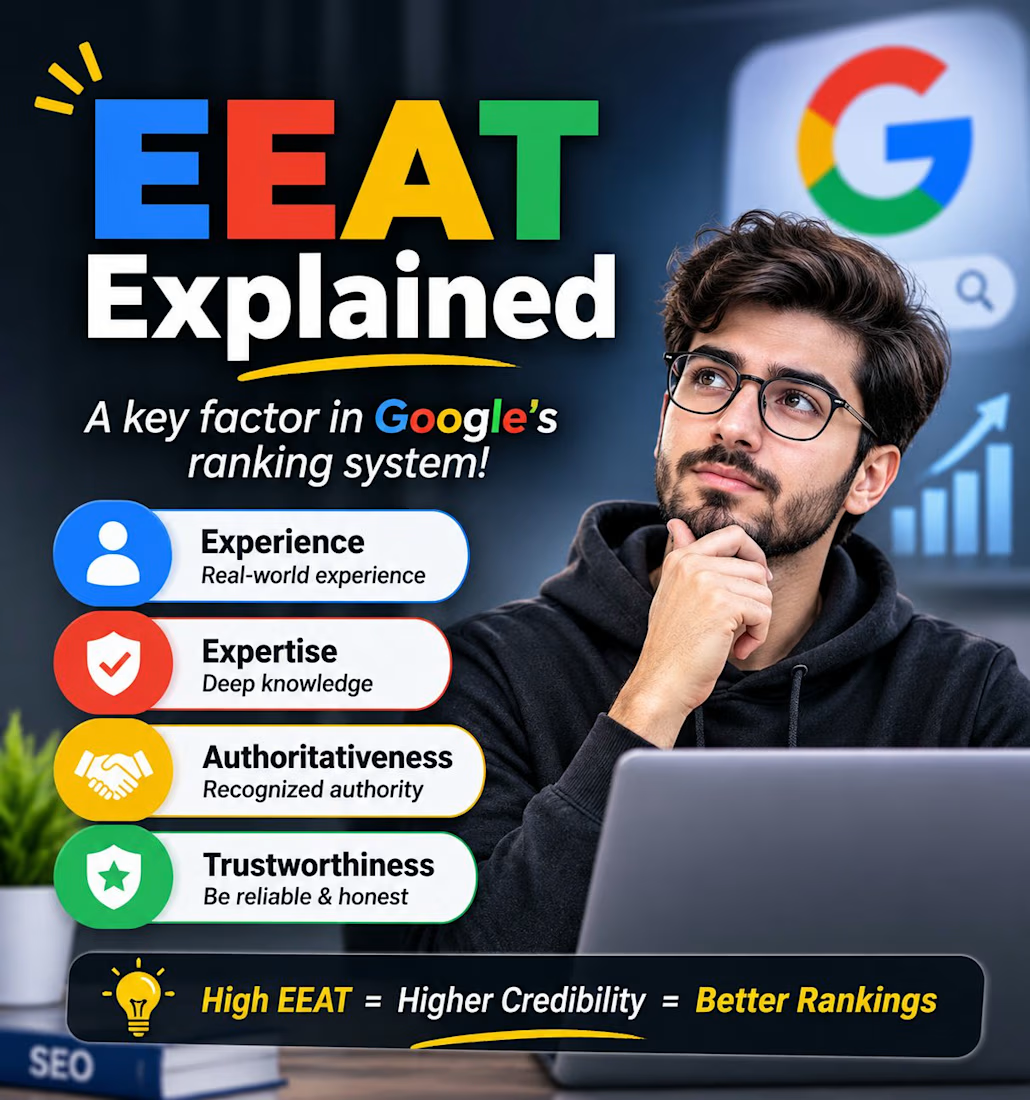
EEAT Explained: The Four Pillars of High-Quality SEO Content
In modern SEO, ranking on Google is not just about using the right keywords, building backlinks, or optimizing meta tags. It's also about creating content that demonstrates Experience, Expertise, Authoritativeness, and Trustworthiness (EEAT).
EEAT is a framework discussed in Google's Search Quality Evaluator Guidelines. It helps human quality raters assess the quality and credibility of search results.
Let's understand its four important pillars:
1️⃣ Experience
Does the content creator have first-hand experience with the topic?
Google's quality guidelines emphasize the value of content created from genuine, real-world experience.
Example:
A person reviewing a product they have personally used can provide practical insights that a generic product description cannot.
2️⃣ Expertise
Does the content creator have sufficient knowledge or skills about the subject?
Expertise means providing accurate, detailed, and useful information that genuinely helps readers.
How to improve it:
Publish well-researched content.
Explain complex topics clearly.
Use reliable references.
Demonstrate subject knowledge.
3️⃣ Authoritativeness
Is the website or content creator recognized as a reliable source in their industry?
Authority can be strengthened through:
Quality backlinks from relevant websites.
Industry recognition.
Brand mentions.
Expert contributions.
Consistent, valuable content.
4️⃣ Trustworthiness
Can users trust the website and the information it provides?
Trust is particularly important because inaccurate information can negatively affect users.
How to improve trust:
Use HTTPS security.
Provide accurate information.
Display clear contact details.
Publish transparent About Us pages.
Cite reliable sources where appropriate.
Keep website information updated.
Why Is EEAT Important for SEO?
EEAT is especially important for topics that can significantly affect people's health, finances, safety, and well-being (YMYL).
Although EEAT itself is not a direct Google ranking factor, Google's systems use various signals that align with these quality principles.
My SEO Recommendation 💡
Don't create content just to rank on Google. Create content that genuinely helps people.
Focus on real experience, demonstrate expertise, build authority, and establish trust.
Remember: Quality content builds credibility, and credibility builds long-term success.
What do you think is the most important pillar of EEAT for modern SEO?
Share your thoughts in the comments! 👇
#SEO #EEAT #GoogleSEO #ContentSEO #TechnicalSEO #DigitalMarketing #SearchEngineOptimization #ContentMarketing #SEOExpert #GoogleRanking
The network for creativity
Join 1.25M professional creatives like you
Connect with clients, get discovered, and run your business 100% commission-free
Creatives on Contra have earned over $150M and we are just getting started



Related posts

Hiring a more expensive SEO expert doesn't automatically mean you're making a better decision.
I worked with a client for almost 3 years. Things were going well, and we had built strong organic rankings and traffic together.
But then AI changed the SEO landscape.
I started recommending several changes to the website, content strategy, technical SEO, and overall approach because I could see that the industry was evolving.
Perhaps the client wasn't comfortable with so many recommendations.
Eventually, they decided to hire an in-house SEO professional at almost 4X what they were paying me.
That's business. Every client has the right to make their own decisions.
But what happened next was disappointing.
The rankings and organic traffic we had spent years building started declining.
Here's what I want businesses to understand:
SEO is not just about maintaining what is already working.
A good SEO expert should tell you when something needs to change.
Recommendations aren't criticism of previous work; they're preparation for what comes next.
AI is changing search, and strategies that worked yesterday may not be enough tomorrow.
One more thing:
I'm based in India, which allows me to offer SEO services at a more affordable price than many SEO professionals in the USA.
But a lower price doesn't mean lower commitment, experience, or expertise.
Sometimes, the person suggesting changes is the person trying hardest to protect the growth you've already achieved.
Don't confuse a comfortable SEO strategy with a future-proof SEO strategy.
What's your take? Should an SEO expert focus on keeping things as they are or challenge the existing strategy when the industry changes?
#SEO #FreelanceSEO #DigitalMarketing #AIandSEO #OrganicTraffic #SEOStrategy #SmallBusiness



They said ranking a new blog on Page 1 of Google in 2026 is impossible.
While everyone is busy spamming generic AI content and watching their traffic drop, here is what happens when you focus on real research and strategy instead:
30 days after launching content on a new site:
👉 13.4K Impressions in the US
👉 7.1 Average Position on Google
👉 43 Clicks (and climbing fast)
How do you beat the AI noise?
Entity & Intent Mapping: Building content for answer engines, not just basic keywords.
Topical Authority: Structuring deep content clusters that Google actually trusts.
AEO / GEO Focus: Optimizing for both traditional search and AI search engines.
Raw AI content gets buried. Precise, strategic content ranks.
Now that the impressions are locked in, the next phase is tuning CTR to drive conversions!
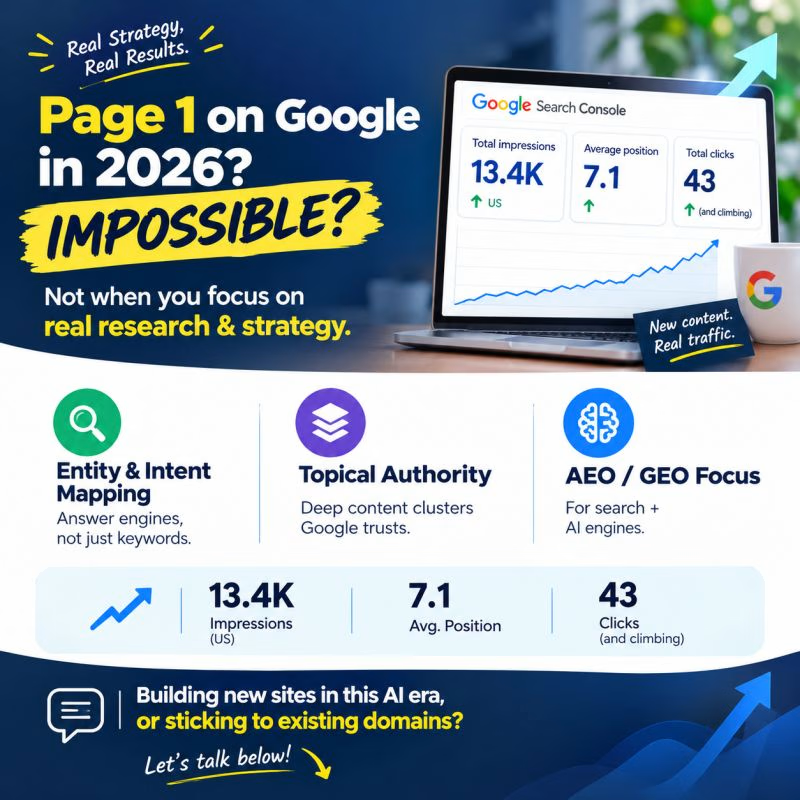

13.4K impressions at position 7.1 with 43 clicks says the next lever is the click itself. Will you test titles and meta first, or the visuals in the snippet too?

𝗗𝗮𝘆 𝟮𝟵𝘁𝗵 𝗼𝗳 𝟯𝟬𝗱𝗮𝘆, 𝟭 𝗗𝗮𝘆𝘀 𝘁𝗼 𝗚𝗢
The 2026 WordPress Technical SEO Blueprint: Core Web Vitals & Schema Architecture
Dominating search engines in 2026 requires more than basic keywords. 𝗜𝗺𝗽𝗹𝗲𝗺𝗲𝗻𝘁 𝘁𝗵𝗶𝘀 𝟱-𝗽𝗼𝗶𝗻𝘁 𝘁𝗲𝗰𝗵𝗻𝗶𝗰𝗮𝗹 𝗦𝗘𝗢 𝗰𝗵𝗲𝗰𝗸𝗹𝗶𝘀𝘁:
1. 𝗡𝗮𝘁𝗶𝘃𝗲 𝗝𝗦𝗢𝗡-𝗟𝗗 𝘀𝘁𝗿𝘂𝗰𝘁𝘂𝗿𝗲𝗱 𝗱𝗮𝘁𝗮 𝗳𝗼𝗿 𝗔𝗜 𝗲𝗻𝗴𝗶𝗻𝗲𝘀.
2. 𝗔𝘂𝘁𝗼𝗺𝗮𝘁𝗲𝗱 𝗔𝗩𝗜𝗙 𝗶𝗺𝗮𝗴𝗲 𝗼𝗽𝘁𝗶𝗺𝗶𝘇𝗮𝘁𝗶𝗼𝗻.
3. 𝗦𝗽𝗲𝗰𝘂𝗹𝗮𝘁𝗶𝘃𝗲 𝗽𝗮𝗴𝗲 𝗽𝗿𝗲-𝗿𝗲𝗻𝗱𝗲𝗿𝗶𝗻𝗴.
4. 𝗖𝗹𝗲𝗮𝗻 𝘀𝗲𝗺𝗮𝗻𝘁𝗶𝗰 𝗵𝗲𝗮𝗱𝗶𝗻𝗴 𝗵𝗶𝗲𝗿𝗮𝗿𝗰𝗵𝘆.
5. 𝗘𝗹𝗶𝗺𝗶𝗻𝗮𝘁𝗶𝗻𝗴 𝘂𝗻𝘂𝘀𝗲𝗱 𝗖𝗦𝗦 𝗮𝗰𝗿𝗼𝘀𝘀 𝗯𝗹𝗼𝗰𝗸 𝘁𝗲𝗺𝗽𝗹𝗮𝘁𝗲𝘀.
𝗕𝗼𝗼𝗸𝗺𝗮𝗿𝗸 𝘁𝗵𝗶𝘀 𝘁𝗲𝗰𝗵𝗻𝗶𝗰𝗮𝗹 𝗦𝗘𝗢 𝗰𝗵𝗲𝗰𝗸𝗹𝗶𝘀𝘁 𝗯𝗲𝗳𝗼𝗿𝗲 𝘆𝗼𝘂𝗿 𝗻𝗲𝘅𝘁 𝘄𝗲𝗯𝘀𝗶𝘁𝗲 𝗹𝗮𝘂𝗻𝗰𝗵!, 𝗧𝗵𝗮𝗻𝗸𝘀 𝗳𝗼𝗿 𝗲𝗻𝗴𝗮𝗴𝗶𝗻𝗴
