The network for creativity
Join 1.25M professional creatives like you
Connect with clients, get discovered, and run your business 100% commission-free
Creatives on Contra have earned over $150M and we are just getting started
Back to feedPost

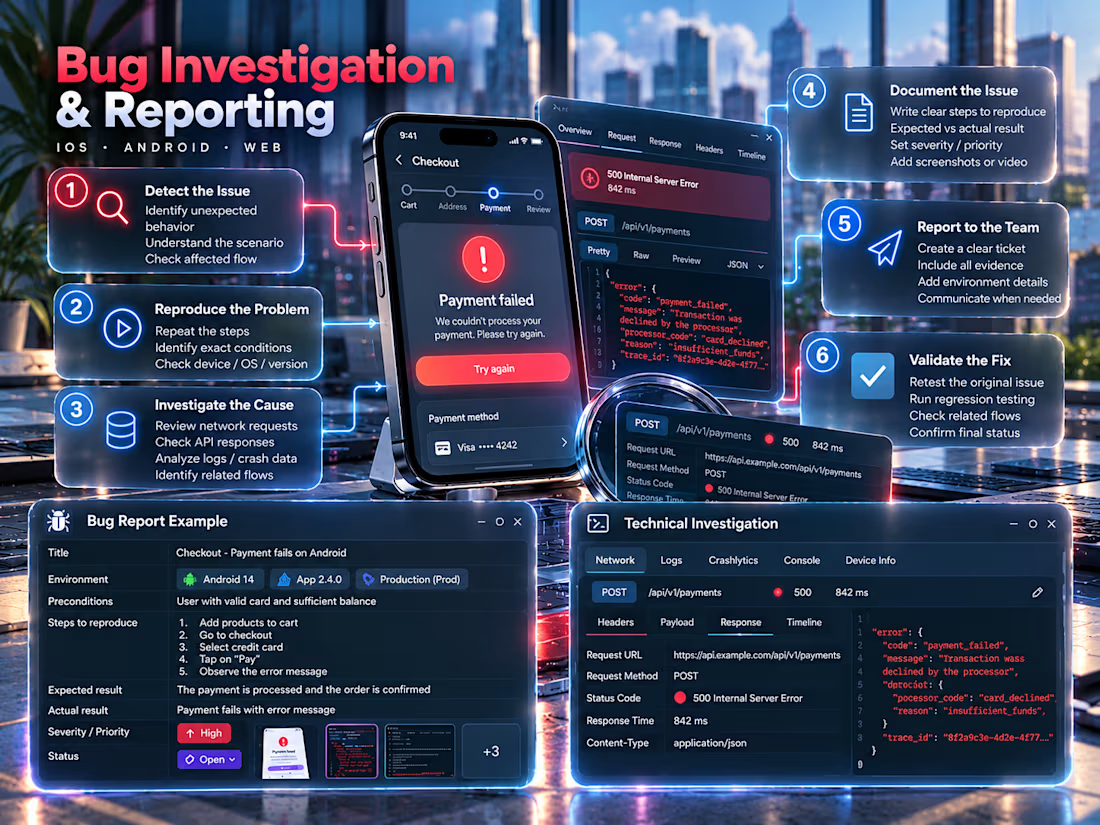
Bug Investigation & Reporting
Finding a bug is only the beginning. The objective is to understand what is happening, under which conditions it occurs, how to reproduce it consistently, and what information the development team needs to investigate it efficiently.
This is the workflow I follow when an issue is discovered during testing.
01 — Detect the Issue
When unexpected behavior appears, I first identify the affected user flow and the conditions surrounding the issue.
Before reporting anything, I verify that the behavior is actually unexpected and gather enough context to begin reproducing it.
02 — Reproduce the Problem
The next step is to reproduce the issue consistently.
I repeat the scenario while checking variables such as device, operating system, application version, environment, user state and test data.
The objective is to determine exactly when the problem occurs and establish clear reproduction steps.
03 — Investigate the Cause
Once the issue can be reproduced, I gather additional technical information that may help the development team understand what happened.
Depending on the project and the access provided by the client, this can include network requests, API responses, logs, console errors or crash information.
The goal is not to guess the root cause, but to provide useful evidence that helps developers investigate it faster.
04 — Document the Issue
All relevant information is organized into a clear bug report.
This includes the environment, preconditions, reproduction steps, expected behavior, actual behavior, severity or priority, and supporting evidence such as screenshots or videos.
The report should allow another person to reproduce the issue without needing additional explanation.
05 — Report & Follow Up
The issue is added to the project's tracking system and shared with the appropriate team.
If additional information is required during the investigation, I reproduce the scenario again, collect the requested evidence and keep the report updated throughout the process.
06 — Validate the Fix
Once a fix becomes available, I execute the original scenario again under the same conditions.
If the issue is resolved, I also validate related functionality to identify possible regressions introduced by the change.
The bug is considered validated when the expected behavior is confirmed and the relevant testing results have been updated.
Final result: a reproducible and actionable bug report supported by clear evidence, followed through from discovery to fix validation.
Note: The interfaces, data and examples shown in this project are illustrative and were created exclusively to represent my working process. For confidentiality reasons, no internal data, documentation or proprietary materials from the companies and products I have worked with are displayed.


The network for creativity
Join 1.25M professional creatives like you
Connect with clients, get discovered, and run your business 100% commission-free
Creatives on Contra have earned over $150M and we are just getting started





Related posts

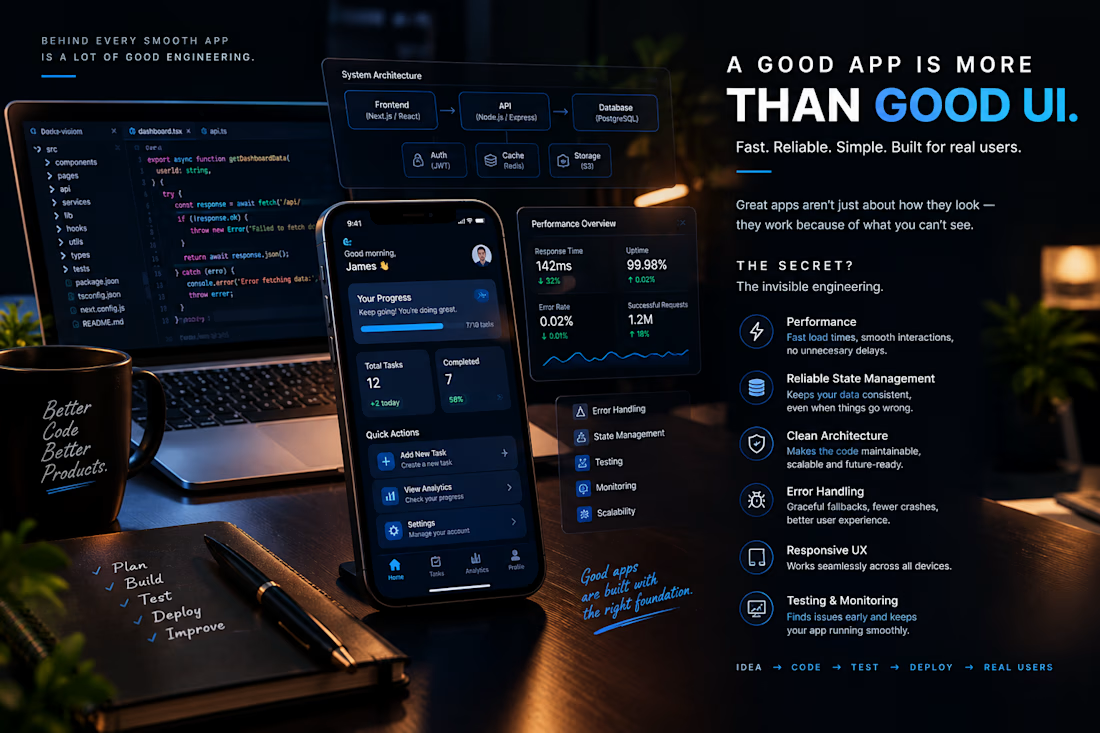
What’s the secret behind an app that actually feels good to use?
It’s not just the UI.
A beautiful interface can get someone to download an app.
But good engineering is what makes them stay.
When I build an application, I think beyond the screens users can see.
The real work is happening underneath:
⚡ Performance — interactions should feel fast and intentional.
🧠 State management — the app needs to keep data consistent as users move through it.
🏗️ Architecture — the codebase needs structure that can survive new features.
🛡️ Error handling — things will go wrong; the app needs to handle them gracefully.
📱 Responsive UX — the experience needs to work across different screen sizes.
🧪 Testing — don't assume it works because the happy path works.
📊 Monitoring — understand what happens when real users start using it.
That’s the part many people never see.
A user taps a button and thinks:
“That was smooth.”
Behind that single interaction could be API calls, state updates, database operations, validation, loading states, error handling and performance decisions.
That’s why I believe:
A good app isn't just designed. It's engineered.
Modern web performance guidance also emphasizes that loading, responsiveness and efficient resource handling directly affect the user experience.
My goal isn't simply to build something that looks finished.
I want to build applications that behave like real products.
Idea → Architecture → Code → Test → Deploy → Real Users.
What’s one thing that immediately makes you uninstall an app?


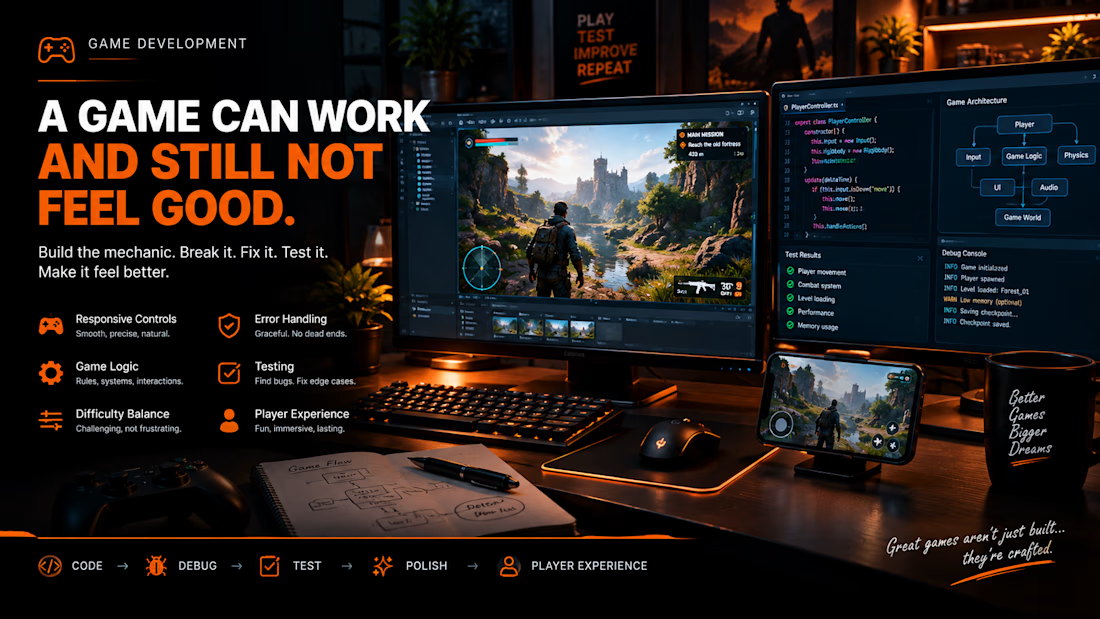
A GAME ISN’T FINISHED WHEN THE CODE WORKS.
One of the biggest lessons I’m learning from game development:
Getting the game to run is only the first milestone.
The real work starts when you ask:
👉 Does the movement feel right?
👉 Do the missions behave correctly?
👉 What happens when the player does something unexpected?
👉 Does the game stay smooth under pressure?
👉 Can I reproduce and fix bugs consistently?
That’s why my workflow is becoming:
BUILD → PLAY → BREAK → DEBUG → TEST → POLISH → REPEAT
I’m paying more attention to the things players might never consciously notice — input responsiveness, game logic, loading, error handling, performance, and how everything connects together.
Modern game-development guidance also puts strong emphasis on testing, profiling, debugging, and monitoring rather than waiting until the end of development.
Because a game can have beautiful graphics and still feel frustrating if the underlying experience isn't solid.
The goal isn't just to make a game that runs.
The goal is to make a game that feels right. 🔥
What’s the first thing you notice when you play a new game?



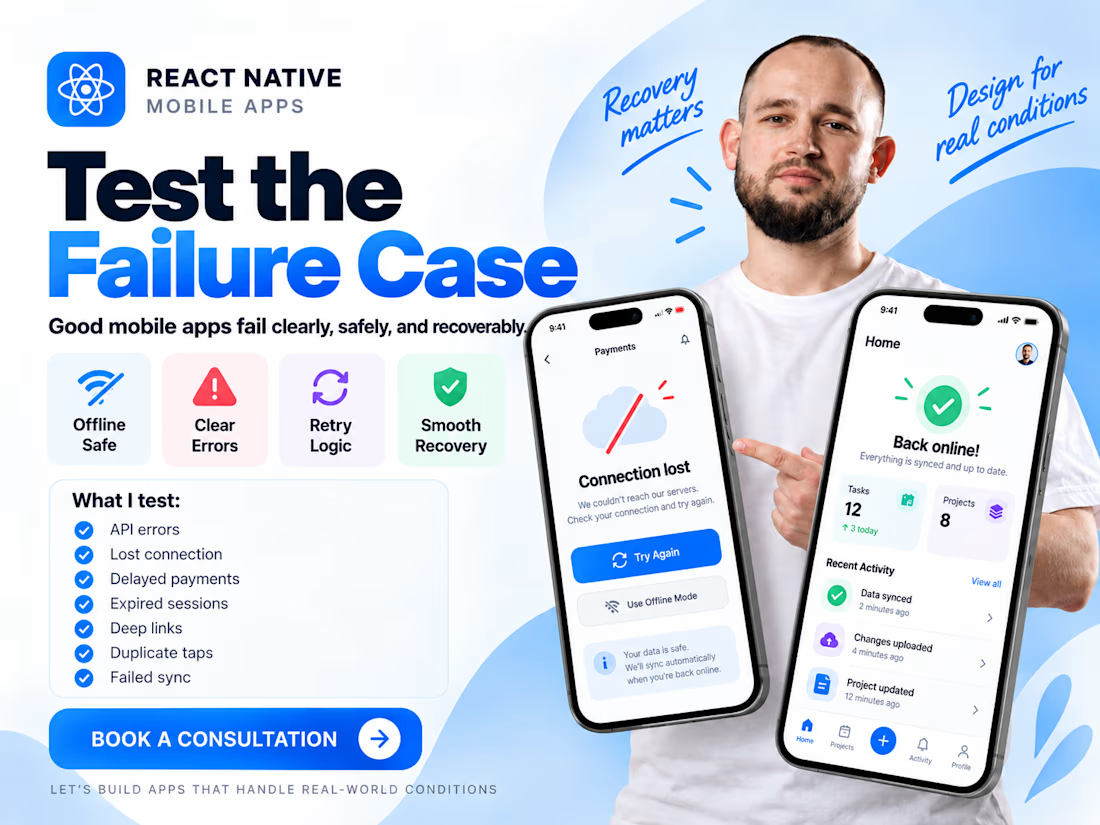
🧪 I don’t trust a mobile feature until I’ve tested the failure case.
Happy-path testing is easy.
What matters is what happens when:
• the API returns 500
• the user goes offline mid-action
• a payment succeeds but the response is delayed
• a push token expires
• the app is reopened after 3 days
• a deep link points to missing content
• the same button gets tapped twice
• background sync fails silently
Most production bugs don’t happen when everything works.
They happen when one dependency behaves differently than expected.
That’s why for React Native apps, I like to test recovery behavior, not just feature behavior.
A good mobile app doesn’t only work correctly.
It fails clearly, safely, and recoverably. ⚙️