The network for creativity
Join 1.25M professional creatives like you
Connect with clients, get discovered, and run your business 100% commission-free
Creatives on Contra have earned over $150M and we are just getting started
Back to feedPost

Your GA4 is Lying to You (And You're Making Decisions Based on It)
The gap between what GA4 reports and actual revenue? It's probably 30-50%.
I watched a Shopify brand spend PKR 2 lakhs on Meta Ads last month. Their GA4 said they made 8 sales. Reality? 23 conversions actually happened.
The problem: browser-based tracking (standard GA4 + Meta Pixel) loses data at every touchpoint. Ad blockers. iOS privacy changes. Cross-domain tracking failures. And Meta's basically guessing who converted.
Here's what server-side tracking actually does:
✓ Captures conversions even when ad blockers are running
✓ Feeds real conversion data back to Meta Pixel (not guesses)
✓ Syncs GA4 with actual Shopify/WooCommerce order data
✓ Gives you one source of truth—not conflicting reports
The setup that changes everything:
Shopify/WooCommerce → Stape.io → GTM (server-side container) → GA4 + Conversions API
Before this: 40% event match quality on Meta. After: 87%. Same budget. 2x more conversions attributed. Better targeting.
That's not a vanity metric. That's the difference between scaling and spinning your wheels.
You probably think: "This sounds complicated."
It's not. It's three integrations—but most agencies don't do it because they're not tracking specialists. They're guessing specialists.
I'm early in my journey, but this is exactly what I've built Ad Studio around. I don't manage ads. I fix the data, so ads actually work.
If you're running e-commerce on Meta and your GA4 feels wrong—it probably is.
#metapixel #ga4 #conversionsapi #shopify #woocommerce #serversidetracking #ecommerce #datatracking

stape.io
Stape | Server-Side Tracking Made Easy For Everyone
Setting up server-side tracking can be challenging. Get started right away with our comprehensive suite of services.
The network for creativity
Join 1.25M professional creatives like you
Connect with clients, get discovered, and run your business 100% commission-free
Creatives on Contra have earned over $150M and we are just getting started





Related posts

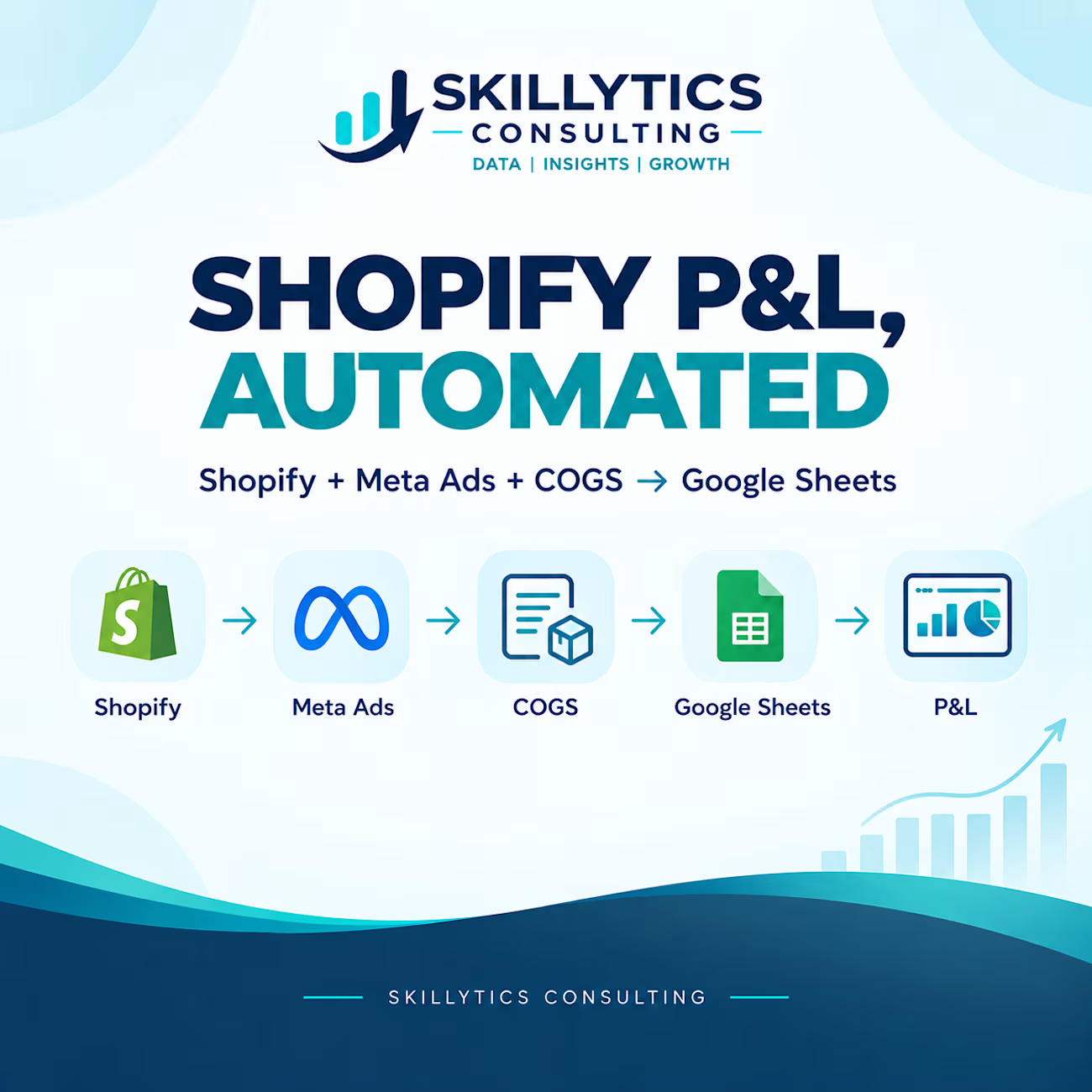
Automated Shopify P&L in Google Sheets
Built a reporting workflow that brings Shopify sales data, Meta Ads spend, and COGS into one automated Google Sheets P&L.
The workflow:
🛍️ Shopify API → Sales, orders, refunds & product data
📣 Meta Ads API → Advertising spend & campaign data
📁 Google Drive → COGS file uploads
⚙️ Google Sheets + Apps Script → Data cleaning, calculations & reporting
The final P&L can track:
• Revenue
• COGS
• Gross Profit & Margin
• Ad Spend
• Net Profit
• Product-level profitability
The goal is simple: reduce manual reporting and give the business a clearer view of actual profitability.
Built by Skillytics Consulting for practical ecommerce analytics and automation.
#Shopify #GoogleSheets #AppsScript #EcommerceAnalytics #PAndL #BusinessAutomation #DataAnalytics



Hi Contra! I’m Daniyal, an SEO specialist working with e-commerce and service businesses.
Lately, I’ve been focusing on a problem I see often: businesses publish more content, but the pages that could bring in customers still have technical issues, weak internal links, or unclear search intent.
My work starts with finding those gaps, then fixing the pages that matter most. I work across technical SEO, content strategy, and Shopify and WordPress sites.
If you’re working on an online store or a service website, what’s your biggest SEO challenge right now? I’d be happy to share a practical suggestion.

Great approach. Fixing the right pages can make a big difference in SEO.

Audit & Optimize Google Ads PPC For Local Business Leads.