The network for creativity
Join 1.25M professional creatives like you
Connect with clients, get discovered, and run your business 100% commission-free
Creatives on Contra have earned over $150M and we are just getting started


The network for creativity
Join 1.25M professional creatives like you
Connect with clients, get discovered, and run your business 100% commission-free
Creatives on Contra have earned over $150M and we are just getting started

Challenges
View all


Related posts


Most interview prep has no feedback loop.
Candidates rehearse alone, then walk into the room without knowing which answers were weak.
That is why we built WithIntro around one rule: every spoken answer gets reviewed before the next question.
In the WithIntro case study, users prepared 75% more efficiently.
The AI feedback was the easy part to demo. The harder work was making practice structured enough to measure.
A good practice system helps candidates:
→ Answer out loud, the way a real interview runs
→ Read back a transcript of every answer
→ Get feedback on each answer while it is still fresh
→ Get the next question based on what was weak
→ Track their progress from one session to the next
Under the hood: voice capture, Whisper transcription, Claude-powered feedback, adaptive learning paths and an analytics dashboard, built on Next.js and Tailwind.
The best practice tool does not only ask questions.
It shows you what to fix before the next one.
At Zenveus, we build the systems behind AI products, so the feature that looks good in a demo keeps working for real users.
#InterviewPrep #EdTech #VoiceAI #AI #SaaS #SoftwareDevelopment #Zenveus

AI Chatbot Development | Intelligent AI Assistants & Business Automation


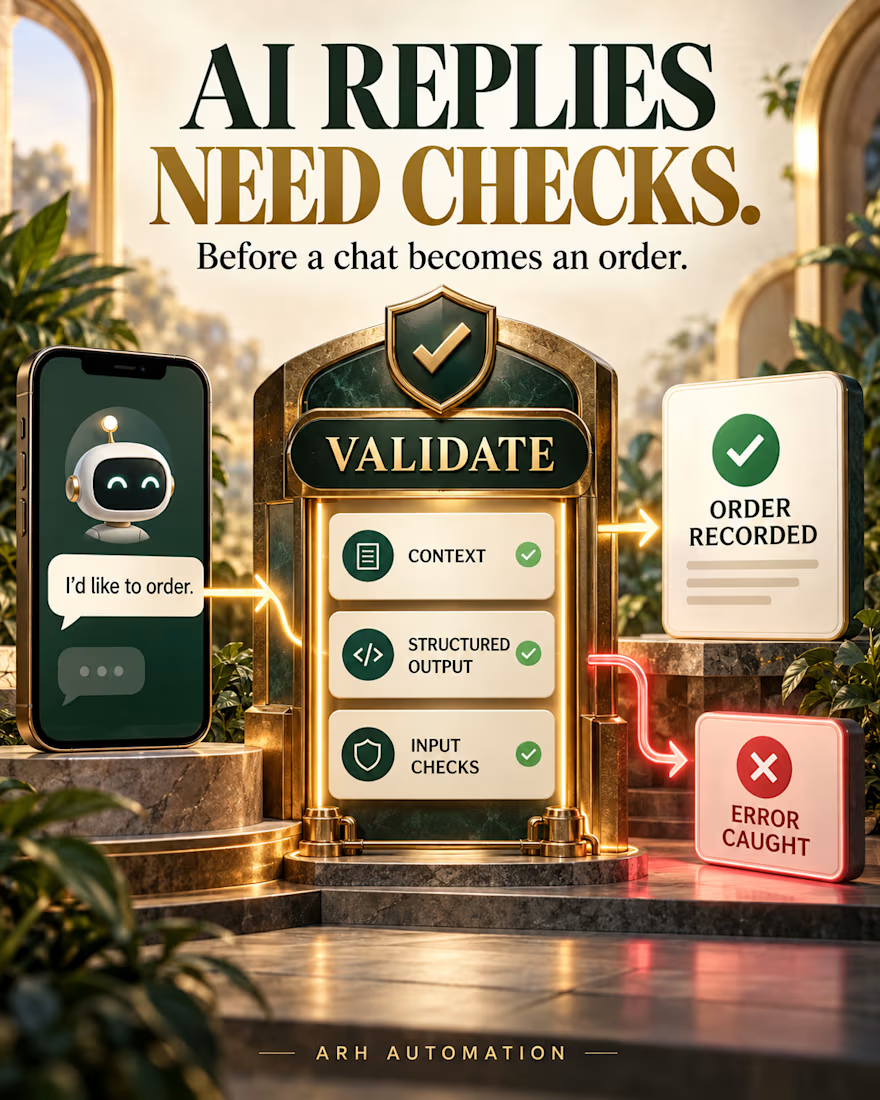
A chatbot can sound helpful and still create a messy order.
When a customer changes a quantity or delivery detail, the real test is whether the system keeps the context, checks the information, and records the right request for the team.
In an 80-hour WhatsApp automation project, I built the conversation flow with structured AI output, input validation, order recording, logging, and error handling. The client rated the completed work 5.0.
That’s the part I care about most: turning a chat into a record people can actually work from, with errors visible when something goes wrong.
If your team takes orders through WhatsApp, what happens between the AI’s reply and the order record?



Order changes mid chat are where most WhatsApp bots fall apart. Did you confirm the changed details back to the customer before recording, or validate silently?