The network for creativity
Join 1.25M professional creatives like you
Connect with clients, get discovered, and run your business 100% commission-free
Creatives on Contra have earned over $150M and we are just getting started
Back to feedPost

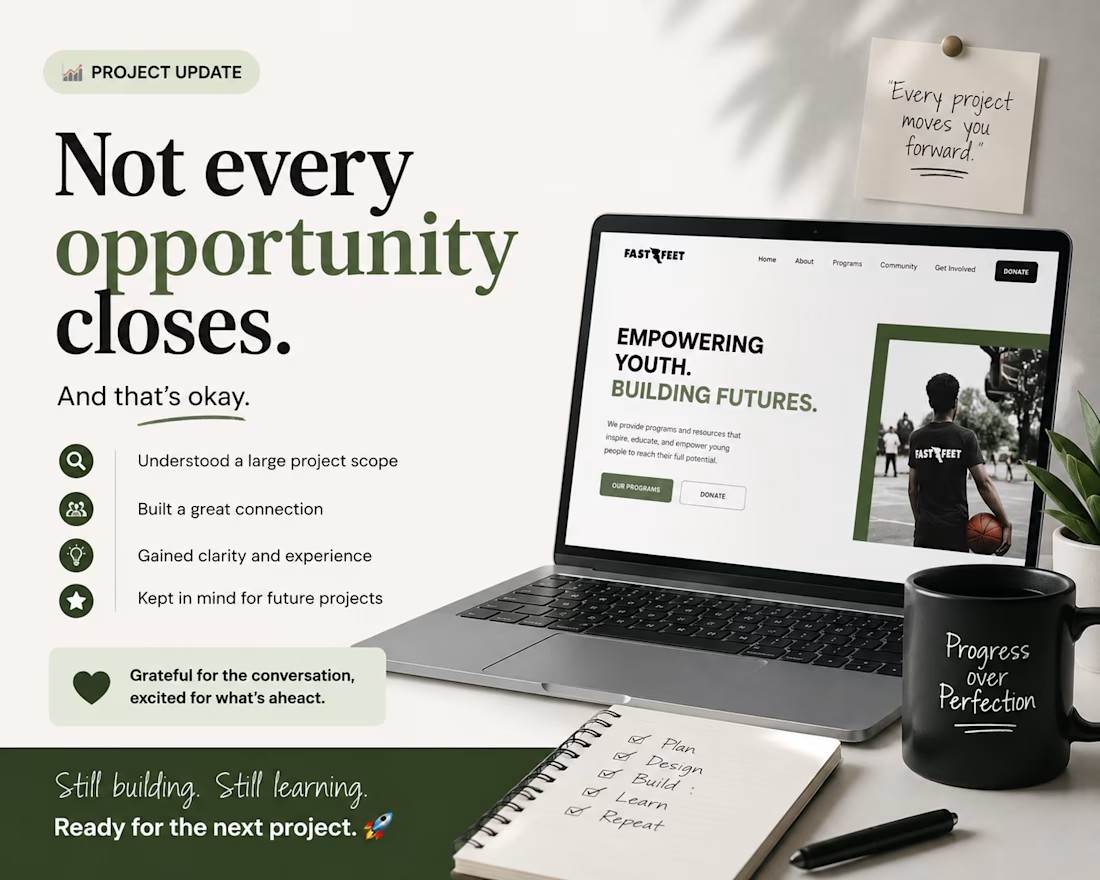
A project doesn’t always have to close to be valuable.
I recently connected with a client looking for a Squarespace developer to turn a detailed Figma design into a fully built website.
After reviewing the project, I realized the scope was much larger than the initial budget. We ultimately couldn’t move forward because of the budget, but the conversation was still valuable.
It reminded me that:
• Understanding the full scope before pricing is important.
• A project can be a great opportunity even if it doesn’t close.
• Building genuine relationships can lead to future opportunities.
• Every client conversation is a chance to learn and improve.
The client even mentioned keeping me on their list for future projects, which I really appreciate.
Still building, still learning, and looking forward to the next project. 🚀


The network for creativity
Join 1.25M professional creatives like you
Connect with clients, get discovered, and run your business 100% commission-free
Creatives on Contra have earned over $150M and we are just getting started







Related posts

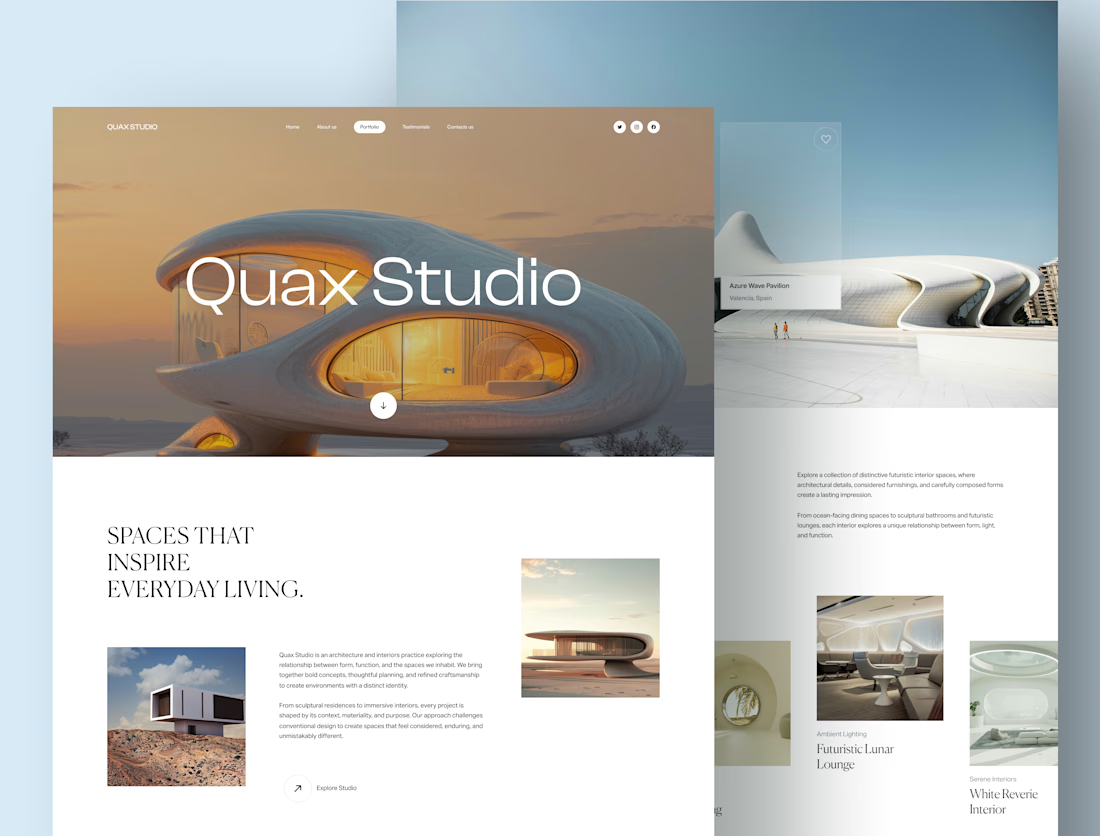
Meet Quax Studio, a stealth-mode architecture and interiors studio based in Australia, specialising in highly modern, futuristic spaces.
The brief was simple: no generic architecture website. The projects had to take centre stage, with minimal copy, a clean white aesthetic, and modern typography that lets the visuals speak for themselves.
So, I built the experience around:
1- Minimal layouts with plenty of breathing room
2- Refined typography and a clean visual hierarchy
3- Project-led storytelling, with less content and more focus on the work
The architectural imagery currently uses visuals from HD images platforms while the studio’s project photography is being finalised.
Would you explore a futuristic architecture studio through a minimal website like this?


Excellent work @gayathri p great balance of colors and visual hierarchy

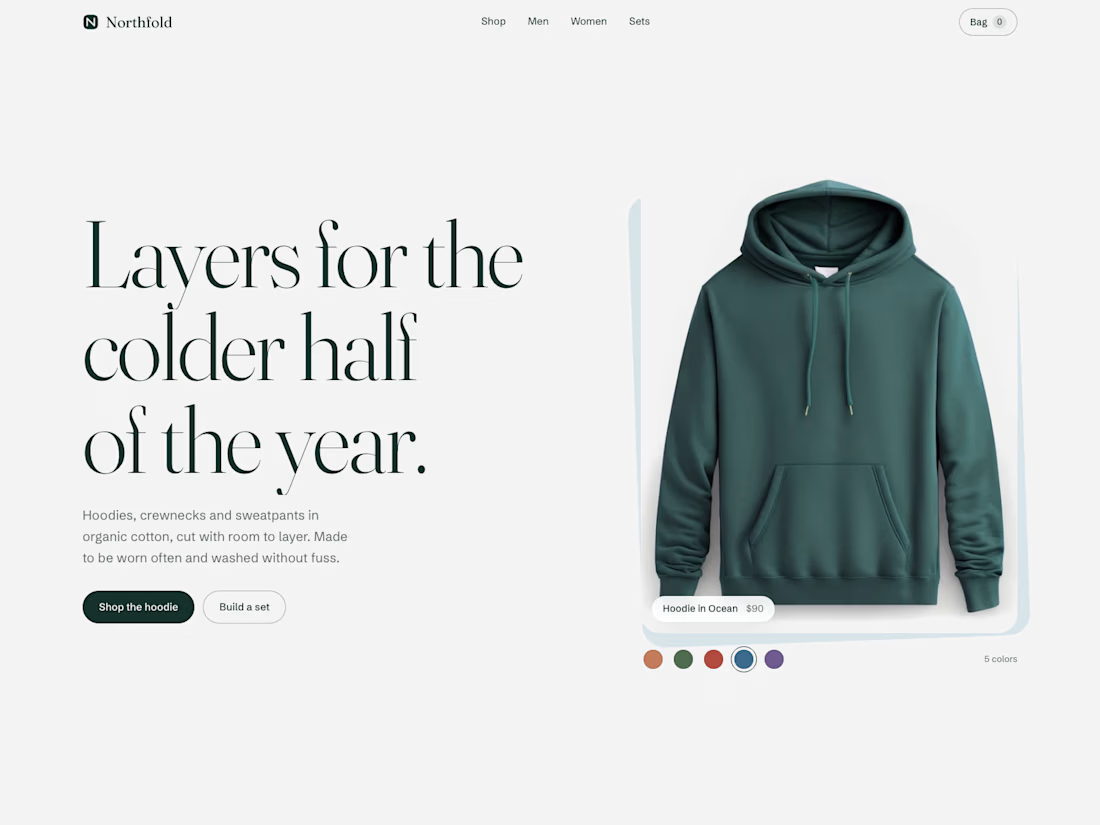
Built a headless Shopify storefront straight from the Storefront API. Next.js handles the routing and rendering, the API feeds in 23 products from Shopify's sample catalog, photos and prices included.
Color swatches swap the product shot and the price on click. Filters sit in the URL, so a filtered collection page is a shareable link. There's a set builder: pick three pieces, 15% off.
The cart is real. Add items, change quantities, close the tab, come back a month later. Still there (30-day cookie). Checkout is a mock, no payment.
Also wrote three Liquid sections for Dawn and ran them through theme-check. Zero issues.
100 on accessibility, best practices and SEO on Lighthouse desktop.


Impressive build. The shareable filters and persistent cart show great attention to the shopping experience.


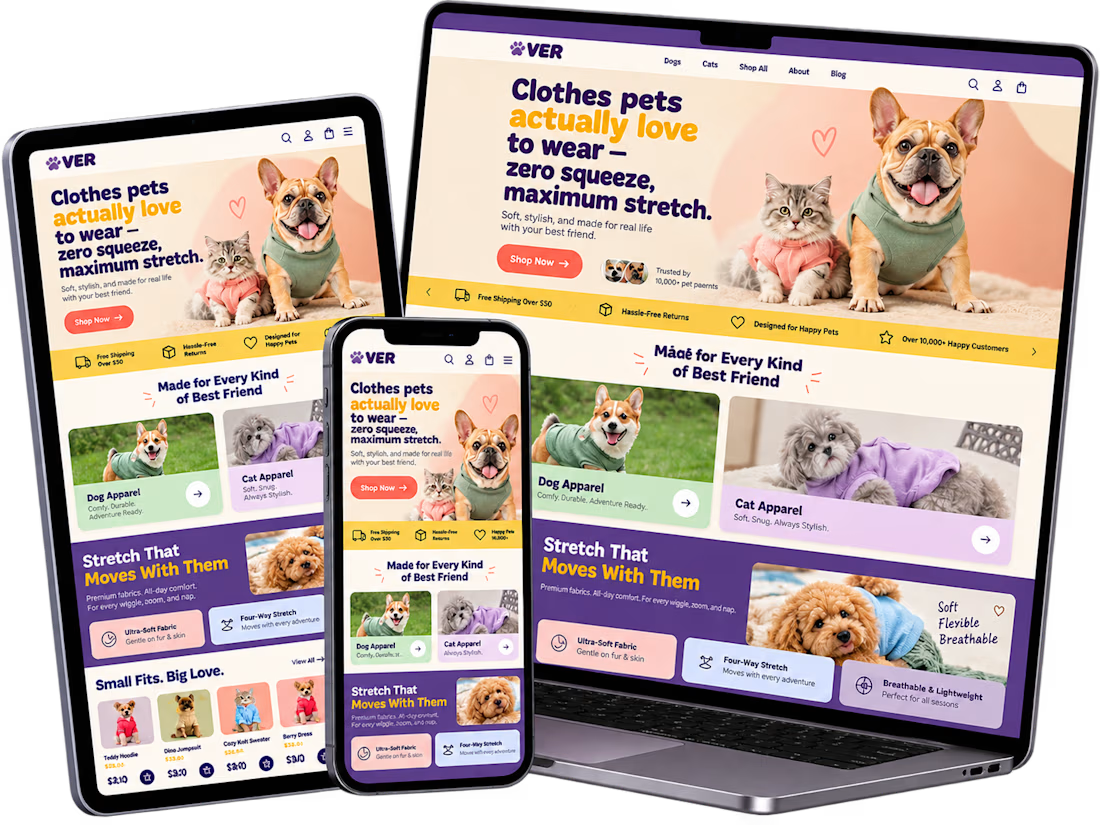
🐾 New Project Showcase — VER Pet Apparel!
Just designed a modern, conversion-focused eCommerce website concept for VER, a pet fashion brand.
The focus? Creating a shopping experience that looks beautiful and makes buying easier.
✨ Interactive hero & engaging visuals
🛍️ Easy shopping for dogs and cats
🎁 Mystery Gift Box promotion
🐶 Product showcases & lifestyle storytelling
📱 Mobile-friendly, CRO-focused UI/UX
Great eCommerce design isn't just about looks. It's about turning visitors into confident buyers.
Designed by WhizwayDigit 🚀
#Shopify #eCommerce #UIUX #CRO #WebDesign #PetFashion