The network for creativity
Join 1.25M professional creatives like you
Connect with clients, get discovered, and run your business 100% commission-free
Creatives on Contra have earned over $150M and we are just getting started
Back to feedPost

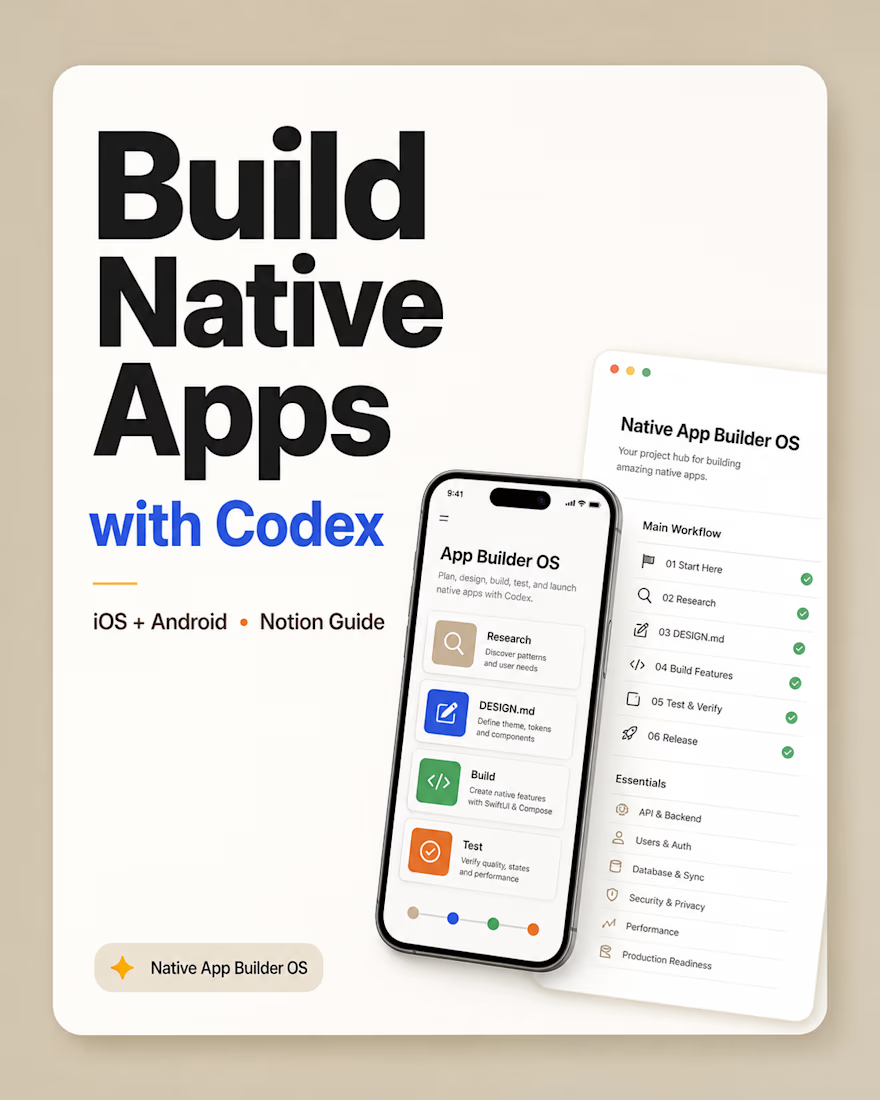
I built Native App Builder OS for Codex, a complete Notion-based system for using Codex Desktop to build native iOS and Android apps from idea to launch.
Most people use AI coding tools with random prompts.
This template gives you a structured workflow instead.
It helps you use Codex Desktop as your main app-building workspace while keeping Xcode and Android Studio for builds, previews, simulators, emulators, logs, and release workflows.
Inside the guide, you’ll find:
App idea to product plan workflow
UX research and Mobbin design-memory process
SwiftUI and Jetpack Compose guidance
DESIGN.md rules for app themes, components, and UI consistency
iPad and Android tablet compatibility rules
GitHub, Xcode, Android Studio, Apple Developer, and Google Play setup
API, auth, database, security, privacy, and sync planning
Testing, performance, production readiness, and release safety workflows
App icon, store screenshot, landing page, and privacy policy guidance
Beginner-friendly Codex prompts for every major step
This is made for founders, indie hackers, designers, students, and beginner developers who want to build real native mobile apps with more structure, less guesswork, and better product thinking.
The goal is simple:
Turn Codex from “a coding chatbot” into a practical mobile app-building operator.
Available now: https://lnkd.in/gWPHBJn4

The network for creativity
Join 1.25M professional creatives like you
Connect with clients, get discovered, and run your business 100% commission-free
Creatives on Contra have earned over $150M and we are just getting started



Related posts

Just published my latest end-to-end project, Quantra.ai.
I took this AI crypto investment platform from a blank canvas to a full working web app, handling both the dark-mode UI/UX design and the React + Node.js full-stack build myself. The goal was to replace cluttered trading screens with clean portfolio charts, instant token swaps, and a built-in AI assistant.
Check out the full case study and motion walkthrough on my profile. Always open for new fintech, AI, and SaaS builds!


Great work taking Quantra.ai from a blank canvas to a full-stack product. Combining clean fintech UI with a built-in AI assistant and shipping both the Figma design and Next.js/React build solo is solid execution.

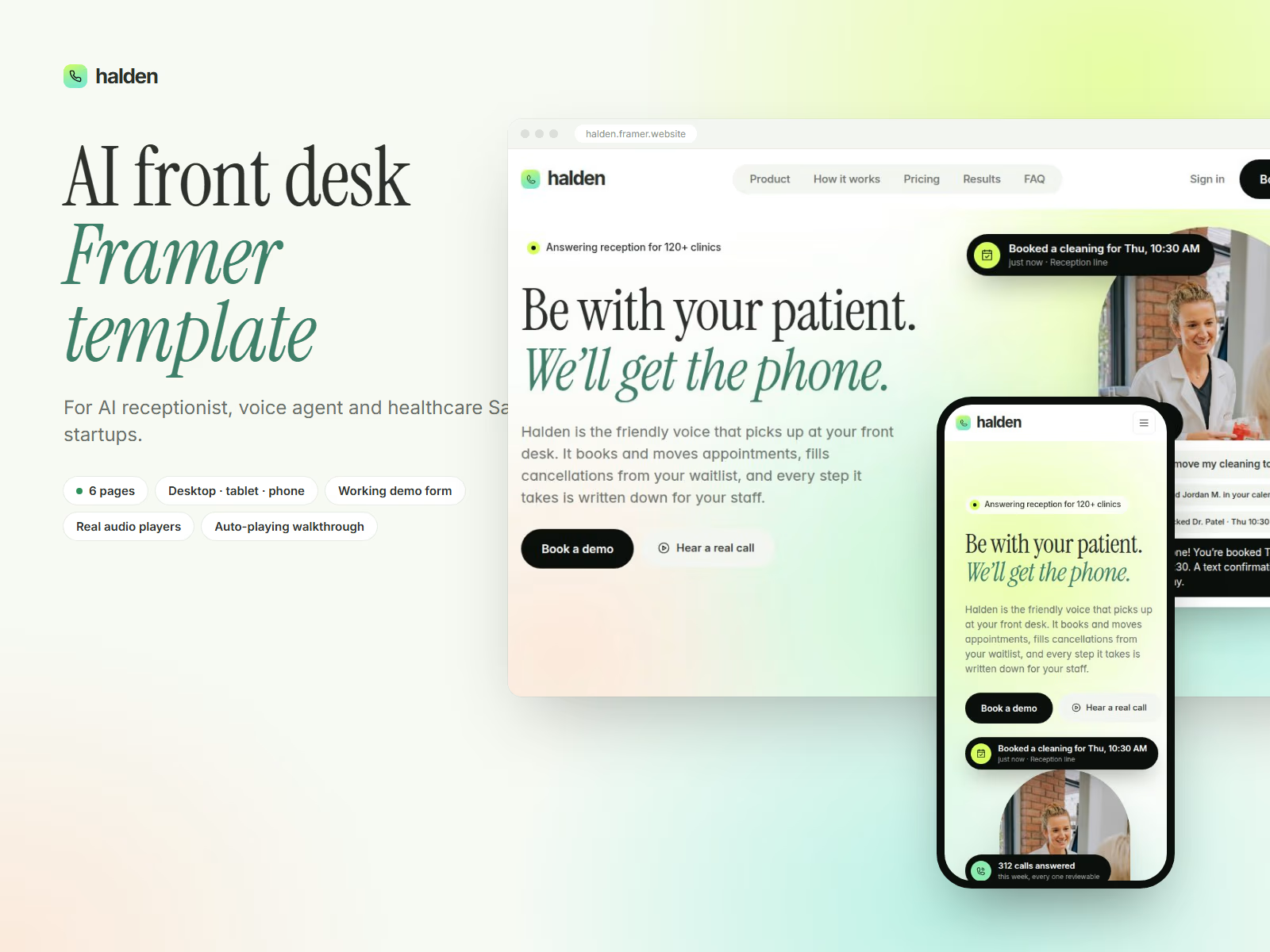
Just launched my first Framer template: Halden, a website for AI receptionist and healthcare SaaS startups. 🩺📞
I wanted it to feel human, not like another dark "AI" site. So it starts with a real moment, a clinician with her patient, and tells the story every clinic knows: the phone rings while you're with a patient.
What's inside:
→ 6 pages: Home, Book a demo, Security, Privacy, Terms and a 404
→ An auto-playing "How it works" walkthrough
→ A demo page with real audio players and a working form
→ Desktop, tablet and phone layouts
→ 17 reusable components and a full style system
Available on my profile as a template, or with customization if you'd like me to set it up for your brand.
Link to my product: Product Link
Would love to hear what you think!


Including a Security page in a template for clinics is a smart touch, since I'd expect that's the page a practice manager checks before booking a demo. Did you structure it around the questions they actually ask, like where call recordings are stored and who can listen to them, so buyers only need to fill in their own answers?

Concept UI/UX design for Tempo, a screen time and focus app. I designed the full onboarding flow: splash, welcome, intro slides, name input, quiz, daily goal di