The network for creativity
Join 1.25M professional creatives like you
Connect with clients, get discovered, and run your business 100% commission-free
Creatives on Contra have earned over $150M and we are just getting started
Back to feedPost


12 Years of ERP Work Taught Me These 3 Data Entry Rules That Save Hours
After 12 years working with SAP, Oracle and Odoo I learned that most data entry errors come from the same 3 mistakes. Rule 1: Always validate before you enter Never copy-paste raw data directly into your ERP. Run a duplicate check and format validation first. This single habit reduces errors by 60%. Rule 2: Standardise your master data first If your vendor names are inconsistent across records your reports will always be wrong. Clean master data = clean reports every time. Rule 3: Build a template for every recurring entry Any data you enter more than once per week deserves a template. I have saved clients 3-4 hours weekly with this alone. Need help cleaning your ERP data or building entry templates? Message me — free consultation available. dataadminpro.com


The network for creativity
Join 1.25M professional creatives like you
Connect with clients, get discovered, and run your business 100% commission-free
Creatives on Contra have earned over $150M and we are just getting started





Related posts

Most Claude Code sessions go wrong in the first message.
Not because the model is weak, but because the starting prompt is vague: “fix this bug” or “add tests.” With nothing else to go on, the model starts editing before it has looked at the repository, and you spend the next ten minutes steering it back.
What changes the outcome is the order of the work. Inspect the repo first. Learn the existing conventions. Plan before editing. Make focused changes, add or update tests, run real commands to verify, then summarize what changed. A prompt that builds that sequence in means you don’t have to remember to ask for it every time.
I put together a set of 2,000 prompts around that workflow, covering areas like debugging, testing, security, architecture, APIs, and cloud. They come as JSON, CSV, and JSONL, so you can browse them, filter them, or feed them into your own scripts.
If you’d rather not start every session from a blank screen, it’s here: https://contra.com/products/5w55SuJ3-claude-code-prompt-vault-2000

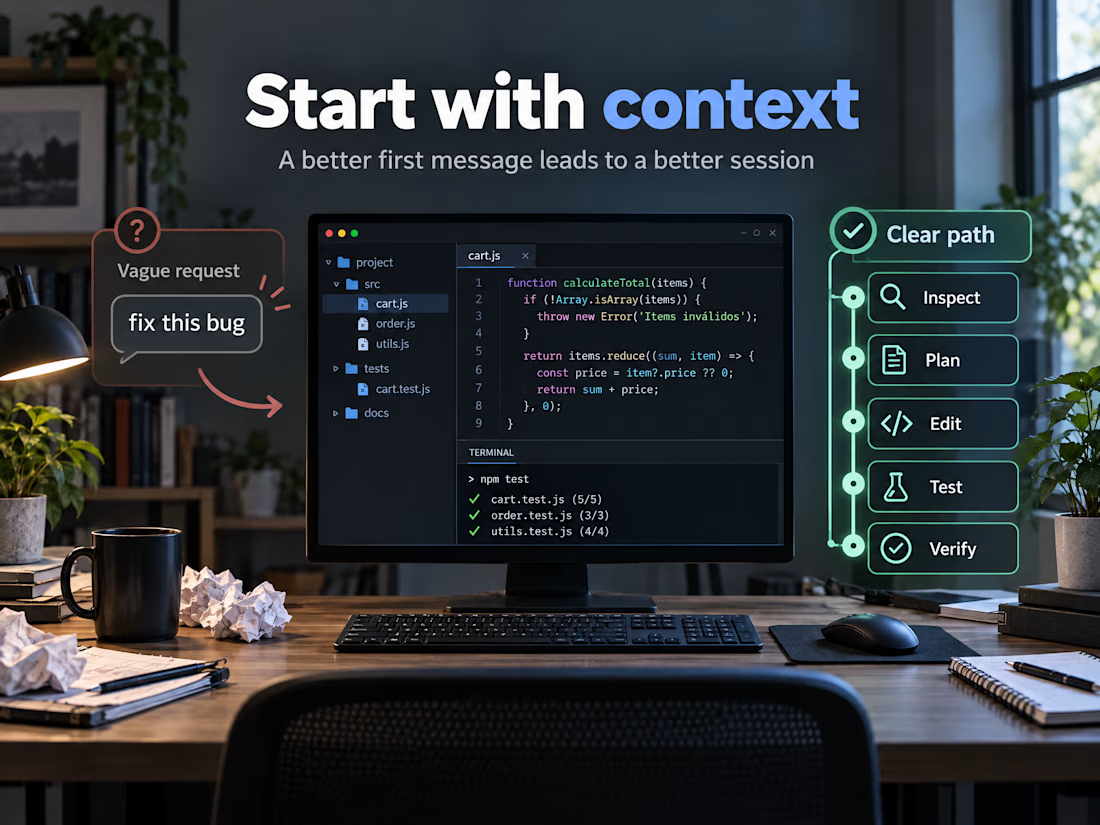

Plan before editing is the step I see skipped most. When I build with Claude, asking it to restate the repo's conventions back to me before any change catches most wrong assumptions early.

94 tests passed. The feature did nothing.
The check was reading its own log entry, so it passed no matter what the code did.
Since then, I don't trust a test until I've watched it fail:
1. Remove the thing the test guards
2. Run it: it should fail
3. Put it back: it should pass
If step 2 passes, the test is useless.
Across ~1,900 tests on a production platform, this is the habit my client valued most. Do you check that your tests can fail?
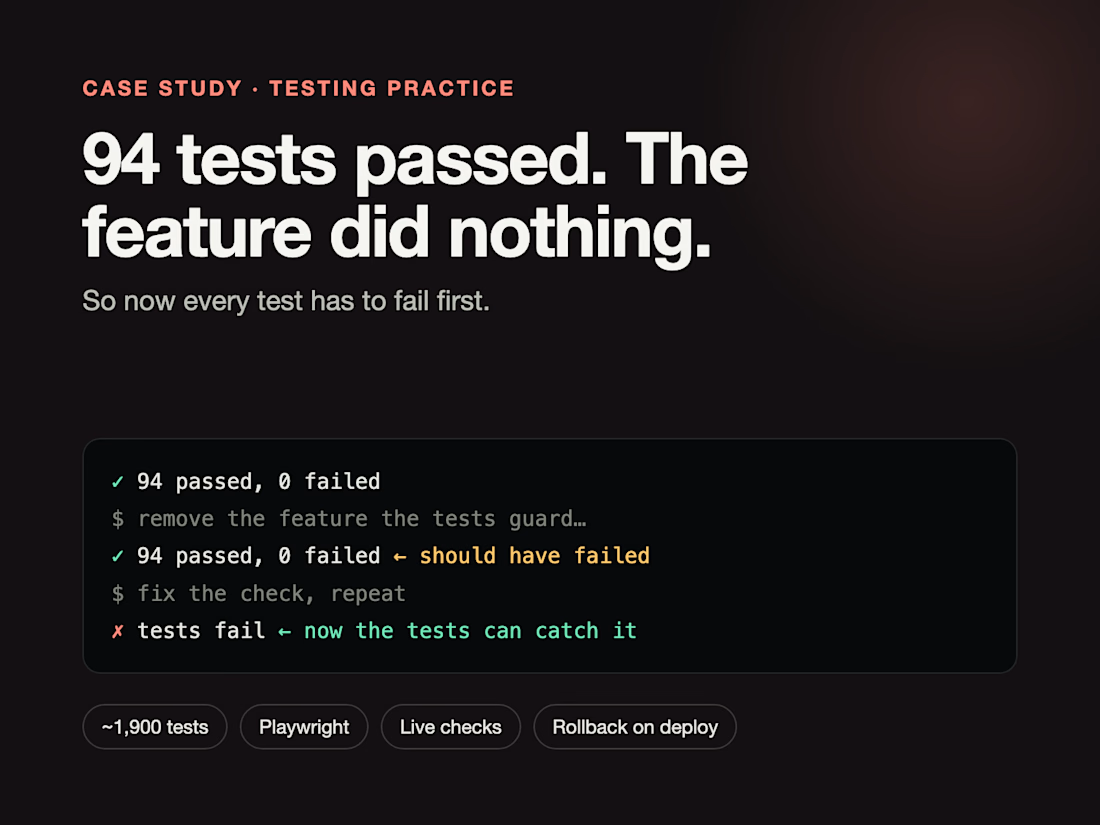
This matters even more when AI writes the tests, because it will happily write a check that agrees with the code. I now ask for a deliberate break first and only trust a test once it goes red.

I've been working on something for a data firm. I've been exploring, new colors, fonts and layout
It's been a process of experimenting, changing my mind, and figuring things out along the way.


Color combinations 🔥