The network for creativity
Join 1.25M professional creatives like you
Connect with clients, get discovered, and run your business 100% commission-free
Creatives on Contra have earned over $150M and we are just getting started
Back to feedPost
A customer asks a question on WhatsApp, gets an answer, and says they want to order.
What happens to that order next?
For a recent client, I built a WhatsApp assistant that answers common questions, captures order details, and updates records so the team can see what came out of each conversation. The useful part is the handoff: the customer can keep talking naturally, while the business gets a record it can act on.
If your team is still copying WhatsApp orders into a sheet or CRM by hand, tell me what happens after a customer says “I’d like to buy.” I’ll point out the first step I’d automate.


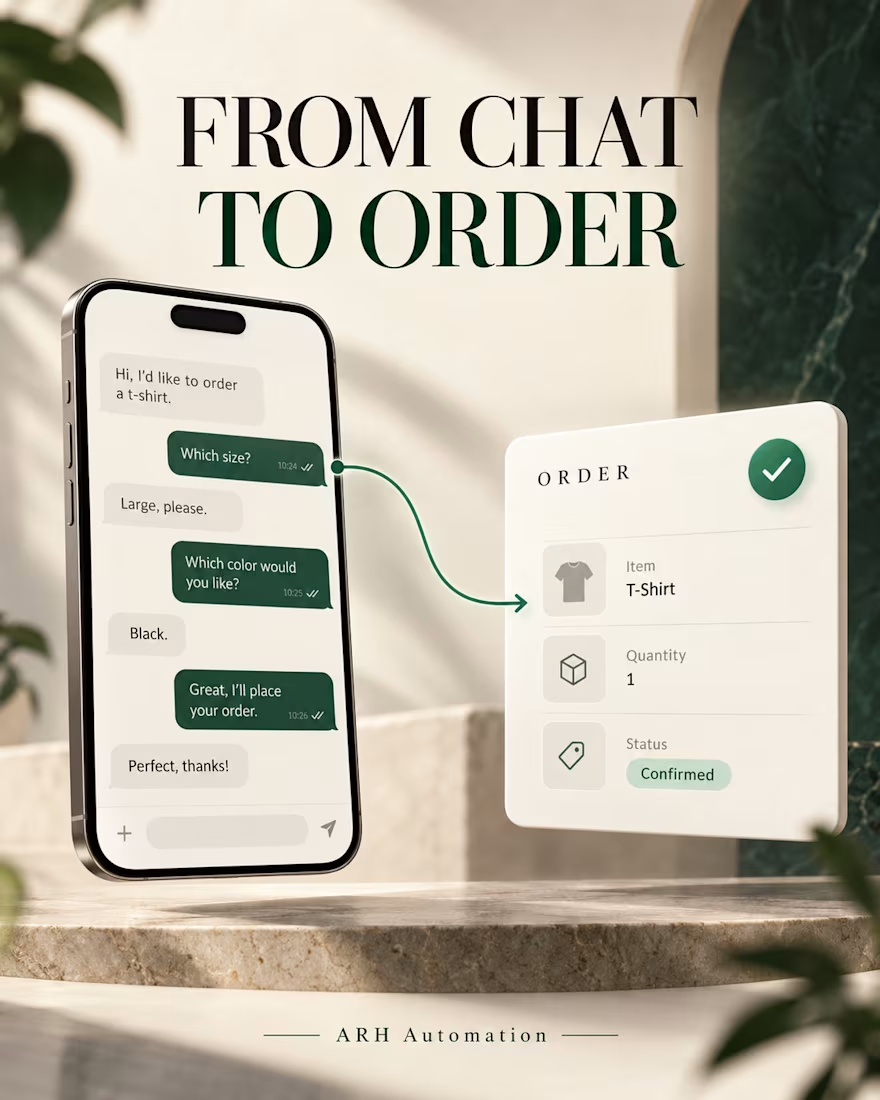

One handoff case I'd test is a customer changing an order after the first record has been prepared.
For example: "two blue desk stands" followed by "make that three, and deliver on Monday instead." The team should see one updated order proposal, the source messages and the...

That’s a fair catch, especially the distinction between captured and confirmed. I used “Confirmed” too early in the visual; stock and delivery still need their own checks.
The revision example is a good test: the second message should update the same order proposal, preserve both...
The network for creativity
Join 1.25M professional creatives like you
Connect with clients, get discovered, and run your business 100% commission-free
Creatives on Contra have earned over $150M and we are just getting started




Related posts

AI WhatsApp Support Assistant (n8n Automation Demo)
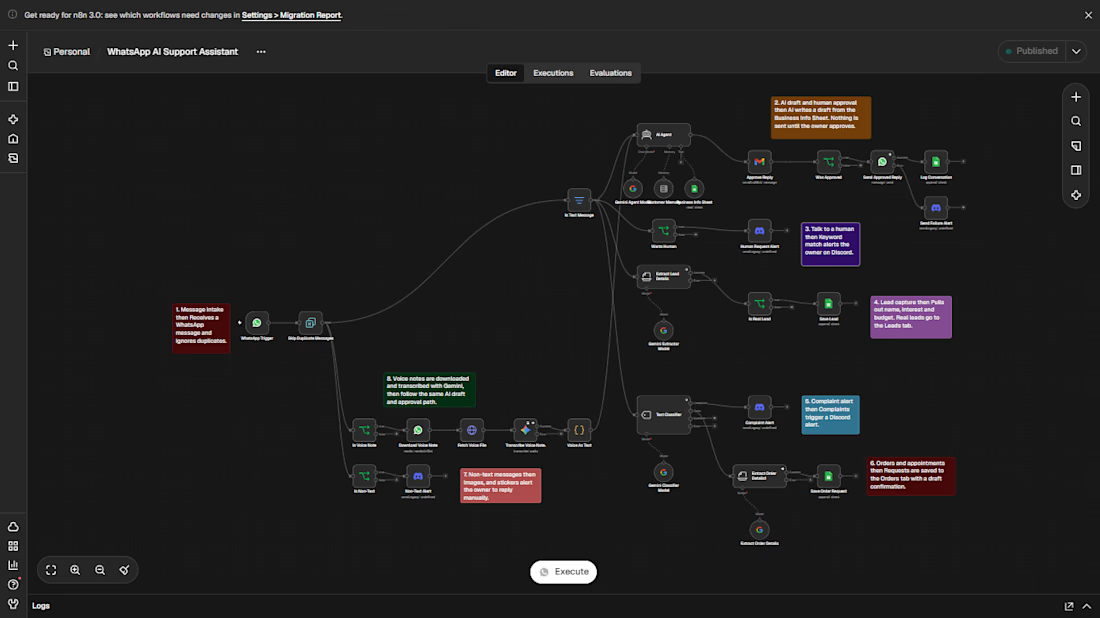
Problem: Small businesses lose customers when WhatsApp messages sit unanswered, leads get buried in chats, and complaints are noticed too late.
What I built: An AI assistant that reads every incoming WhatsApp message and prepares a reply, while the owner stays in control.
Writes a reply draft from the business’s own info sheet. Nothing is sent until the owner approves it by email.
Captures real leads (name, interest, budget) into a Google Sheet.
Saves orders and appointment requests with a draft confirmation.
Alerts the owner on Discord for complaints and “talk to a human” requests.
Transcribes voice notes and handles them like text messages.
Alerts the owner to reply manually when someone sends an image or sticker.
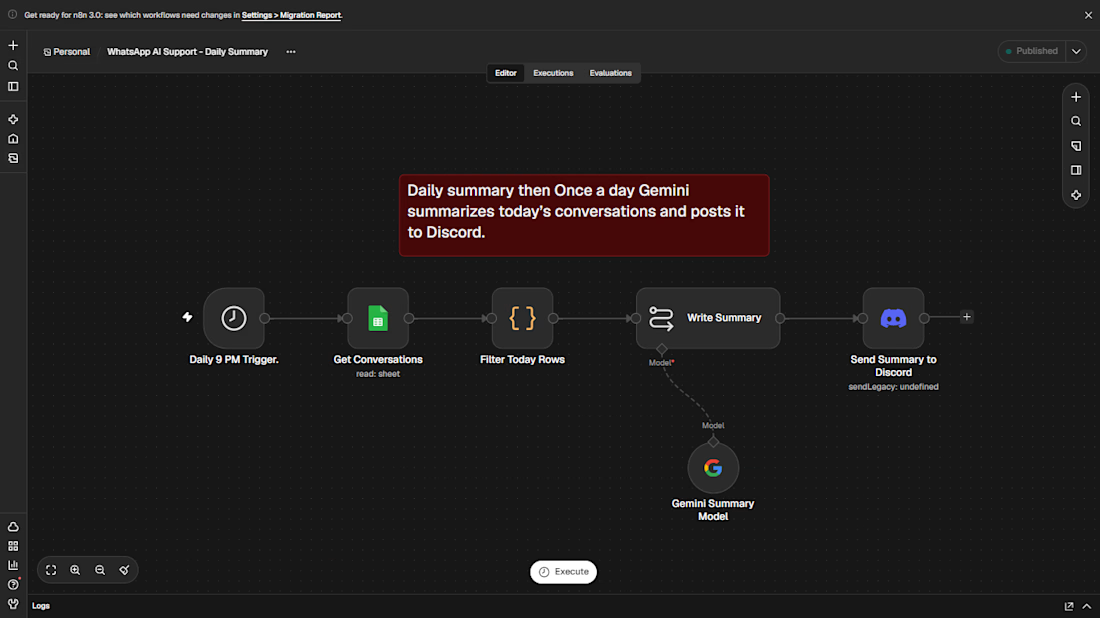
Posts a daily 9 PM summary of the day’s conversations to Discord.
Role: Nisbah Iqbal, AI Automation Builder

Good work .

Building a Voice AI Assistant That Turns Phone Calls Into Thoughtful Follow‑Through
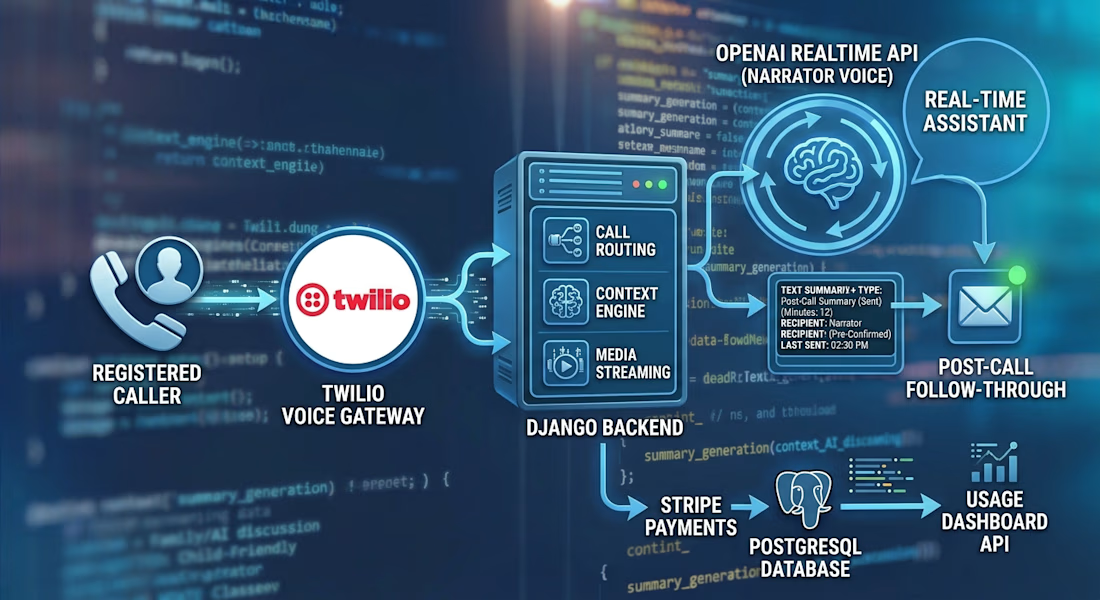
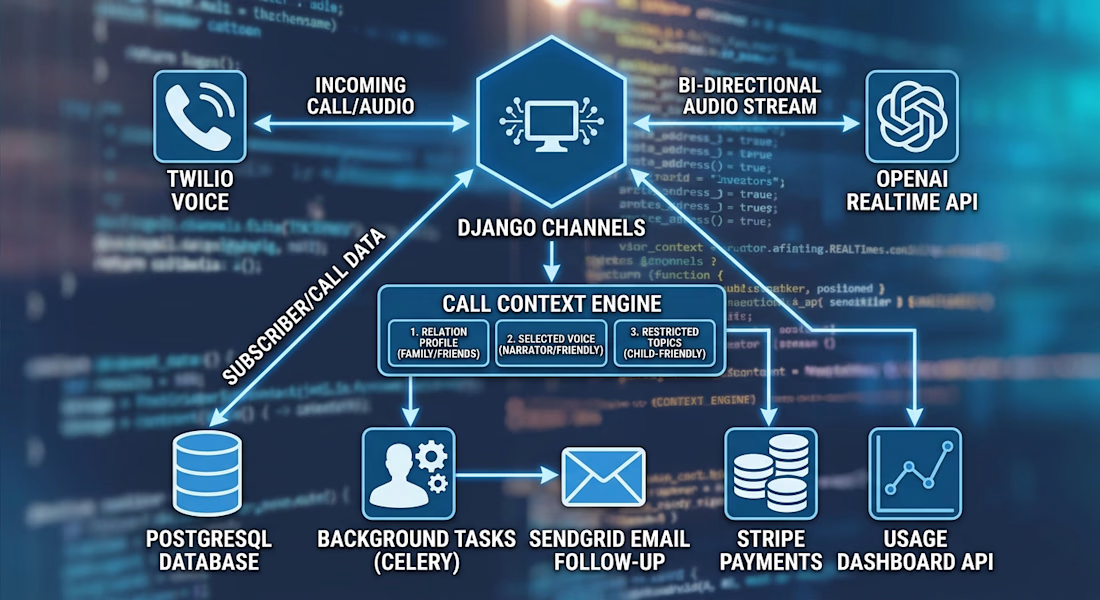
I built a Django backend for a family-focused AI phone assistant. A registered caller connects through Twilio, and Django Channels streams the call to an OpenAI Realtime session for a natural, two-way conversation.
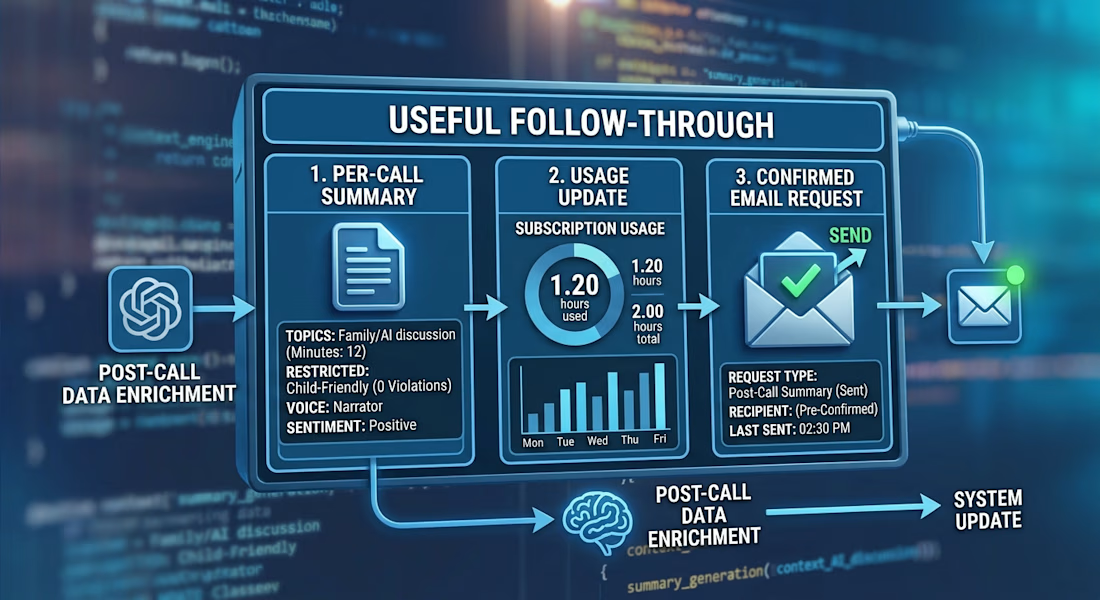
The backend adds caller-specific context, selected voices, subscription minute limits, and interruption handling. After the call, background tasks generate a separate summary. A follow-up email is sent only when requested and the recipient is confirmed.
I also built APIs for managing relations, subscriptions, and dashboard usage data. One of the most interesting parts was connecting the whole lifecycle: incoming call, real-time conversation, usage tracking, and post-call follow-through.
#Django #VoiceAI #RealtimeAI #Twilio #OpenAI #BackendDevelopment




I think we're heading towards a stage where everyone will have their own unique tools and workflows, which they won't even bother sharing or selling, knowing others can simply reverse-engineer and adapt them. Feels like we're entering an era of truly unique creativity.