The network for creativity
Join 1.25M professional creatives like you
Connect with clients, get discovered, and run your business 100% commission-free
Creatives on Contra have earned over $150M and we are just getting started
Back to feedPost
Why do we need Online Reputation Management?
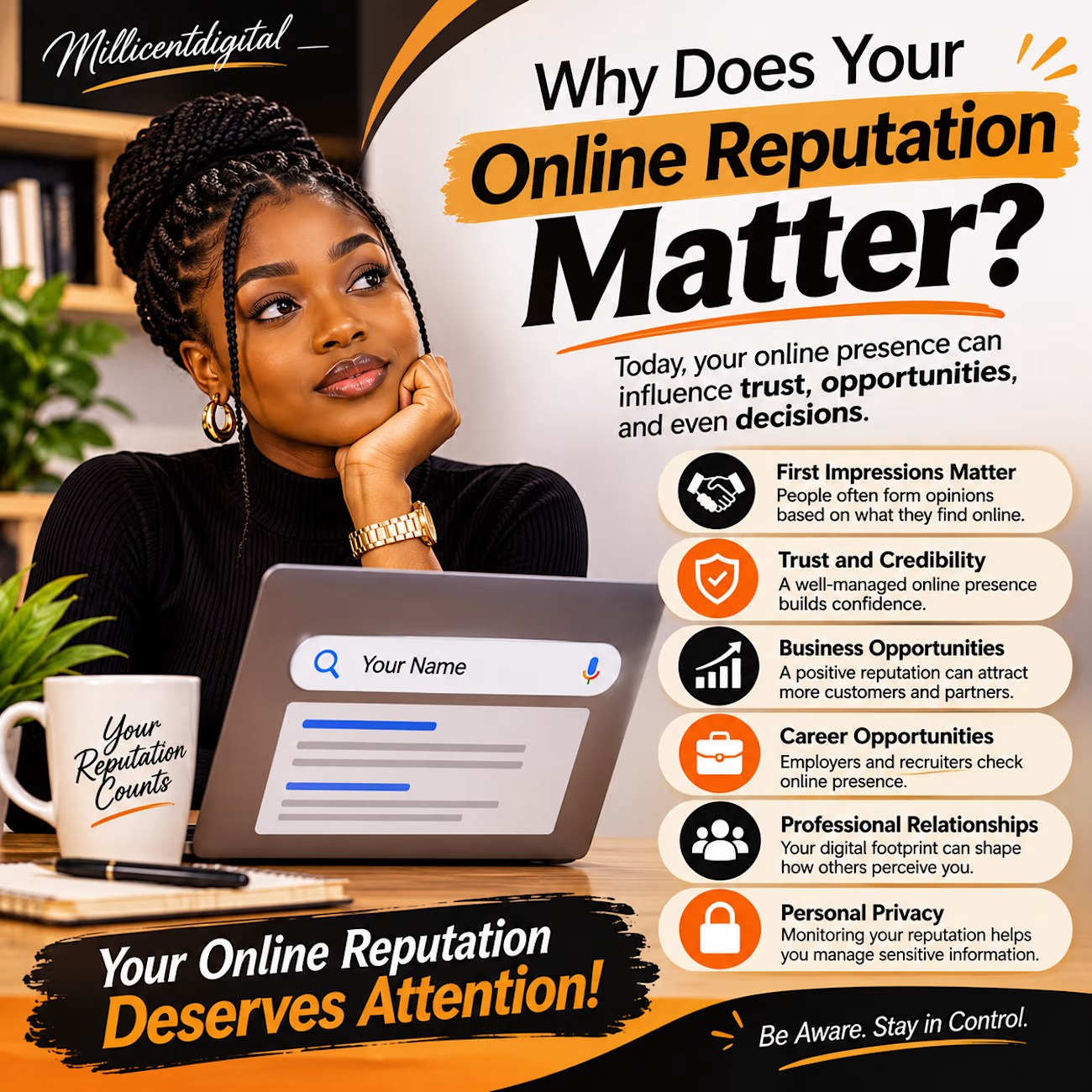
Why Does Your Online Reputation Matter More Than You Think?
Imagine a potential customer, employer, business partner, or investor searching your name online.
What they discover may influence their decision before they ever speak to you.
Today, your online presence can affect your credibility, opportunities, relationships, and professional image.
Here are some reasons Online Reputation Management is important:
🔹 First Impressions Matter: People often form opinions based on what they discover online.
🔹 Trust and Credibility: Accurate information and a well-managed online presence can help establish confidence.
🔹 Business Opportunities: Potential customers may choose another business if they encounter unresolved reputation concerns.
🔹 Career Opportunities: Employers and recruiters may research candidates before making hiring decisions.
🔹 Professional Relationships: Your digital footprint can influence how colleagues, partners, and clients perceive you.
🔹 Personal Privacy: Monitoring your online presence can help you identify exposed personal information and take appropriate action.
You don't need to be famous or own a large company to care about your online reputation.
If people can search for you online, your reputation deserves attention.

The network for creativity
Join 1.25M professional creatives like you
Connect with clients, get discovered, and run your business 100% commission-free
Creatives on Contra have earned over $150M and we are just getting started
Related posts

What Is Online Reputation Management (ORM), and How Does It Actually Work?
Every day, people search for names, businesses, brands, and professionals online.
But have you ever wondered what happens when the information they find doesn't accurately represent the person or business they're searching for?
That's where Online Reputation Management (ORM) comes in.
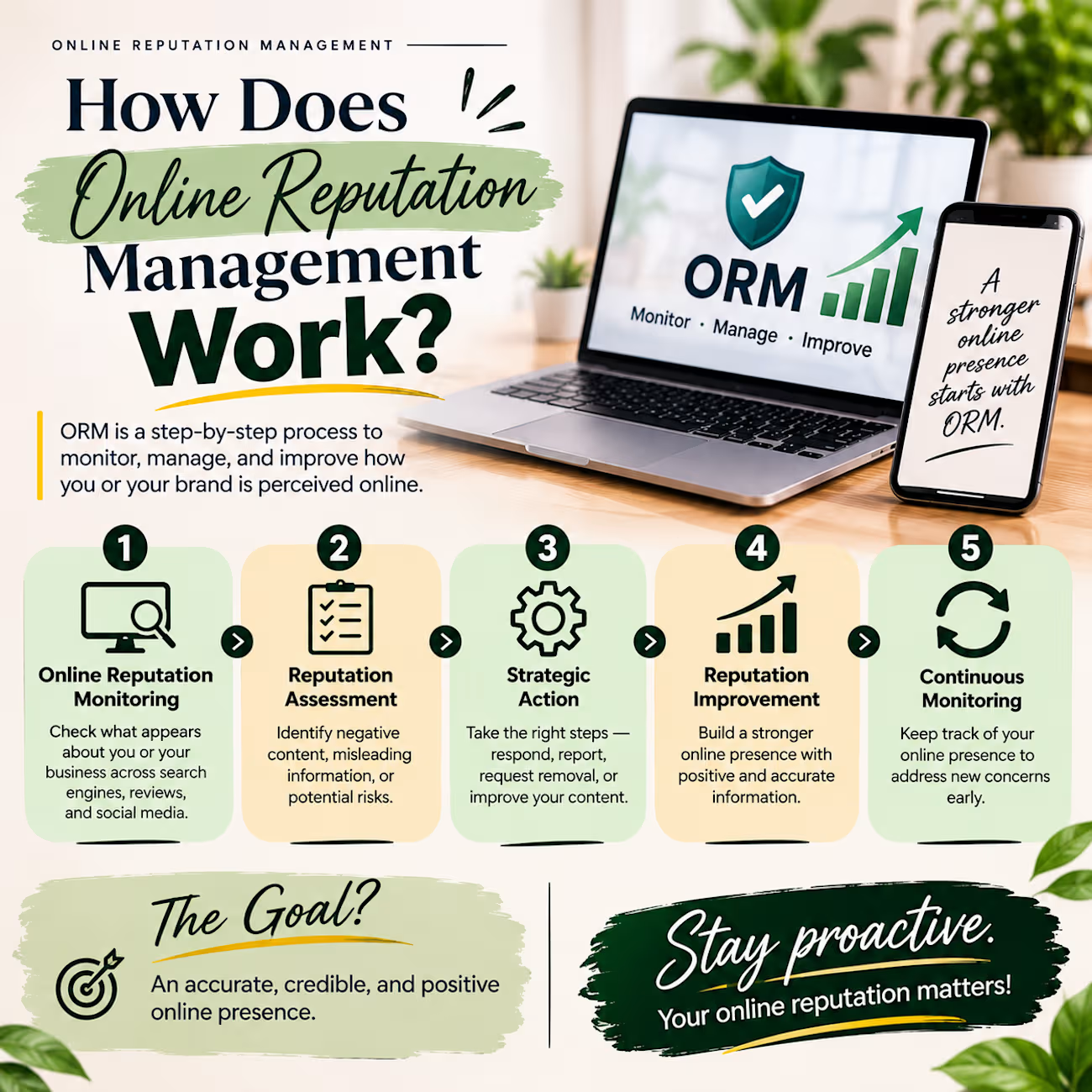
ORM is the process of monitoring, managing, and improving how a person, business, or brand is perceived online.
How Does ORM Work?
It involves several important steps:
1. Online Reputation Monitoring
Checking what appears when people search for your name, business, or brand across search engines, review platforms, social media, and websites.
2. Reputation Assessment
Identifying negative reviews, misleading information, outdated articles, fake content, and other potential reputation concerns.
3. Strategic Action
Determining the appropriate response, whether that means addressing customer feedback, reporting policy-violating content, requesting corrections, or pursuing eligible removal and deindexing options.
4. Reputation Improvement
Building a stronger online presence through accurate information, positive customer experiences, relevant content, and consistent engagement.
5. Continuous Monitoring
Keeping track of your online presence to identify new concerns before they become bigger problems.
The goal isn't to hide every negative comment. It's to ensure that your online presence is accurate, credible, and properly managed.
Online reputation is an asset. Don't wait until a problem affects your opportunities before paying attention to it.


It's NOT the value.
And 9 times out of 10 it's not that your price is too high.
It's these 4 things.
Let me explain -
It all comes down to the 24 milliseconds it takes potential clients to decide whether or not they're even INTERESTED in what you're selling.
That means your website needs to accomplish more on sheer milliseconds than you ever will on a sales call or email funnel.
If clients aren't biting.... Or you KNOW the value is there and hear just crickets... It likely comes down to these 4 things missing when people click your link :
1 - WHO is this for?
If you don't call out the exact people you serve (or if you're trying to be too broad) you've lost interest before they're even paying attention.
2 - WHAT'S IN IT FOR THEM?
Don't start with what makes you qualified or what you're passionate about, start with what they get.
3 - WHY should they trust you?
Your just some rando on the Internet. Why trust you?
4 - HOW to take the next step?
If you're offering too many next steps, you've lost them to confusion. Keep it simple!
Follow for more website strategy to get more clients ✨


Add one line to your website brief. Who owns where the form goes, and who sends a test submission before launch?
Then someone's actually responsible for where every inquiry ends up.