The network for creativity
Join 1.25M professional creatives like you
Connect with clients, get discovered, and run your business 100% commission-free
Creatives on Contra have earned over $150M and we are just getting started
Back to feedPost

The Invisible Resume: Cracking the Code of Global Remote Hiring
Why Silicon Valley and London firms are looking for more than just a skill set in 2026.
The Post-Geography Skillset
Throughout my professional career, I have seen the hiring bar move from "Can you do the job?" to "Can you do the job in total isolation while staying aligned with a team 8,000 miles away?" Global companies have plenty of access to technicians. What they lack are Remote Architects—people who can manage their own output without a manager hovering over their desk.
The 'Three Pillars' of Global Remote Desirability
1. Radical Self-Documentation
In a global office, if it isn't written down, it didn't happen. Companies like GitLab and Zapier hire people who write like developers but think like journalists. They want hires who create a 'paper trail' of their decisions, reducing the need for 2 AM meetings across time zones.
2. Low-Context Communication
High-context cultures rely on body language; low-context cultures rely on clear, explicit words. Global firms want candidates who can explain a complex financial error or a software bug in three bullet points that a colleague in New York can understand instantly upon waking up.
3. Emotional Resilience
Remote work is a marathon of discipline. Hiring managers look for "Proof of Autonomy"—side projects, volunteer work, or past remote experience—that proves you don't need the social 'energy' of an office to produce high-level work.
Real-World Case: The 'Basecamp' Approach
Consider Basecamp (37signals). They famously don't care where you went to school. They care about how you write your cover letter. Why? Because in a remote-first world, your writing is your personality. It is your presence. If you can't persuade someone in a 500-word email, you can't lead a team in a borderless company.
The "Ownership" Mindset
When a London-based fintech hires in Chennai, they are buying back their own time. They don't want to "manage" you; they want you to "own" the outcome. The difference between a contractor and a partner is the ability to say: "I noticed this problem, and I've already drafted three solutions."
Cultural Neutrality
Global companies want "cultural adds," not just "cultural fits." They look for individuals who can adapt to a global standard of professionalism while bringing local market insights that the HQ might be blind to.
Conclusion: Writing the Future of HR
As a strategist who has spent recent years ghostwriting for the architects of these global teams, I understand that the "Job Description" is only half the story. The other half is the invisible set of soft skills that make remote operations possible. My work focuses on articulating these values to help companies attract the top 1% of global talent.
The network for creativity
Join 1.25M professional creatives like you
Connect with clients, get discovered, and run your business 100% commission-free
Creatives on Contra have earned over $150M and we are just getting started
Related posts

New Service: AI Job Application Agent, 8 Platforms, 24/7
I built a fully automated AI agent that handles your entire job search across LinkedIn, Indeed, Greenhouse, Lever, Ashby, Workable, USAJobs, and Wellfound simultaneously, around the clock.
It doesn't blast generic applications. Every submission is individually scored for fit and tailored to the actual job posting using your real background.
Ideal for professionals actively job hunting who want quality applications at scale without spending hours a day doing it manually.
Three tiers available: 1 platforms / 3 platforms / all platforms full custom setup with 90-day runtime.
Available now on Fiverr or message me directly to discuss your setup.
https://www.fiverr.com/s/AymwqkP

When does a passion for coding evolve into a true studio culture?
It happens when you move beyond simply delivering a design and start building the structural, financial, and client-experience foundations of a professional firm.
I don't believe in operating as just another 'freelancer'; I believe in building with the exactness and vision of a digital architecture firm.
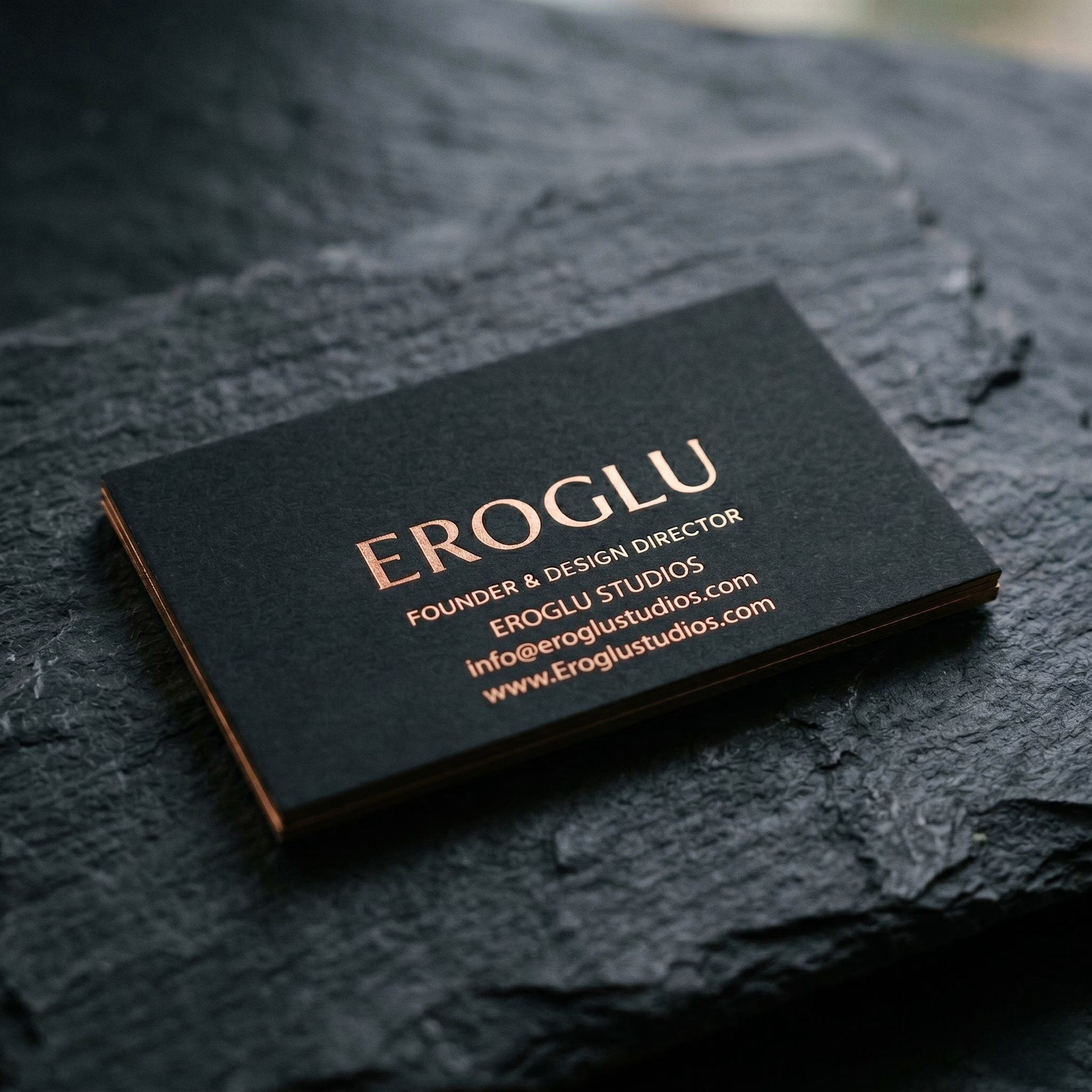

This shows a high level of skill and attention to detail. It’s not something most people can pull off this way. What key principle or technique do you think made the biggest impact here?
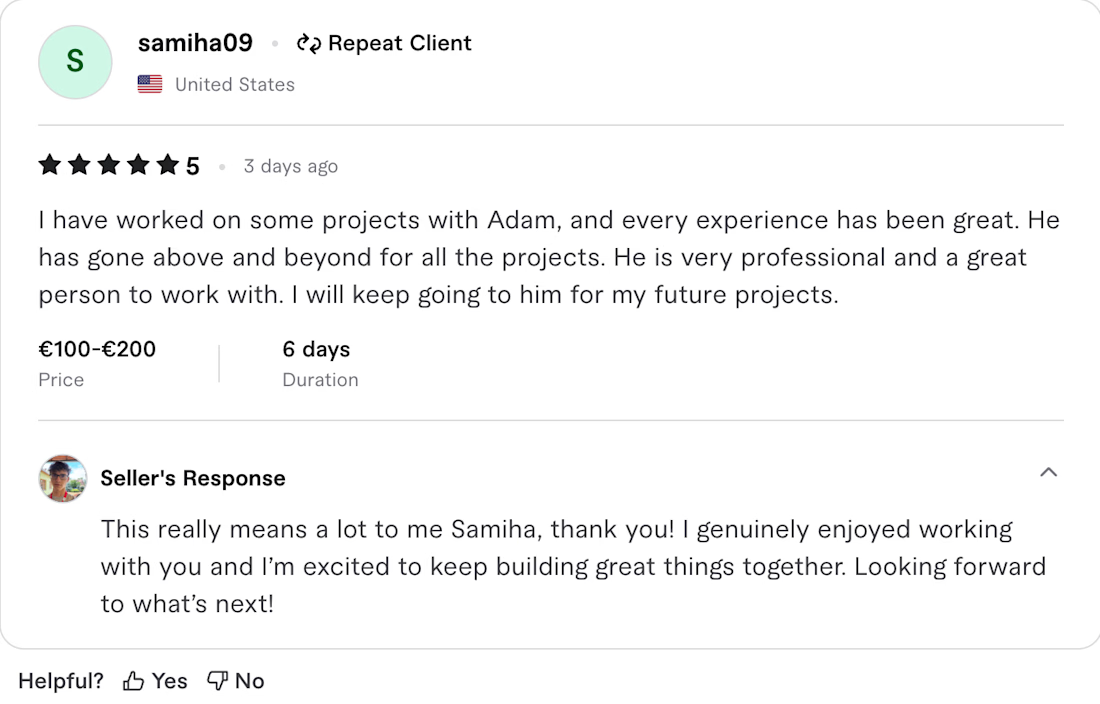
⭐ Fresh 5-star review, and a repeat client. Here's what they said:
"I have worked on some projects with Adam, and every experience has been great. He has gone above and beyond for all the projects." - samiha09, United States 🇺🇸
That's what I show up for every time.
If your job search is stalling, too many applications, too few callbacks. I build you a complete AI-powered system:
ATS-friendly resume tailored to your industry
LinkedIn profile that gets recruiters to reach out to YOU
Personalized job search strategy so you stop applying blindly
Cover letter template that doesn't sound like everyone else's
📅 Typical delivery: 6 days
💶 Starting from €100
📌 Also on Fiverr → https://www.fiverr.com/s/P2pyYrL
DM me and let's get your job search moving. 🚀



















Trending

Runway
AI video generation is exploding. What are you dreaming up in Runway?

Contra University
Learn from expert creatives how to earn more using next-gen AI tools.
creativeaiflow
Creative AI workflows are evolving. What tools do you use, and what are their strengths and weaknesses?
portfolioreview
The best portfolios tell a story, not just show a grid. Share yours for feedback.
freelancerlife
Freelancer life is wins, pivots, and everything in between. What’s yours right now?