The network for creativity
Join 1.25M professional creatives like you
Connect with clients, get discovered, and run your business 100% commission-free
Creatives on Contra have earned over $150M and we are just getting started
Back to feedPost

🚀 New Service: Strapi CMS API + React / Next.js / Remix Blog, SEO & Hosting Setup
If you want a modern blog or content website without using WordPress, I can help you build a clean, scalable, and SEO-friendly setup using Strapi CMS with a React, Next.js, or Remix frontend.
This service is ideal for founders, SaaS teams, agencies, creators, and businesses that need a custom blog, marketing website, resource library, case-study section, documentation hub, or CMS-powered content platform.
What’s included:
✅ Strapi CMS setup
✅ Blog posts, pages, categories, tags, and authors
✅ Media library setup
✅ SEO metadata fields
✅ Meta title and description
✅ Canonical URLs
✅ Open Graph and Twitter/X card tags
✅ Dynamic sitemap.xml
✅ robots.txt setup
✅ React / Next.js / Remix frontend integration
✅ Blog listing and detail pages
✅ Category, tag, author, resource, or case-study pages
✅ Responsive UI
✅ Deployment and hosting setup
✅ Domain + SSL configuration support
✅ Optional Google/GitHub authentication
✅ 1 year basic support for deployment-related help and minor fixes
Why Strapi?
Strapi is a flexible headless CMS that gives your team a clean admin panel to manage content while keeping the frontend fast, modern, and fully customizable. It is a strong WordPress alternative for teams that want API-first content management and a better developer experience.
Best for:
SaaS websites
Founder blogs
Agency websites
Resource libraries
Documentation sites
Case-study sections
SEO-focused blogs
CMS-powered marketing pages
Private content portals
Recommended stack:
Strapi CMS + Next.js / Remix / React + PostgreSQL + Vercel / Render / Railway / VPS deployment.
Starting package: $1,299 fixed price
Advanced setup with Google/GitHub auth, private pages, custom collections, advanced SEO, and CMS workflows available as a premium package.
Service: Strapi CMS API + React / Next.js / Remix Blog, SEO & Hosting Setup
https://contra.com/s/ObM7YvrX-strapi-cms-api-react-remix-nextjs-blog-and-seo-and-hosting?r=the_codebook_inc_lbrbv0f5

contra.com
Strapi CMS API + React / Remix / Next.js Blog & SEO & Hosting by Narendra Maurya
Read more about Strapi CMS API + React / Remix / Next.js Blog & SEO & Hosting by Narendra Maurya on Contra.
The network for creativity
Join 1.25M professional creatives like you
Connect with clients, get discovered, and run your business 100% commission-free
Creatives on Contra have earned over $150M and we are just getting started





Related posts

Pawline: booking built around the van, for mobile pet groomers
Pawline is a booking system for a small mobile pet grooming business: one van, two groomers, three Austin zones.
Most booking tools treat a mobile groomer like a salon. The real problem is logistics: travel fees by zone, visits with several pets that take different amounts of time, and one van that can't be double-booked.
What it does:
🐾 ZIP check with instant zone travel fees
🐾 Live pricing and visit length for up to 4 pets, including add-ons and setup time
🐾 Only shows time slots the van can actually fit, and respects the owner's blocked time
🐾 Private links so customers can reschedule or cancel without an account
🐾 Owner dashboard with a daily van timeline
🐾 Public demo mode with fictional bookings and hidden customer details
Built for real use: owner-only data access, leaked-password protection, and full end-to-end testing on desktop and mobile.
Try the owner demo: Owner → "Try the demo dashboard"
Live: https://pawline-grooming-app.lovable.app


Designing around travel zones instead of a salon schedule is the right call. The demo mode is a nice touch for people testing it.

Website redesign complete 🚀
Can’t wait to share the full site. Until then, here’s my personal favorite interaction from the project.
Industry: Data / Crypto


Really clean design.

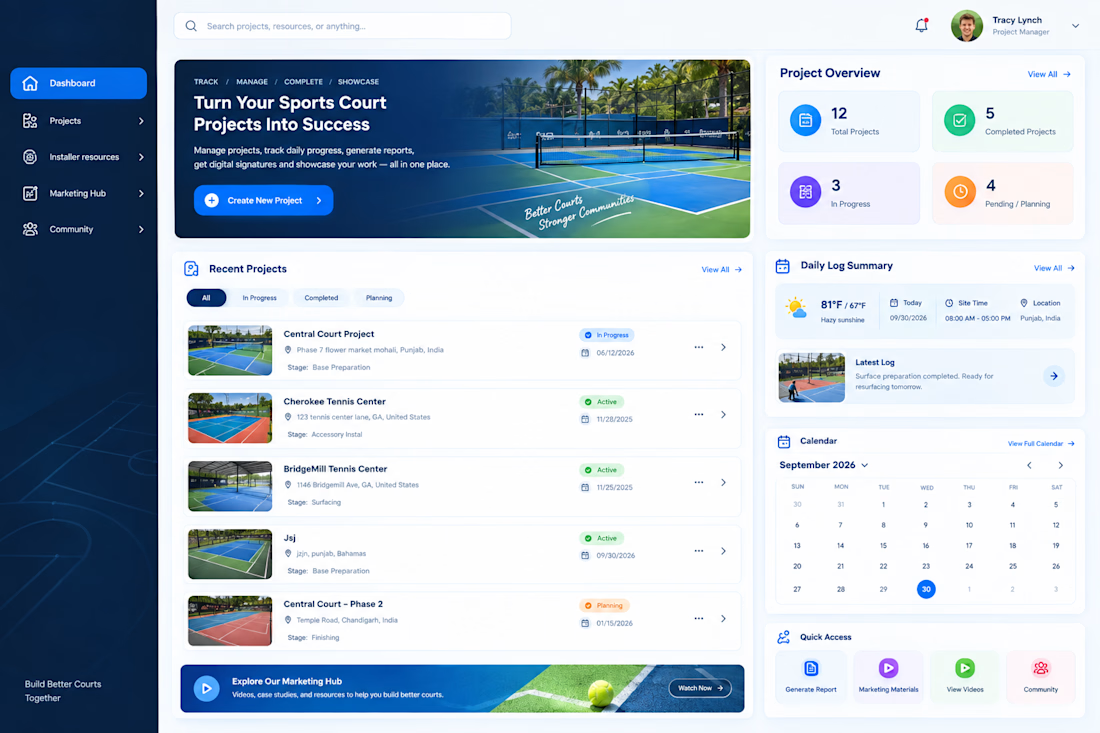
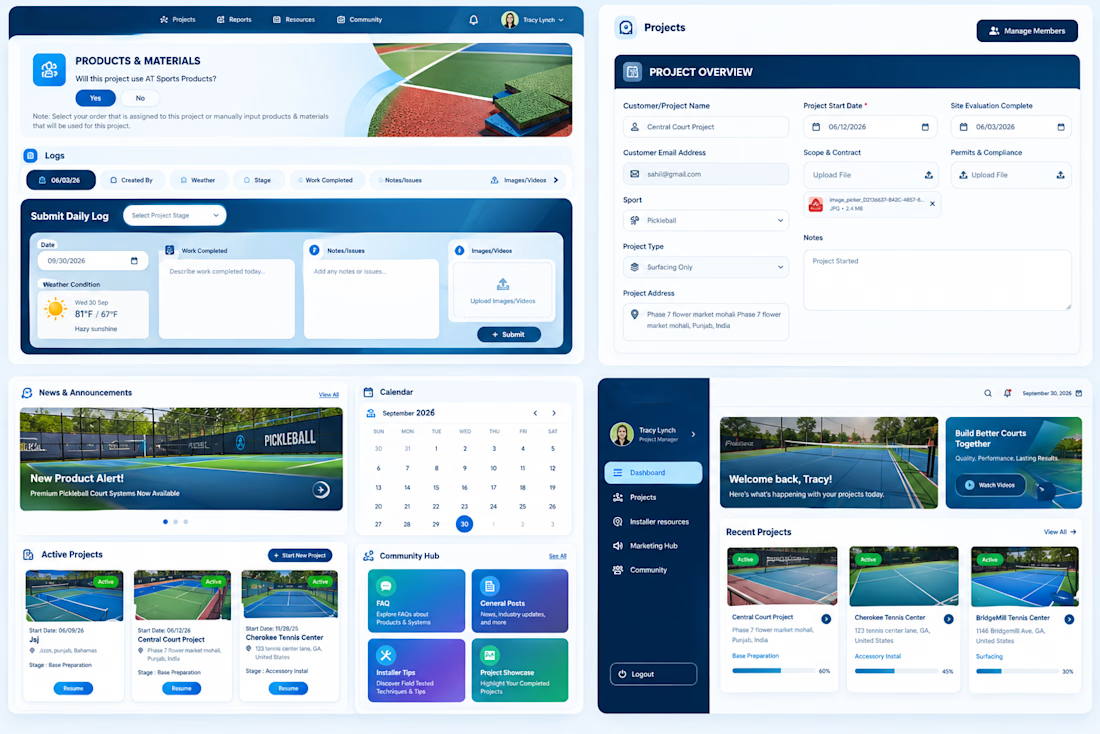
Sports Construction Project Management Platform
Excited to showcase a project I developed specifically for sports court construction professionals.
This platform simplifies construction workflows by bringing project management, daily site tracking, documentation, and project showcasing together in one place.
✨ Key Features:
Project and task management
Daily logs with images, weather, and work details
Automated project report generation
Digital signatures and warranty documentation
Completed project showcases with likes and comments
Marketing materials and video resources
My goal: To simplify construction workflows through a centralized digital platform.
#SaaS #WebDevelopment #ProjectManagement #ConstructionTech #ProductDevelopment #UIUX #ContraPortfolio