The network for creativity
Join 1.25M professional creatives like you
Connect with clients, get discovered, and run your business 100% commission-free
Creatives on Contra have earned over $150M and we are just getting started
Back to feedPost

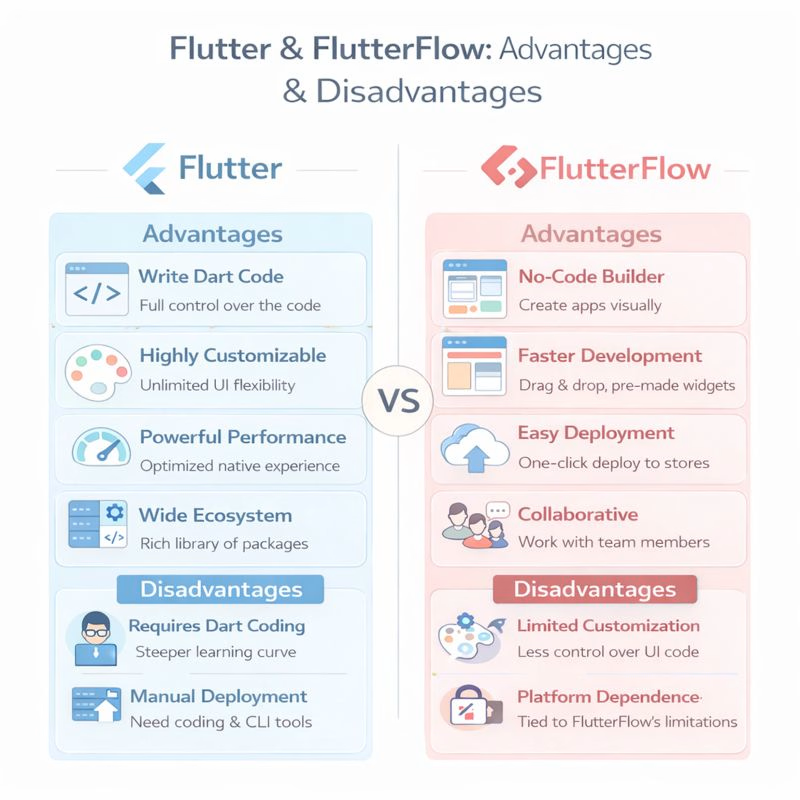
𝗙𝗹𝘂𝘁𝘁𝗲𝗿 𝘃𝘀 𝗙𝗹𝘂𝘁𝘁𝗲𝗿𝗙𝗹𝗼𝘄
𝗧𝗵𝗲 𝗰𝗵𝗼𝗶𝗰𝗲 𝘁𝗵𝗮𝘁 𝘀𝗵𝗮𝗽𝗲𝘀 𝗵𝗼𝘄 𝘆𝗼𝘂𝗿 𝗮𝗽𝗽 𝗴𝗿𝗼𝘄𝘀
Most apps succeed or struggle based on one early decision.
The tech you pick early shapes how your app grows.
𝗙𝗹𝘂𝘁𝘁𝗲𝗿
• Custom UI with full flexibility
• Strong performance for growing products
• Built for long-term scale
• Complete control over the code
Great fit for products built to last.
𝗙𝗹𝘂𝘁𝘁𝗲𝗿𝗙𝗹𝗼𝘄
• Faster builds with visual development
• MVPs ready in weeks
• Easy way to test ideas early
Great fit when speed leads the way.
𝗧𝗵𝗲 𝘀𝗺𝗮𝗿𝘁 𝗮𝗽𝗽𝗿𝗼𝗮𝗰𝗵
Validate fast. Build with intent. Scale with confidence.
Control or speed
Which one do you prefer?
The network for creativity
Join 1.25M professional creatives like you
Connect with clients, get discovered, and run your business 100% commission-free
Creatives on Contra have earned over $150M and we are just getting started



Related posts

Sometimes, the biggest opportunity is hidden within an existing user flow.
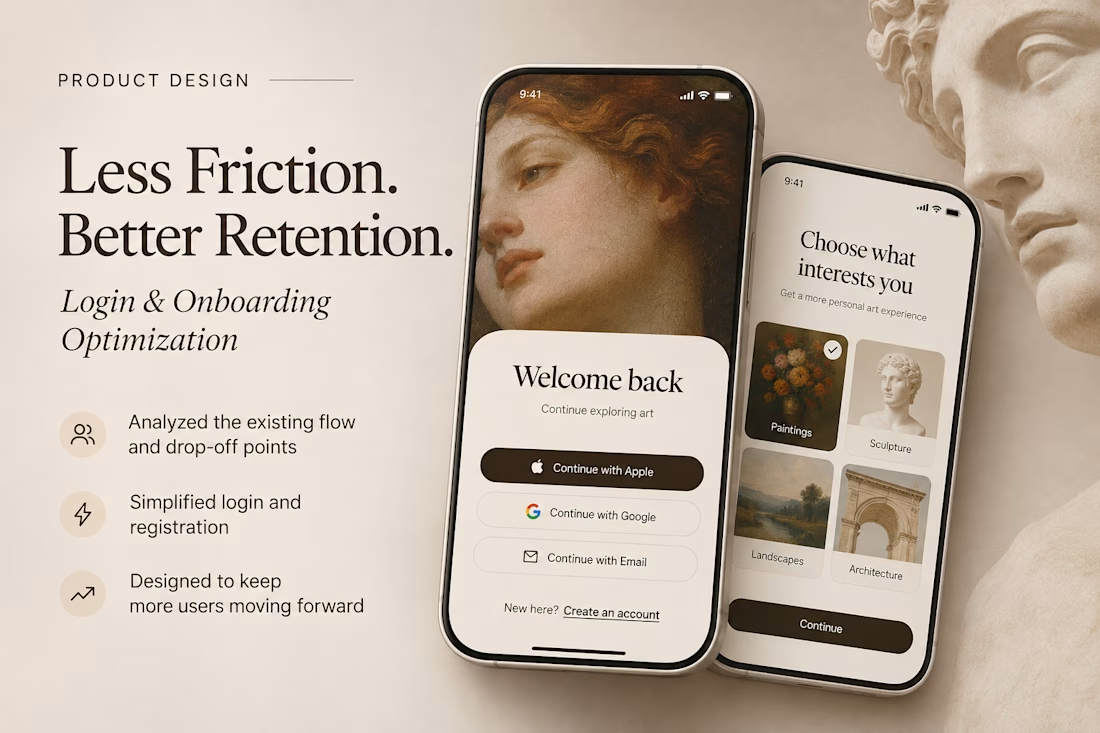
When I joined this project, the application was already live. My main challenge was to improve the login experience, reduce unnecessary friction, and help more users continue their journey.
My approach focused on:
• Analyzing the existing authentication flow.
• Identifying potential user drop-off points.
• Simplifying login and registration.
• Reducing unnecessary steps and cognitive load.
• Designing with user retention in mind.
Product design is not just about making interfaces look better. It's about understanding why users leave and giving them fewer reasons to do so.
Before redesigning an entire product, ask yourself: are users even getting past the first screen?
👉 What's your priority when improving an existing product: user activation, retention, or conversion?

Activation first for me, since retention numbers mean little if people stall at login. Did you instrument each auth step before redesigning, so you could see which screen was losing the most users?

Hexa Bloom is an original, relaxing hexa puzzle game for Android, coming soon to Google Play. I designed and built it end to end: game design, UX/UI design, a design system, motion and visual effects, sound design and the Flutter app.
Players drop stacks of coloured petals onto a hexagonal flowerbed. Matching petals gather, and ten of a colour bloom into a flower. Three mechanics set it apart: bloom cells that double the next bloom, bouquet orders of specific colours, and a level map that grows into the player's garden with every star.
**What I did**
- Game design: rules, 30 hand-tuned levels and a generator for endless levels that get steadily harder
- UX/UI design: home, level map, gameplay HUD, win and lose cards, shop, daily reward, records, profile and settings, with a 4-step interactive tutorial
- Design system: colour and type tokens, components and screen templates
- Motion design and VFX: drag, drop and bloom animation, a particle system, chain effects and screen transitions
- Sound design: every sound effect and a generative ambient score, synthesised in code on one pentatonic scale
- Accessibility: colour-blind patterns, reduced motion, a left-handed layout and screen-reader labels
- Flutter and Flame development for iOS and Android, with a unit-tested rules engine
- Brand and marketing: app icon, a cinematic teaser in four social sizes, and SEO copy for the store listing and social posts


love that you shipped the accessibility bits like colour blind patterns and the left handed layout in a puzzle game, that stuff gets skipped a lot. the bloom idea sounds really satisfying too

Building software is getting cheaper. Building the RIGHT software is still difficult.
In 2026, almost anyone can use AI to create a prototype, generate code, or launch a basic application.
But here's what I think many founders underestimate:
Getting something built is only the beginning.
The real challenges start when:
- Users expect a reliable product, not just an impressive demo.
- New features start creating technical complexity.
- AI integrations become expensive to maintain.
- Different tools and systems don't communicate properly.
- The product needs to scale without rebuilding everything.
I've always believed that successful product development isn't about writing more code or adding more features.
It's about making the right technical decisions early.
Sometimes that means building a custom solution. Sometimes it means integrating existing tools. And sometimes the smartest decision is NOT to build something at all.
Founders, what's your biggest challenge when turning an idea into a production-ready product?
Finding the right technical partner
Managing development costs
Choosing the right technology
Moving from MVP to a scalable product
I'd genuinely love to hear your experiences.
#StartupFounders #SaaS #AI #ProductDevelopment #Startups #TechEntrepreneurship