The network for creativity
Join 1.25M professional creatives like you
Connect with clients, get discovered, and run your business 100% commission-free
Creatives on Contra have earned over $150M and we are just getting started
Back to feedPost

Your Webflow bill jumped from $25 to $170. Congratulations — your site started working.
Webflow's 2026 pricing is a success tax. The better your site performs, the more it costs. Traffic crosses a bandwidth tier. CMS hits the next item bracket. Localization and Optimize quietly became paid add-ons.
Most agencies don't warn clients about this. They quote the $25 plan and ghost when the upgrade email arrives.
How I architect projects to avoid the trap:
Move heavy assets (PDFs, videos, hero images) to a CDN before they eat bandwidth.
Audit CMS structure before launch. Bad collection design forces premium tiers you don't need.
Build the lead pipeline in n8n, not in Webflow add-ons. Cheaper, more flexible, yours.
You're not paying for software anymore. You're paying for an architecture decision. Make it on purpose.


The network for creativity
Join 1.25M professional creatives like you
Connect with clients, get discovered, and run your business 100% commission-free
Creatives on Contra have earned over $150M and we are just getting started

Challenges
View all


Related posts


A client shouldn’t have to learn Webflow just to publish their next case study.
On a recent build, I spent a lot of time on the CMS: setting up reusable blocks and the logic that lets the team update content without rebuilding pages.
The tricky part is deciding how much control to give them. Too little, and every update becomes a request. Too much, and they’re suddenly responsible for the layout.
I want them to open the CMS, know what to do, and get on with their day. There’s a fair amount of work behind making that feel simple.


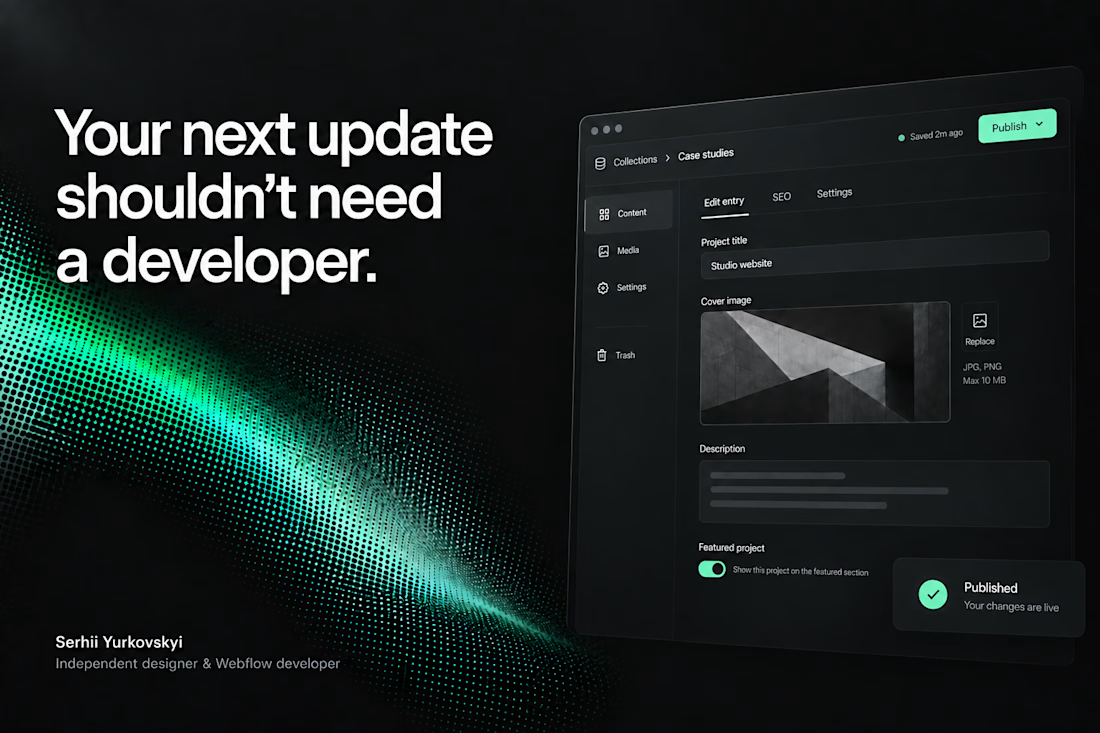

The CMS thinking here is spot on: the best handoff is the one that gives a client confidence without exposing all the complexity underneath.


New case study!
Artist portfolio website design and Webflow development for Teri Sanders, a New York-based artist.

The way the editorial grid lets Teri’s work lead while the oversized name anchors the page feels beautifully restrained. Nice balance of art direction and a usable Webflow portfolio structure.


Love this concept 🧡