The network for creativity
Join 1.25M professional creatives like you
Connect with clients, get discovered, and run your business 100% commission-free
Creatives on Contra have earned over $150M and we are just getting started
Back to feedPost

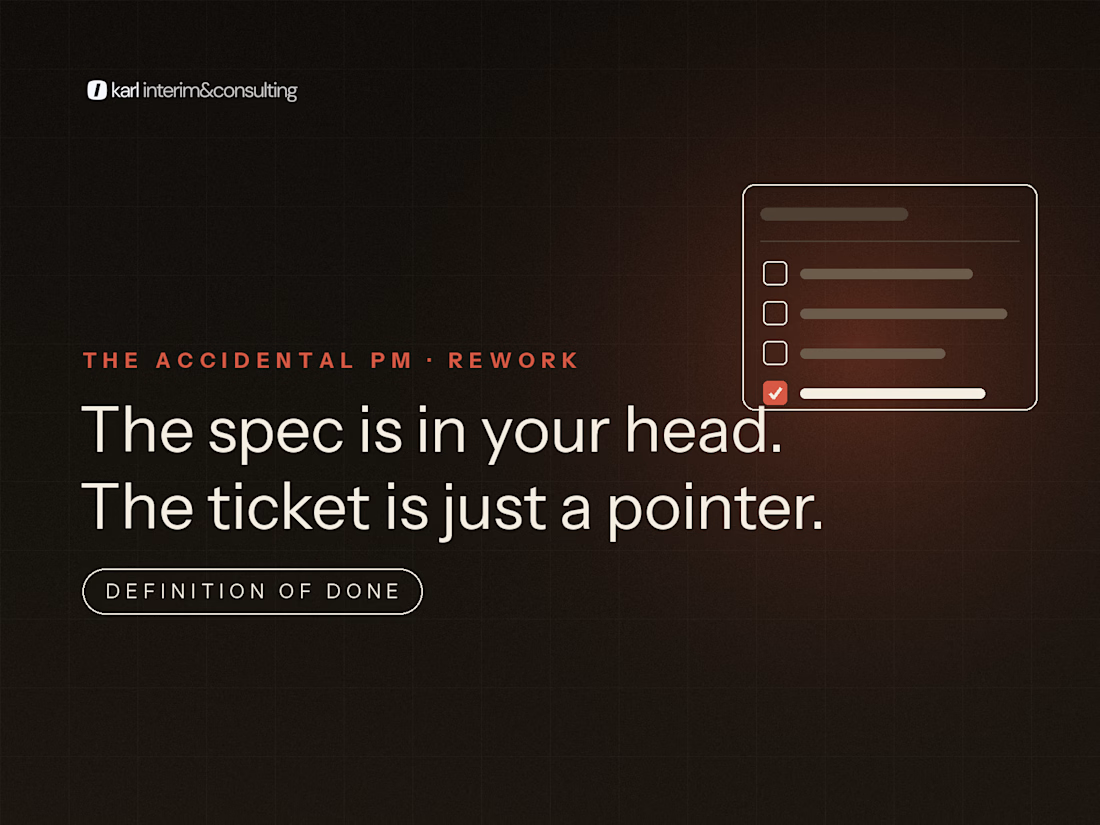
Here's a cost of being the accidental PM that nobody puts a number on: the distance between what you meant and what got built.
You write the ticket at 11pm, between an investor call and whatever else was on fire that day. "Add filters to the dashboard." You know exactly what you mean, because you've had that conversation four times in your head and once with a customer. The engineer who picks it up tomorrow morning has had neither. So they make a reasonable call, build a reasonable thing, and two weeks later you look at it and say that's not quite what I meant.
Nobody did anything wrong there. The spec lived in your head, and the ticket was a pointer to it.
When I come into a team, the first thing I look at isn't how messy the backlog is. It's how often work gets redone. Once a sprint is normal, every team has that. Twice a sprint and your engineers are effectively running at seventy percent, and the missing thirty never shows up on a chart anywhere. It shows up as a team getting slower for reasons nobody can name, and as engineers who stop asking questions because asking hasn't been helping.
Longer tickets don't fix this. What fixes it is a definition of done that lives outside your head: what has to be true for this story to be finished, written before anyone starts, in language an engineer can check their own work against. Ten minutes per story, when somebody is holding the standard.
That somebody doesn't have to be you. Right now it probably is, and you're doing it at 11pm.
The network for creativity
Join 1.25M professional creatives like you
Connect with clients, get discovered, and run your business 100% commission-free
Creatives on Contra have earned over $150M and we are just getting started





Related posts


The thing I keep relearning: a design is never finished because someone ran out of ideas. It's finished because someone decided to stop. Knowing when to stop is the hardest part.



Damn.... Crazy colors 👏😍

Hey everyone! 👋
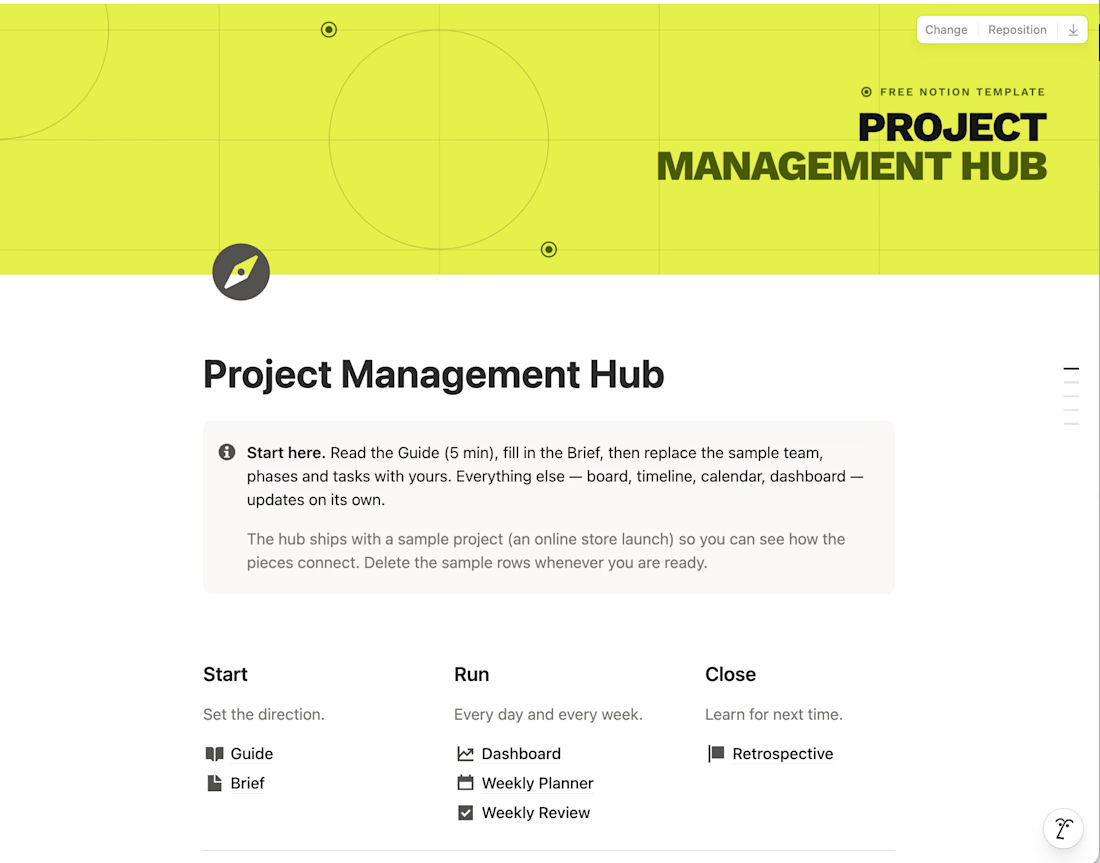
I built a Project Management Hub in Notion to run projects from brief to retrospective in one calm, minimalist workspace. It's for sale on Gumroad, but I'm sharing it for free with the Contra community.
It includes a guide, project brief, dashboard, weekly planner and review, plus 7 linked databases (tasks, phases, team, budget, risks and more). A sample project shows how everything connects.
It's for your personal use only, so please keep it within the Contra network.
Hope it helps! Let me know what you think 🙌



Love this!!

I’ve always liked products that solve a very specific problem instead of trying to do everything.
So for the Lovable Challenge, I picked a simple question that event-tent rental businesses hear all the time:
“Can I book a tent for my wedding?”
The problem is… a tent can’t really be booked until you know if the whole event will work.
How many guests?
How much usable space?
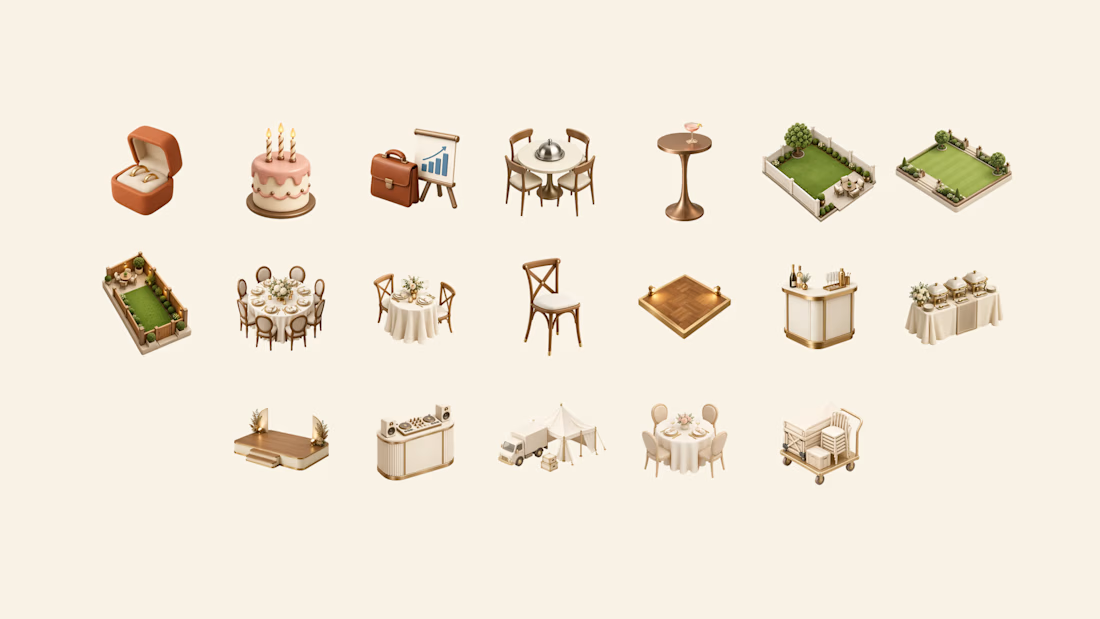
Tables? Dance floor? Bar? Stage?
Will the layout actually fit?
Can the crew set it up and pick it up on time?
Usually, the owner has to figure all of that out manually through messages, calls and calendar checking.
So I built TentFit — a spatial booking experience for event tent rentals.
The customer starts by planning the event, then maps out the space and everything they want inside it. TentFit checks the layout and highlights conflicts.
And instead of just saying “doesn’t fit,” it helps solve the problem:
Switch the tent. Move the layout. Remove an element.
Once everything works, TentFit checks the logistics and turns the final setup into a booking.
The goal was simple:
Make the customer’s decision easier, and make the owner’s job easier.
The flow is basically:
FIT → FEASIBLE → BOOKED
I had a lot of fun building the spatial planning part of this one.
X/Twitter post: https://x.com/brjanov/status/2105630218492731501?s=20
Built with @Lovable
#LovableChallenge #ProductDesign #UXDesign #NoCode #SaaS #WebDesign




Nice stuff!