The network for creativity
Join 1.25M professional creatives like you
Connect with clients, get discovered, and run your business 100% commission-free
Creatives on Contra have earned over $150M and we are just getting started
Back to feedPost
One Thing My Work Has Taught Me: Every Online Problem Has a Different Story.
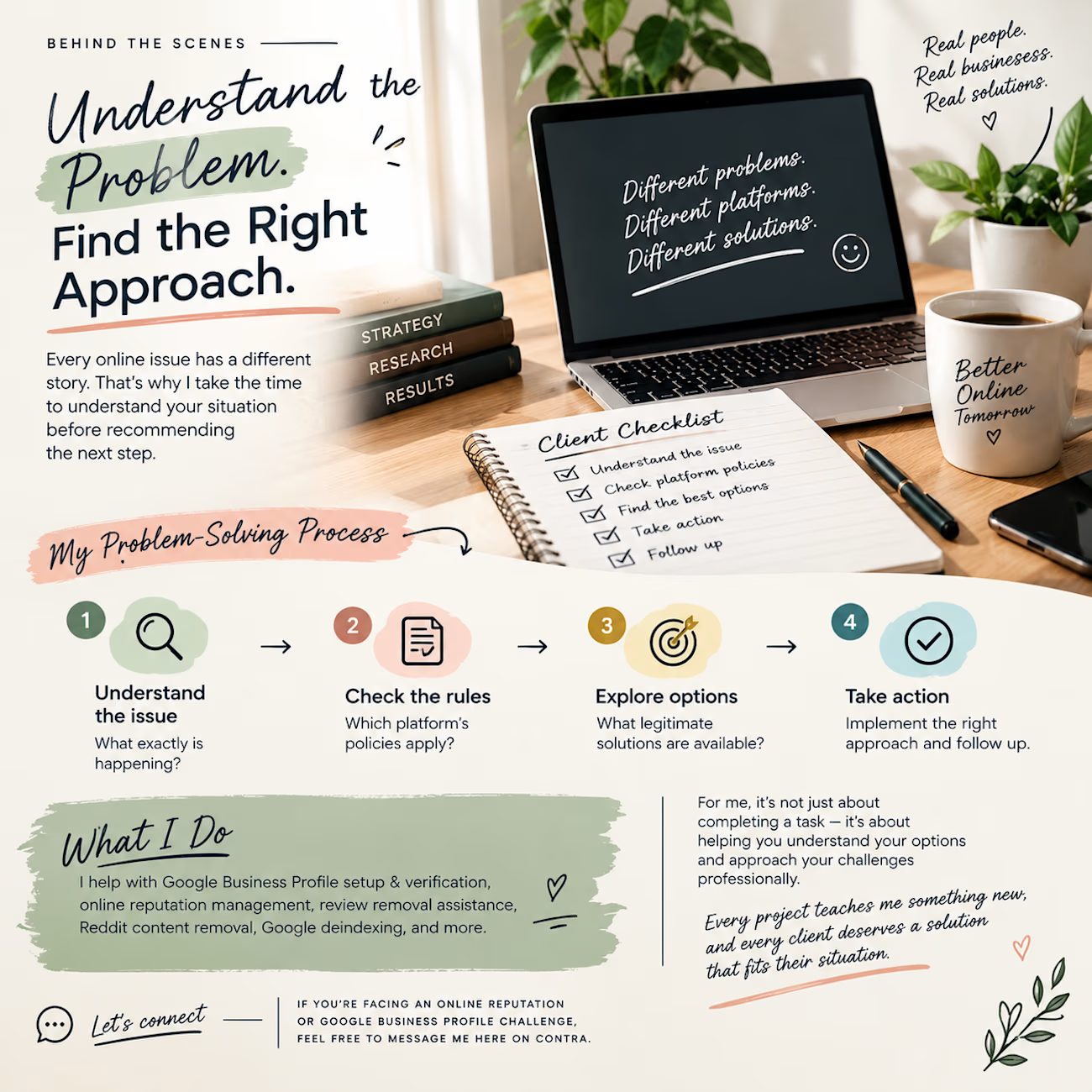
Sometimes, a client comes to me because they can't get their business verified on Google.
Other times, they're concerned about a review, a Reddit post, or an article that's affecting how people see their brand online.
Although these situations may seem similar, the right solution is rarely the same for everyone.
That's why I believe in understanding the problem before taking action.
🔎 What exactly is the issue?
📋 Which platform's policies apply?
🎯 What legitimate options are available?
These are the questions I consider before recommending the next step.
My work covers Google Business Profile setup and verification, online reputation management, review-removal assistance, Reddit content removal, Google deindexing, and other content-removal requests.
For me, it's not just about completing a task. It's about helping clients understand their options and approach their challenges professionally.
Every project teaches me something new, and every client deserves an approach that fits their situation.
That's the mindset I bring to my work.
If you're working through an online reputation or Google Business Profile challenge, feel free to connect with me here on Contra.
The network for creativity
Join 1.25M professional creatives like you
Connect with clients, get discovered, and run your business 100% commission-free
Creatives on Contra have earned over $150M and we are just getting started
Related posts

New case study: SaaS creative ads for ReliableSite 🖥️
A server hosting brand needed Google Ads banners that stand out in a crowded niche.
I designed several dark premium concepts, the client picked a style, and I delivered 3 final banner sets in multiple sizes.
Gold accents, bold headlines and a clear CTA, built to get clicks.
Full case study on my profile 👇


What Is Online Reputation Management (ORM), and How Does It Actually Work?
Every day, people search for names, businesses, brands, and professionals online.
But have you ever wondered what happens when the information they find doesn't accurately represent the person or business they're searching for?
That's where Online Reputation Management (ORM) comes in.
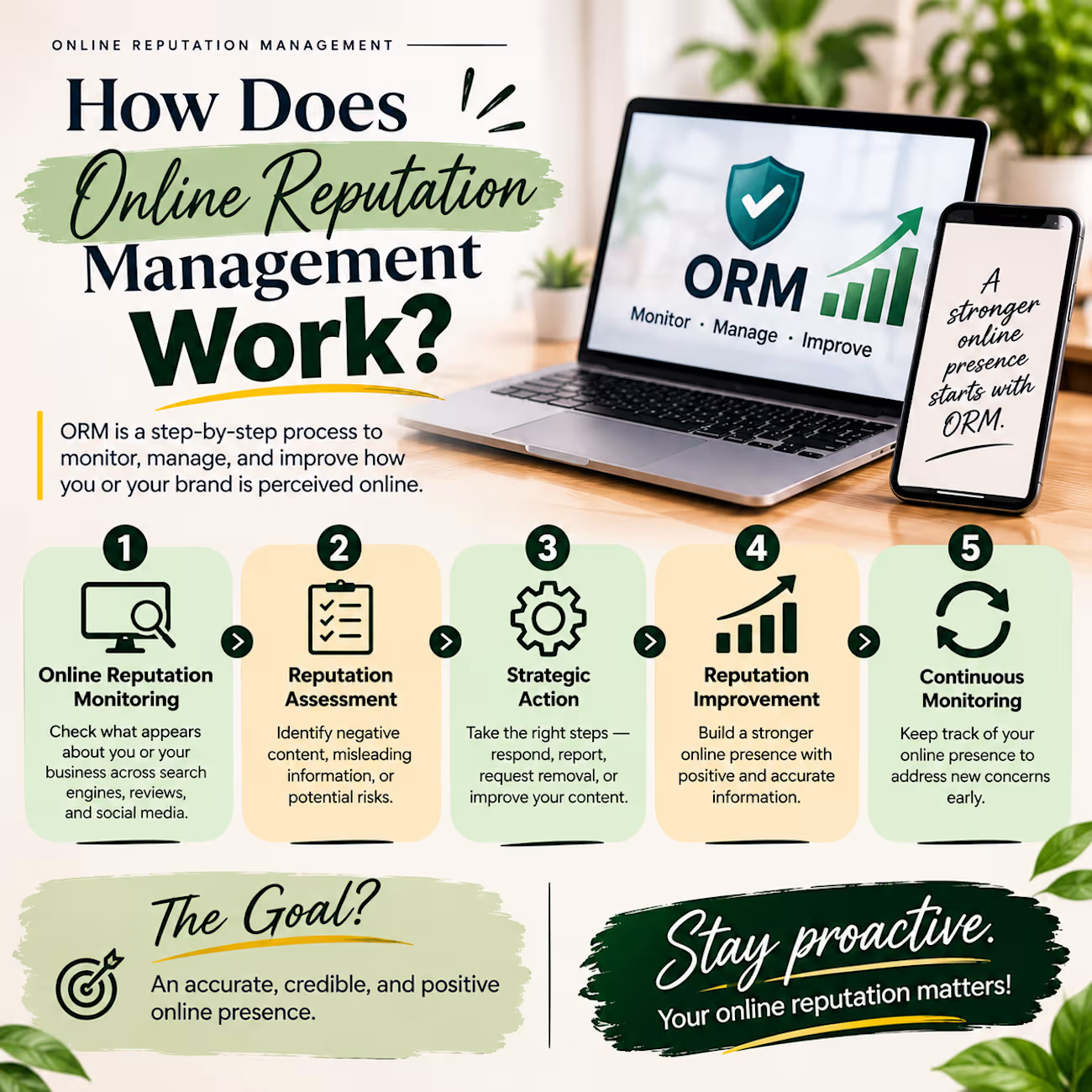
ORM is the process of monitoring, managing, and improving how a person, business, or brand is perceived online.
How Does ORM Work?
It involves several important steps:
1. Online Reputation Monitoring
Checking what appears when people search for your name, business, or brand across search engines, review platforms, social media, and websites.
2. Reputation Assessment
Identifying negative reviews, misleading information, outdated articles, fake content, and other potential reputation concerns.
3. Strategic Action
Determining the appropriate response, whether that means addressing customer feedback, reporting policy-violating content, requesting corrections, or pursuing eligible removal and deindexing options.
4. Reputation Improvement
Building a stronger online presence through accurate information, positive customer experiences, relevant content, and consistent engagement.
5. Continuous Monitoring
Keeping track of your online presence to identify new concerns before they become bigger problems.
The goal isn't to hide every negative comment. It's to ensure that your online presence is accurate, credible, and properly managed.
Online reputation is an asset. Don't wait until a problem affects your opportunities before paying attention to it.

I need work i am seo expart Professional SEO Guest Posting & Quality Backlink Services 🚀
plzz order