The network for creativity
Join 1.25M professional creatives like you
Connect with clients, get discovered, and run your business 100% commission-free
Creatives on Contra have earned over $150M and we are just getting started
Back to feedPost
Creative business owners: Is your accounting helping you grow, or just helping you meet deadlines?
If you run a design studio, creative agency, or marketing business, you know that growth means more than landing new clients and delivering great work.
It’s also about knowing whether your business is actually making money.
You might have a full client roster, exciting projects, and growing revenue — but do you know which clients are most profitable? Whether your pricing covers your true costs? Or how much you can afford to invest in your next big move?
As an accountant, I believe your numbers should do more than keep you compliant. They should help you make smarter business decisions.
Here’s what good financial management can help you do:
📊 Understand your profitability — Know which services, projects, and clients are generating real returns.
💰 Price your services with confidence — Make sure your rates reflect your costs, time, and business goals.
📈 Manage cash flow — Plan for quieter months, cover operating expenses, and avoid unnecessary financial stress.
🎯 Make better growth decisions — Know when you can hire, invest in marketing, upgrade your tools, or expand your studio.
Because a busy agency isn’t always a profitable one. And more revenue doesn’t automatically mean more money in your pocket.
Your creativity builds the business. Your financial clarity helps you grow it.
If you run a design studio, creative business, or marketing agency and want to move beyond simply keeping your accounts up to date, let’s talk.
I’d love to help you turn your numbers into a tool for growth — not just another deadline to meet.
#CreativeBusiness #MarketingAgency #DesignStudio #AccountingForBusiness #BusinessGrowth #FinancialClarity


Very True! Your numbers should tell a story, not just tick compliance boxes.
Your numbers should tell a story, not just tick compliance boxes.
The network for creativity
Join 1.25M professional creatives like you
Connect with clients, get discovered, and run your business 100% commission-free
Creatives on Contra have earned over $150M and we are just getting started





Related posts
A client asked me last week: “Why is there still a balance sitting in prepaid? I already paid all of it.”
Fair question. Honestly, it’s one of the most common things business owners get confused about.
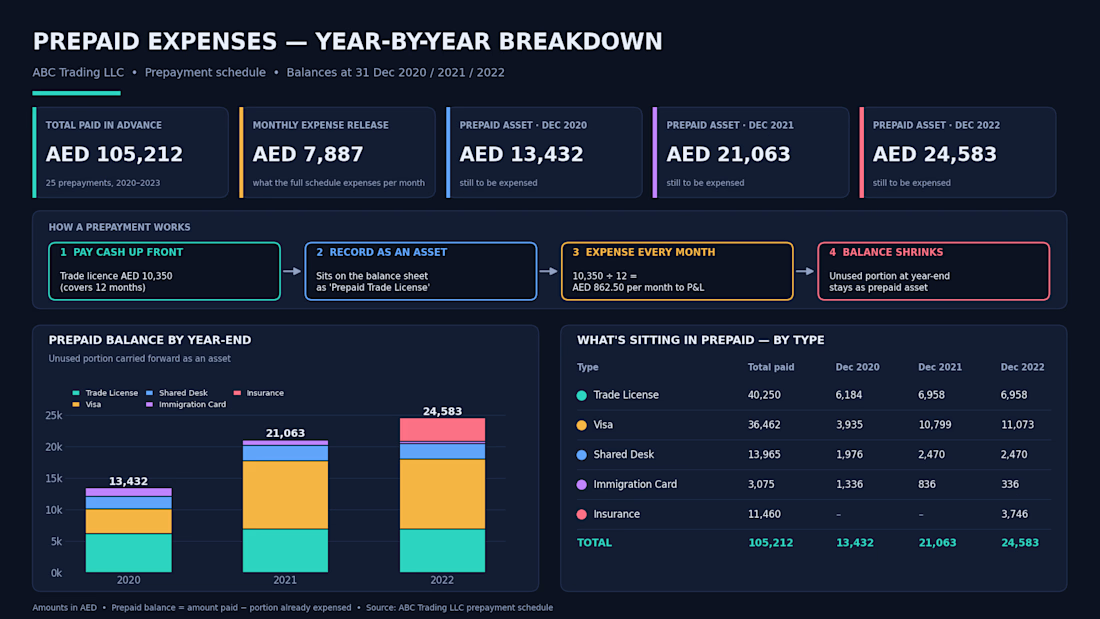
Here’s how I explained it. When you pay your trade licence for the year, that money has left your bank. But you haven’t used the whole year yet. So the unused part isn’t an expense yet. It’s something you’ve paid for and still own, like a credit waiting to be used.
Say you pay 10,350 for a 12 month licence. Each month, 862.50 moves into expenses. Whatever hasn’t been used by 31 December stays on the balance sheet as prepaid.
The client still wasn’t fully getting it from the schedule alone, so I broke it down year by year. 2020, 2021, 2022. Same prepayments, just showing how much was used and how much was still left at each year end.
That’s when it clicked for them.
The visa, shared desk, insurance and licence costs all work the same way. Pay now, use over time, expense a little each month.
If your accountant keeps saying “prepaid” and you nod along, ask them to show you a schedule like this. It’s your money, you should be able to see where it is.
This is part of my contra series, where I explain accounting without the jargon.
#accounting #prepaidexpenses #smallbusiness #UAE


Great explanation! Breaking prepayments down year by year makes it much easier for business owners to understand how their money is accounted for and why balances remain on the balance sheet.
The hidden value of monthly bookkeeping
Monthly bookkeeping is more than recording transactions. It's financial control. 📚
When your books are updated consistently, you can:
✅ Track income and expenses.
✅ Identify unusual transactions earlier.
✅ Monitor outstanding customer invoices.
✅ Reconcile bank balances.
✅ Prepare more reliable financial reports.
✅ Spend less time searching for financial documents.
When bookkeeping is delayed for months, even simple questions can become difficult to answer.
How much did we spend last month?
Which customers still owe us money?
Are our expenses increasing?
These answers should not require guesswork.
I provide accounting support to help businesses maintain organized records and gain better visibility into their finances.
📩 Message me if you're looking for dependable bookkeeping and accounting support.
#MonthlyBookkeeping #AccountingSupport #FinancialControl #SmallBusinessAccounting

Clean books mean more confidence in your numbers and ultimately better decision making

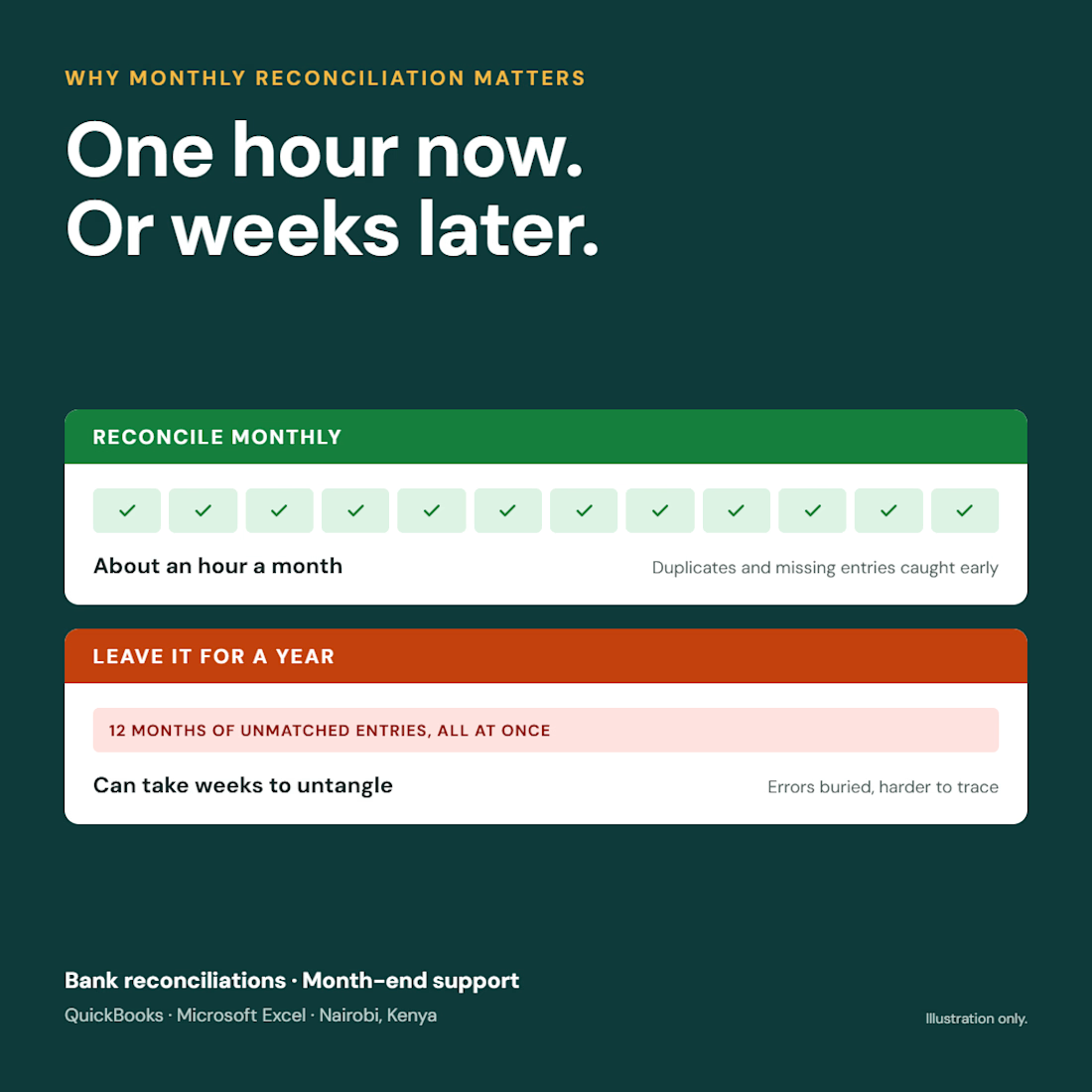
One hour now, or weeks later. ⏳
A bank reconciliation done every month usually takes about an hour. Left for a whole year, it can take weeks to untangle, and by then errors are buried and harder to trace.
Reconciling monthly helps you:
✅ Catch duplicate payments early
✅ Spot missing entries before they pile up
✅ Know your real cash position at any time
✅ Go into month-end and tax time without surprises