The network for creativity
Join 1.25M professional creatives like you
Connect with clients, get discovered, and run your business 100% commission-free
Creatives on Contra have earned over $150M and we are just getting started
Back to feedPost

I built Trackt because a task list wasn't solving the problem I actually cared about.
In relationship-driven businesses, important follow-ups don't usually disappear because someone doesn't care.
They disappear inside email.
“I'll send those comps Tuesday.”
“I'll get back to you on that rate.”
“Let me check with the client and circle back.”
A few days pass, and suddenly a small missed commitment becomes a trust problem.
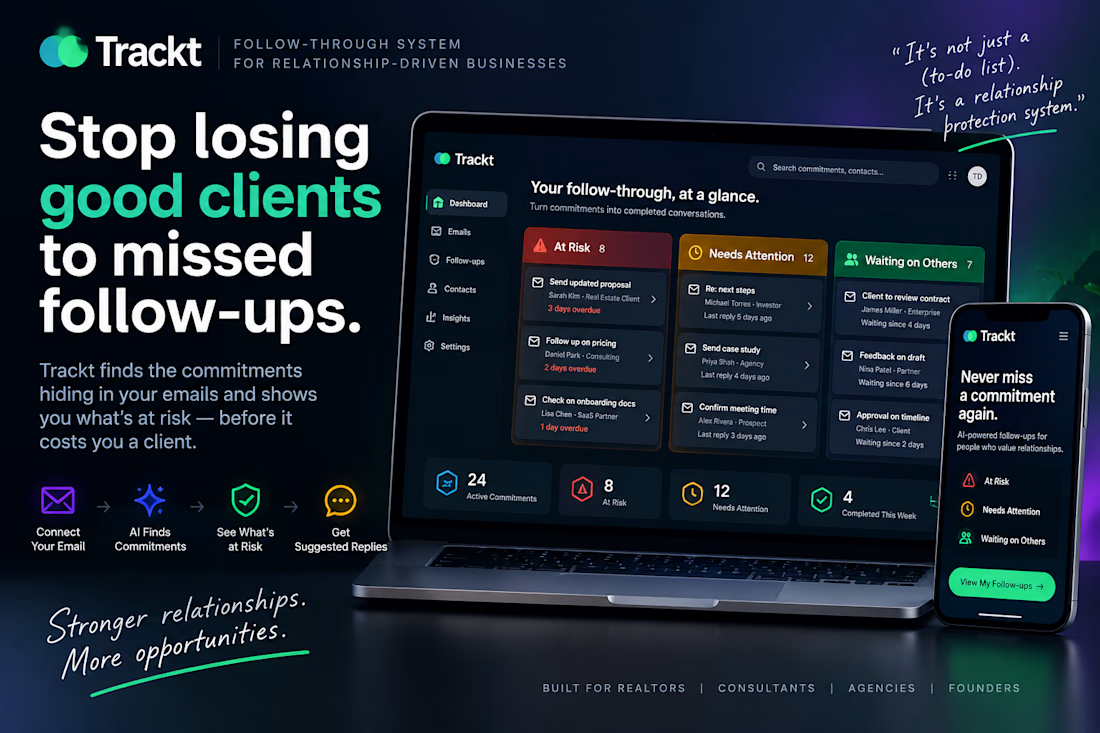
So instead of building another task manager, I built Trackt around risk.
It separates follow-through into three views:
• At Risk
• Needs Attention
• Waiting on Others
One design decision I spent a lot of time on was confidence.
If AI isn't certain that something represents a real commitment, I don't think it should pretend otherwise. Showing uncertainty can actually make an AI system more useful because you know when to trust it and when to check.
Building Trackt reinforced something for me:
AI gets much more useful when you give it one narrow operational problem to solve really well.
I'm curious how other builders here approach this:
When you're building with AI, do you prefer one focused tool that solves a specific problem, or a broader system that tries to handle the whole workflow?
The network for creativity
Join 1.25M professional creatives like you
Connect with clients, get discovered, and run your business 100% commission-free
Creatives on Contra have earned over $150M and we are just getting started