The network for creativity
Join 1.25M professional creatives like you
Connect with clients, get discovered, and run your business 100% commission-free
Creatives on Contra have earned over $150M and we are just getting started
Back to feedPost

Sometimes the fix isn't a new system — it's finding the one wrong module in an existing one.
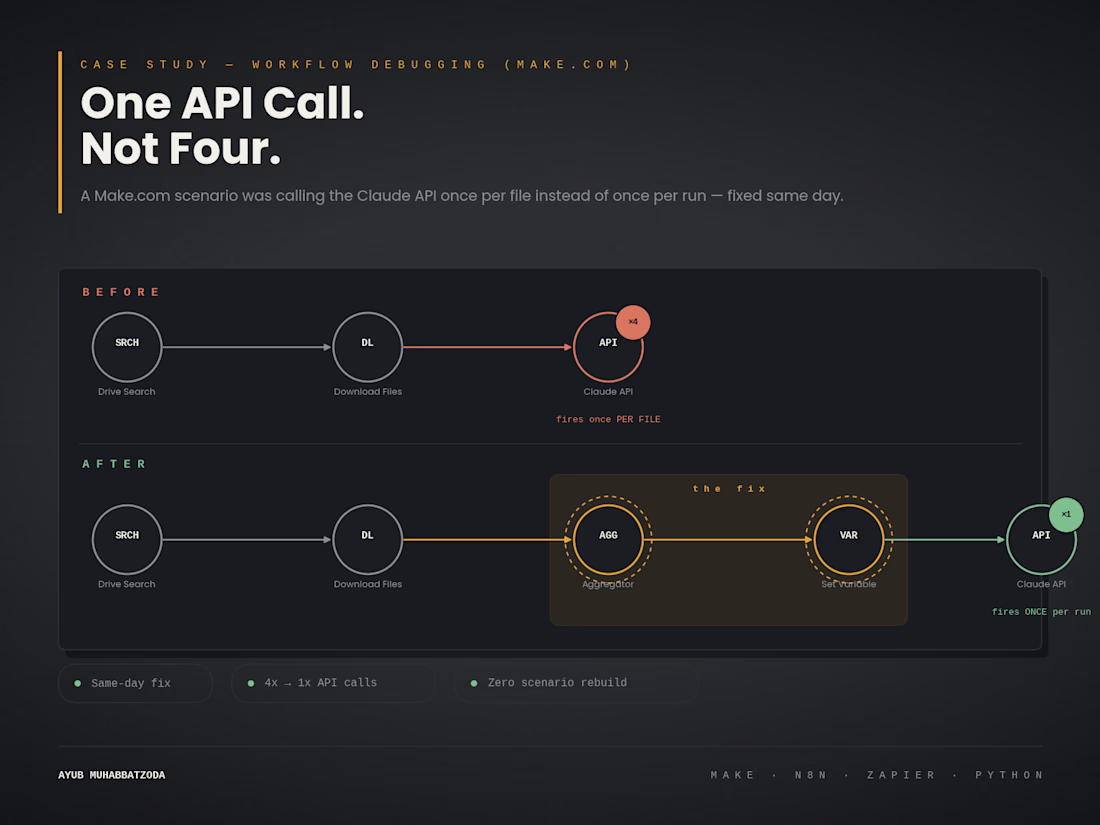
A client's Make.com scenario was supposed to combine multiple Google Drive files into a single text payload and run one Claude API call on the result. Instead, it was firing the Claude API once per file — burning API costs and returning fragmented, inconsistent output.
I traced the issue to the scenario's aggregation logic: files were being processed individually instead of being merged before the API step. I redesigned the module structure — Drive Search, Download, Array/Text Aggregator, Set Variable, then a single Claude API call — with the exact aggregator configuration and mapping formulas needed to guarantee one clean, ordered payload per run.
Result: 4x fewer API calls, consistent output, and zero need to rebuild the scenario from scratch. Delivered same day.
This is the kind of workflow debugging I do constantly across Make, n8n, and Zapier — if your automation is technically "working" but doing something expensive or wrong under the hood, I can usually find it fast.


The network for creativity
Join 1.25M professional creatives like you
Connect with clients, get discovered, and run your business 100% commission-free
Creatives on Contra have earned over $150M and we are just getting started








Related posts


Shapeshift is a looping product-carousel ad I designed as a reusable template for any brand with four products to show (flavours, colourways, a menu), made for Instagram and paid social. Every piece is a named layer: retype the text, drop your photos into the four product slots and recolour, and the motion stays the same. Swap in a different shape set (soft, Mughal or geometric) and the same timing takes on a new personality.
I built it with the SVGator MCP. I came up with the concept and art-directed the motion, colours and every rebrand, while an AI assistant made the layer edits through the MCP. Every version in the video (vivid, light, the Bunsmith burger rebrand and the Mughal shapes) comes from that same file.


Beautiful Grid effect that follows your cursor
Interactive footer built in Framer

Interactive footer
Beautiful grid animation that follows your cursor.
Built in framer