The network for creativity
Join 1.25M professional creatives like you
Connect with clients, get discovered, and run your business 100% commission-free
Creatives on Contra have earned over $150M and we are just getting started
Back to feedPost

🔔 How do you break down problems—and how do you deal with them?
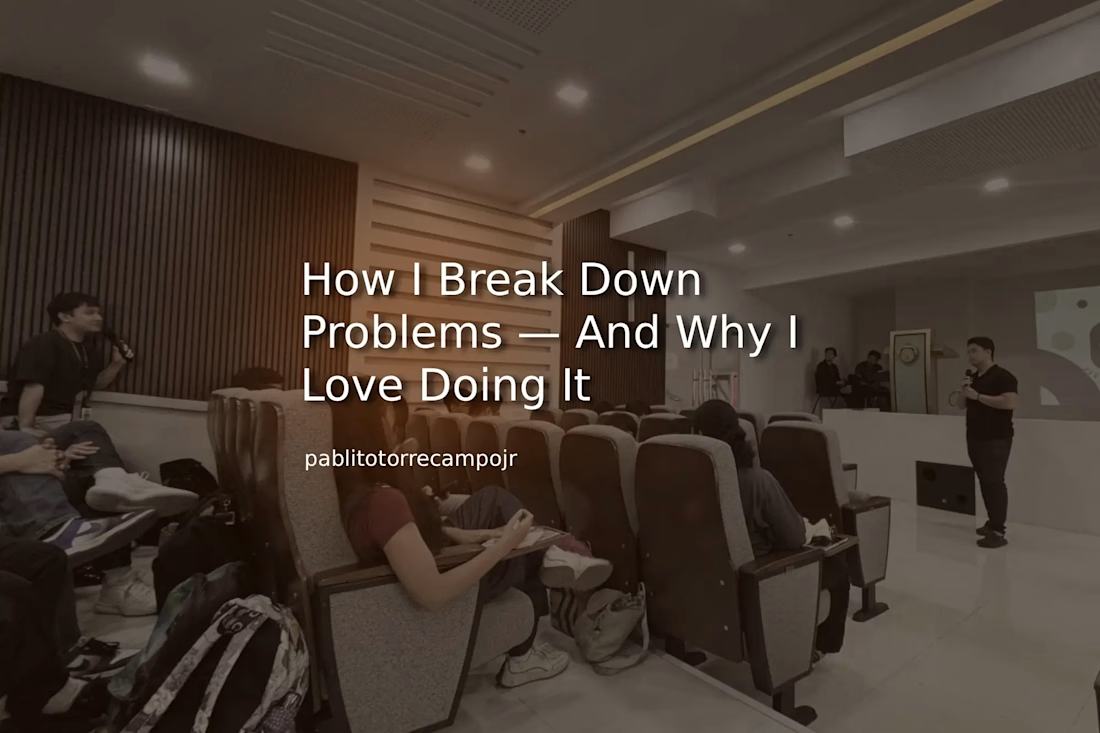
Last February, I faced one of my biggest challenges: public speaking. What began as uncertainty turned into a powerful realization about innovation, curiosity, and asking one simple question: “What if?”
Despite feeling uncertain and inexperienced, I approached the situation the same way I tackle problems for my clients, and the people I work with.
If you’d like to learn more, you can visit my website.
How about you? How do you handle the problems and tasks you encounter at work?
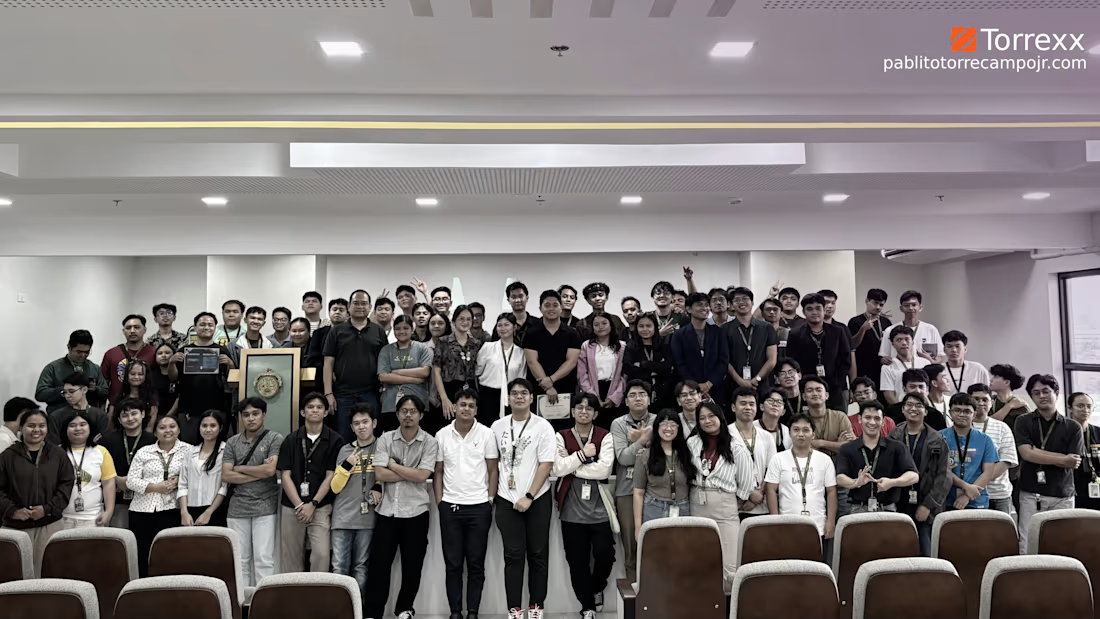
Thank you University of San Jose-Recoletos for this opportunity.
The network for creativity
Join 1.25M professional creatives like you
Connect with clients, get discovered, and run your business 100% commission-free
Creatives on Contra have earned over $150M and we are just getting started






Related posts


Most interview prep has no feedback loop.
Candidates rehearse alone, then walk into the room without knowing which answers were weak.
That is why we built WithIntro around one rule: every spoken answer gets reviewed before the next question.
In the WithIntro case study, users prepared 75% more efficiently.
The AI feedback was the easy part to demo. The harder work was making practice structured enough to measure.
A good practice system helps candidates:
→ Answer out loud, the way a real interview runs
→ Read back a transcript of every answer
→ Get feedback on each answer while it is still fresh
→ Get the next question based on what was weak
→ Track their progress from one session to the next
Under the hood: voice capture, Whisper transcription, Claude-powered feedback, adaptive learning paths and an analytics dashboard, built on Next.js and Tailwind.
The best practice tool does not only ask questions.
It shows you what to fix before the next one.
At Zenveus, we build the systems behind AI products, so the feature that looks good in a demo keeps working for real users.
#InterviewPrep #EdTech #VoiceAI #AI #SaaS #SoftwareDevelopment #Zenveus

Your customer understands your offer. They like what you do. But they still don’t take action. What went wrong?
Sometimes, the problem isn’t the offer.
It’s the next step.
Imagine reading a business owner’s post about a service that could solve your problem.
You’re interested. You want to know more.
But the post ends with:
“Let me know what you think!”
Now you’re left wondering:
Should you send a message? Ask for the price? Book a call? Wait for more information?
Compare that with:
“Send me a DM with the word START, and I’ll explain how the service works.”
The second version gives the reader a clear action to take.
That’s the purpose of a call to action (CTA).
A good CTA doesn’t need to sound aggressive or pushy. It simply helps interested readers understand what to do next.
As I continue developing my copywriting skills, I’m learning to pay attention not only to the message itself but also to where it leads the reader.
Because getting someone’s attention is one thing. Helping them take the next step is another.
Question: Have you ever been interested in an offer but felt unsure about what to do next?

This is PowerPoint. 👀
A selection of my presentation work, from bold slide design to advanced Morph transitions, 2D animation and 3D models.
Every project starts with the same goal: make the content clear and give people a reason to keep watching.
Looking for this level of design for your next presentation? Let’s talk.


Nice work man. Looks good