The network for creativity
Join 1.25M professional creatives like you
Connect with clients, get discovered, and run your business 100% commission-free
Creatives on Contra have earned over $150M and we are just getting started
Back to feedPost

Just wrapped a full brand and digital build for SEEM Engineering.
UAE-based steel fabrication and structural execution.
The brief wasn't "make us look bigger." It was closer to: make the credibility visible.
We built the whole thing from scratch, brand identity, visual system, Framer website, and a custom internal Brand Hub in Lovable with invoice generators and a Claude-powered Brand Agent.
The identity had one constraint: it had to work on a safety helmet as well as it works on a screen. That's the test for industrial brands. Decorative doesn't survive the site.
Typography, color, layout, all of it built around a single idea. Fabricated, not designed.
The Brand Hub was the part that surprised me most. Got deep into PDF export logic, VAT invoice structure for UAE compliance, and AI-assisted document generation.
A lot of unglamorous work that makes the day-to-day functional for the team.
Sometimes the most valuable thing a studio can deliver isn't the visual.
It's the system underneath it.
Open for new projects.


The network for creativity
Join 1.25M professional creatives like you
Connect with clients, get discovered, and run your business 100% commission-free
Creatives on Contra have earned over $150M and we are just getting started



Related posts

EchoMind is live on the Framer Marketplace.
It’s a calm, editorial shop template for brands that make physical things: hardware, objects, small product lines. I designed the brand, generated the product photography and built every page in Framer.
What’s inside:
20 pages, each designed for desktop, tablet and phone
CMS-driven shop with working price sort
Product pages with gallery, specs and FAQs
A build-your-own configurator with live pricing
A bag with quantities and discount codes
Journal with hover image previews
Launch, studio, support and gift card pages
The product itself is fictional: a modular mixing desk where one core listens to your mix and suggests one fix at a time. I wanted the template to feel like a real brand from day one, so it’s been built and photographed like one.
Get the template: https://www.framer.com/marketplace/templates/echomind/

Congrats on the launch, Jonathan. Designing the brand, the photography and every page yourself gives it a clear voice. What was the hardest part of building a shop template in Framer?



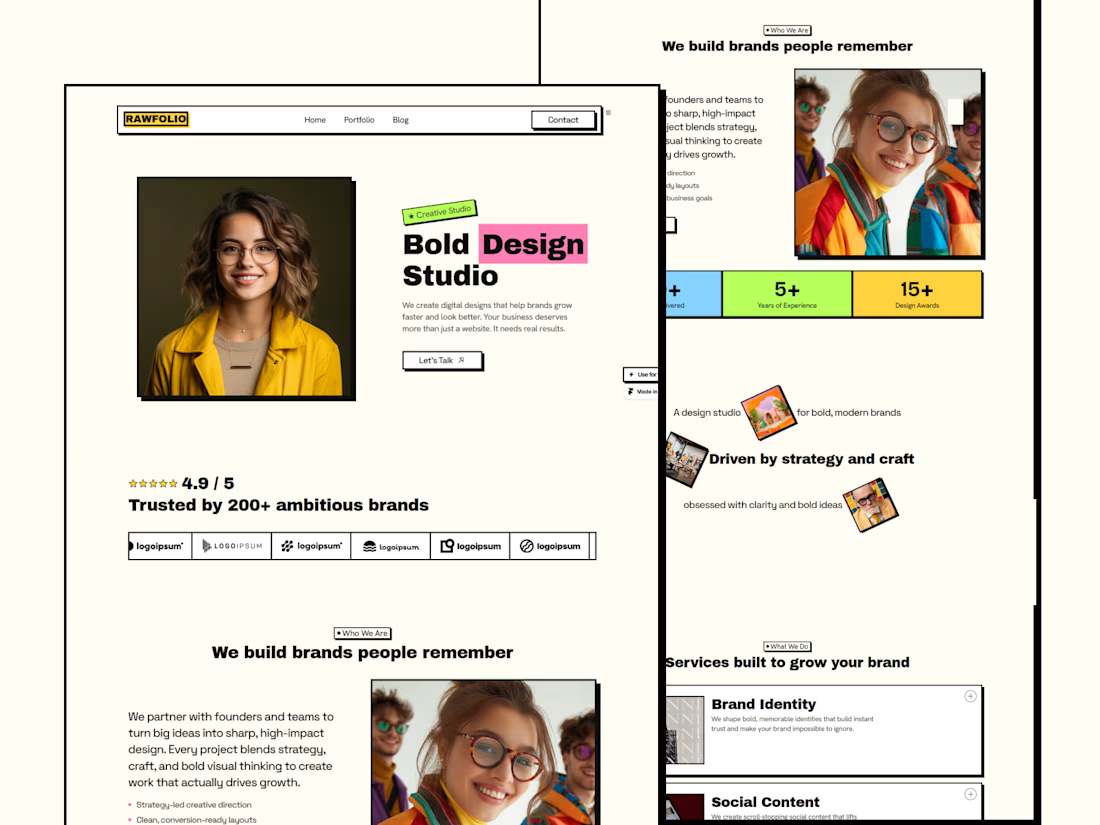
Meet RawFolio — a bold Agency & Portfolio Framer Template built for creatives, designers, and agencies who want to stand out.
Showcase your best work, express your style, and make a lasting first impression.
Template link: https://framer.link/atdX7m3


Great type, Anayatul!