The network for creativity
Join 1.25M professional creatives like you
Connect with clients, get discovered, and run your business 100% commission-free
Creatives on Contra have earned over $150M and we are just getting started
Back to feedPost
On Labor Day, a reminder:
Most teams don’t struggle because people don’t work hard.
They struggle because of how work is structured.
Common mistakes I see:
• Tasks live in chats instead of a system
• No clear ownership → “someone will do it”
• Priorities change but aren’t communicated
• Too many tools, no clear workflow
• Meetings replace actual execution
The result?
People stay busy.
But progress feels slow.
What actually helps:
• One clear place for tasks
• Defined ownership
• Simple, consistent workflow
• Communication that supports execution
Hard work matters.
But without structure, it gets lost.

Most teams I’ve seen are not lacking effort, just clarity.
The network for creativity
Join 1.25M professional creatives like you
Connect with clients, get discovered, and run your business 100% commission-free
Creatives on Contra have earned over $150M and we are just getting started
Related posts

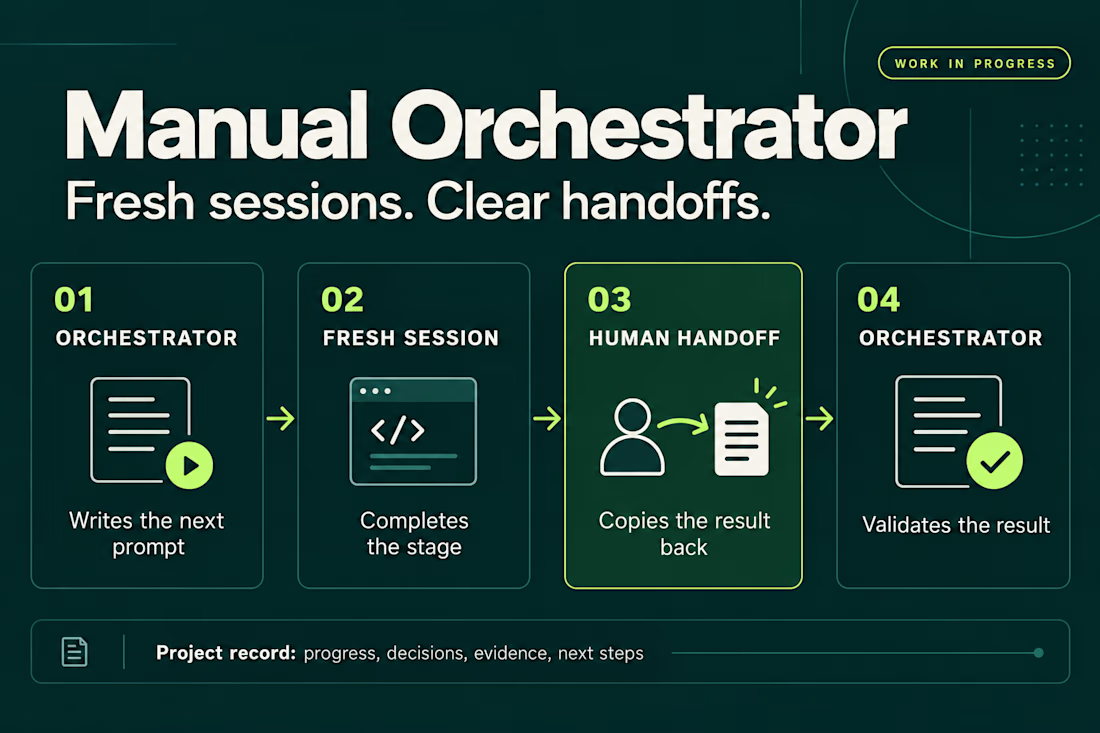
I’ve been working on a small skill called Manual Orchestrator to make longer projects with AI agents easier to manage.
The problem started with a familiar situation: one chat would accumulate plans, implementation details, corrections, and test results. By the time I was ready for the next phase, I wanted a fresh conversation without losing the decisions we’d already made.
Manual Orchestrator gives that process some structure. One chat acts as the orchestrator: it breaks the work into stages and writes a prompt for the next one. I run that prompt in a new session, then bring the result back. The orchestrator reviews it against the stage’s criteria before preparing the next prompt. If something needs fixing, I go back to the same worker session.
The skill also keeps a record in the project with the current stage, decisions, evidence, and next steps. That makes it easier to pause, resume, or hand the work to another session.
The handoff is manual. I choose when to open a session and carry the result back. The orchestrator and worker sessions can also use different agent CLIs, with the prompt adapted to the capabilities available.
It’s open source and still a work in progress. I’m using it to learn what helps in practice and where the workflow needs to improve. Installation has been checked for Codex, Claude Code, and Gemini CLI, but the full workflow hasn’t been tested across every CLI or version.
If you try it, I’d be interested in hearing what works and where it gets in your way.


Day 600 of building my own business is still frightening.
With no experience whatsoever, I started my own Webflow studio in March 2025.
Since then it's been 600 days of:
Anxiety
Optimism
Impostor syndrome
Success
Failure
Failure
Failure
Success
Success
Believing
Doubting
Excitement
And everything in between.
Now I'm working with clients all over the world.
I'm building Webflow sites.
I'm working on a web app for musicians as a product owner.
I'm building my own digital product for solopreneurs.
It's still frightening. But most of all, I've never felt more free and satisfied.
I'm still looking for work, though.
To be completely honest, I really need some work as of right now.
If you need a Webflow developer or UX designer, I would love to talk.

Respect for sharing the hard parts too. Hope the right projects come in soon.

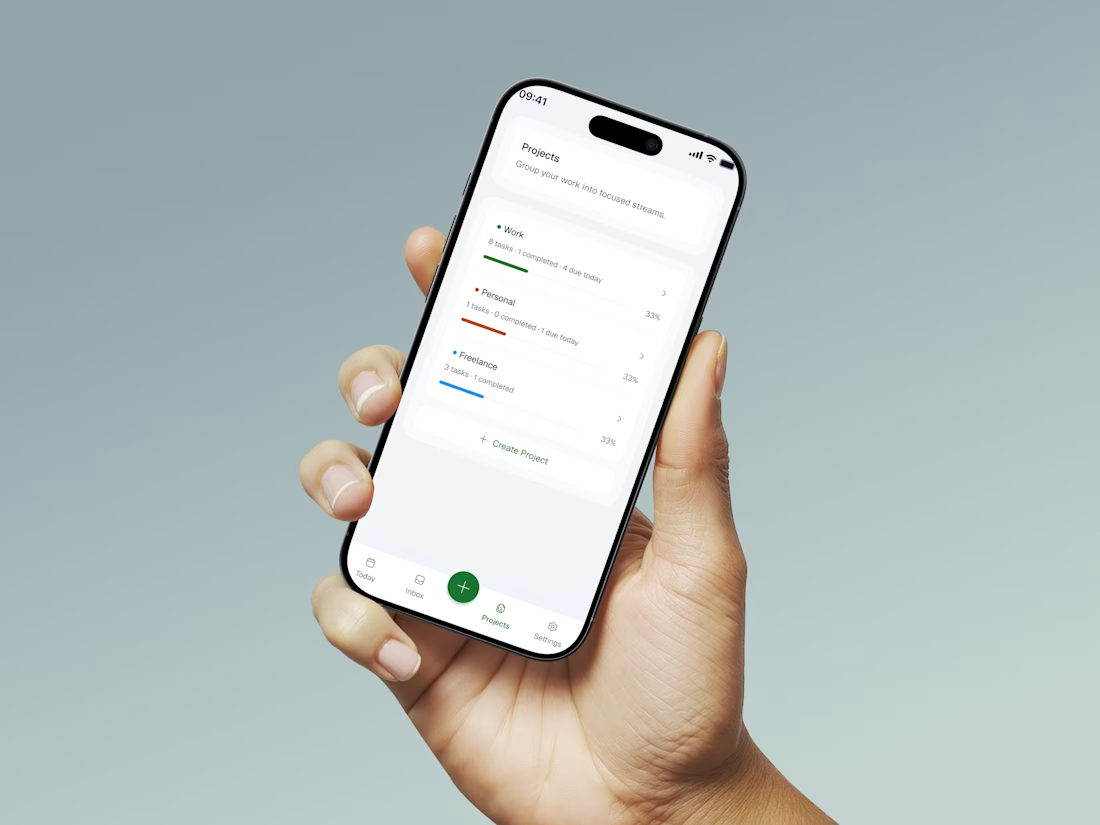
I designed a task management app from scratch. Here's every decision I made and why:
Most task apps have a problem hiding in plain sight , they're so loaded with features that by the time you've organised your tasks, you've lost the energy to do them.
That's what I wanted to fix with PLANORA
One question drove every decision: what does someone actually need when they sit down to get things done?
Here's what I focused on:
One screen for everything: no nested menus, no switching views. Just your tasks and your day.
Add a task in under 3 seconds: one tap, type, done. Friction at the capture stage kills habits before they form.
Visual hierarchy over visual noise: white space and contrast do the work, not badges and colour coded labels competing for attention.
The goal wasn't the most powerful task app. It was the one people would actually use every day.
Simplicity is the hardest thing to design. But it's almost always the right answer.
What's the most cluttered app you use daily that needs a redesign? 👇


So minimal. Does it support recurring tasks?