The network for creativity
Join 1.25M professional creatives like you
Connect with clients, get discovered, and run your business 100% commission-free
Creatives on Contra have earned over $150M and we are just getting started
Back to feedPost

Most SaaS trailers don't fail on the shots. They fail in the cuts.
VoiceCake has seven surfaces to show: dashboard, agent builder, voice clones, phone numbers, call logs, a node editor. Forty-one seconds. Cut flatly between them and you've made a slideshow with music.
So I stopped treating them as screens. The whole film happens inside one deep-space environment, and each part of the product arrives in it as an object. The dashboard assembles out of the starfield. The knowledge node wires itself into the workflow along live connections.
The world never changes, so the cuts stop registering as cuts. A platform reads as one system instead of seven tabs.
When a product has more features than your runtime, do you cut features or find a way to hold them all?


The network for creativity
Join 1.25M professional creatives like you
Connect with clients, get discovered, and run your business 100% commission-free
Creatives on Contra have earned over $150M and we are just getting started





Related posts

Another project we done this summer!
✨ A redesign, new motion and an Astro rebuild took the site from broken on mobile to 100 Performance.


Nice work!!

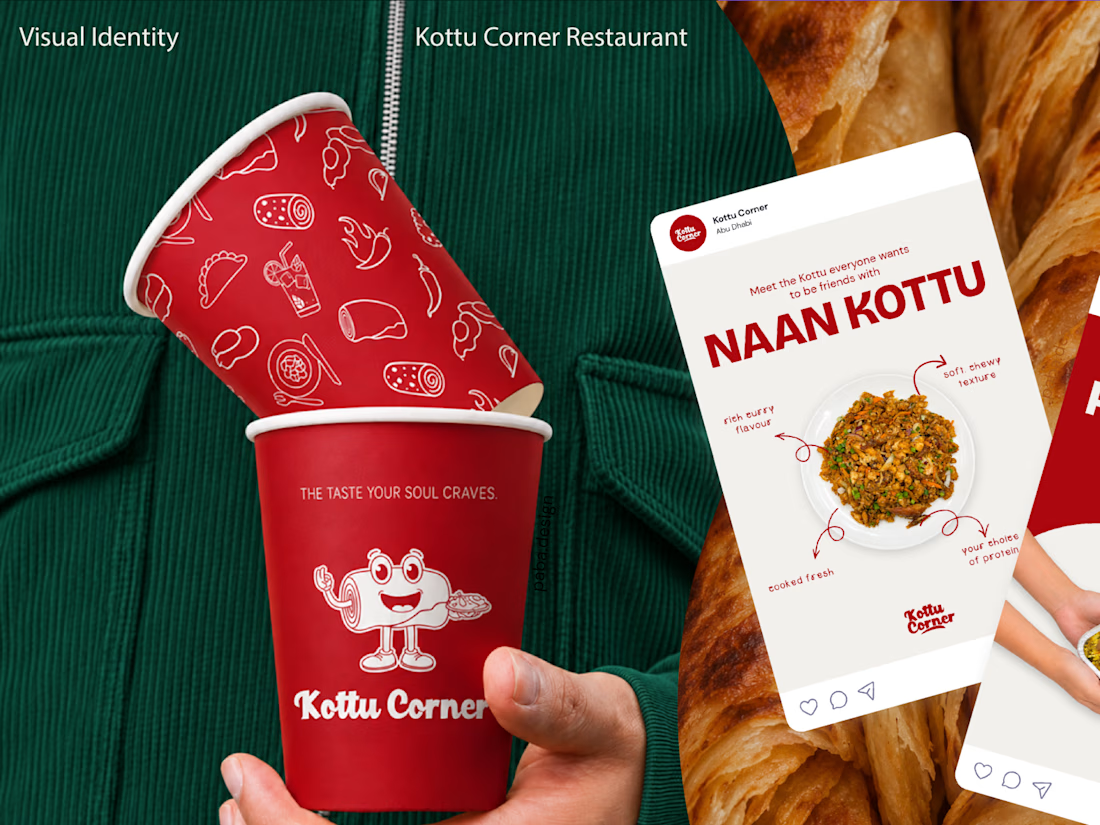
What if your business already has a logo, but nothing else that makes it recognizable as a brand?
That was the starting point for my recent branding project for Kottu Corner, a restaurant in the UAE.
They came to me with an existing logo, but without a complete visual identity to support it.
Redesigning the logo simply for the sake of change wouldn't have been a smart business decision. With the brand preparing for a major transformation, the existing logo was the one familiar element customers could still recognize. Changing it alongside everything else would risk losing that connection and making the brand feel unfamiliar to the very people who already knew and trusted it.
Instead, I focused on developing a cohesive brand identity around it, guided by the restaurant's audience, business goals, and plans for future franchise growth.
From brand strategy and visual direction to packaging, merchandise, and other brand touchpoints, the goal was to create an identity that feels recognizable, consistent, and true to the business.
Because sometimes, good branding isn't about changing what already exists. It's about building on it.
Explore the full case study! ❤️

Cool work!!


Gifting landing page and product page for Graffeo, a San Francisco coffee roaster since 1935.
Sick 🔥