The network for creativity
Join 1.25M professional creatives like you
Connect with clients, get discovered, and run your business 100% commission-free
Creatives on Contra have earned over $150M and we are just getting started
Back to feedPost

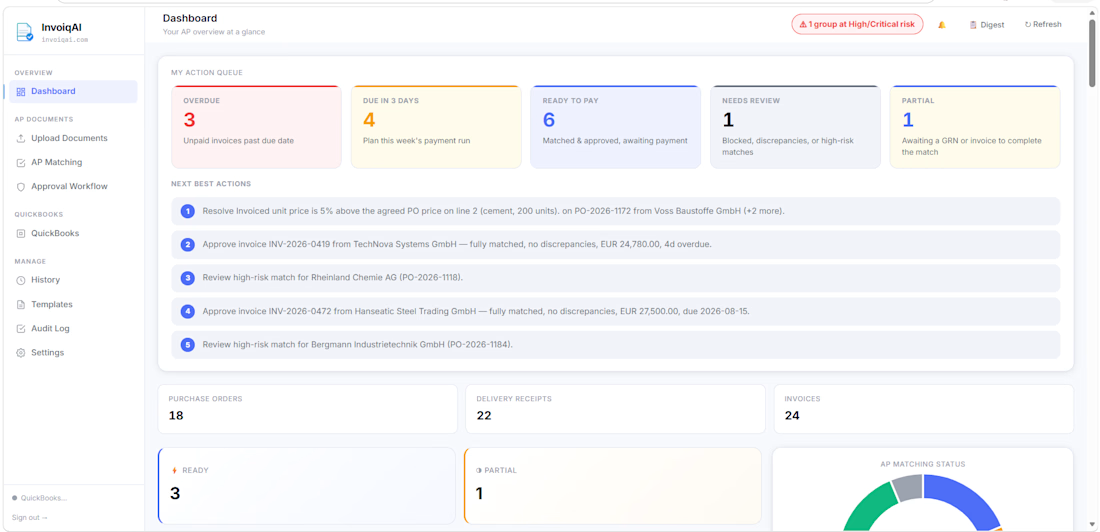
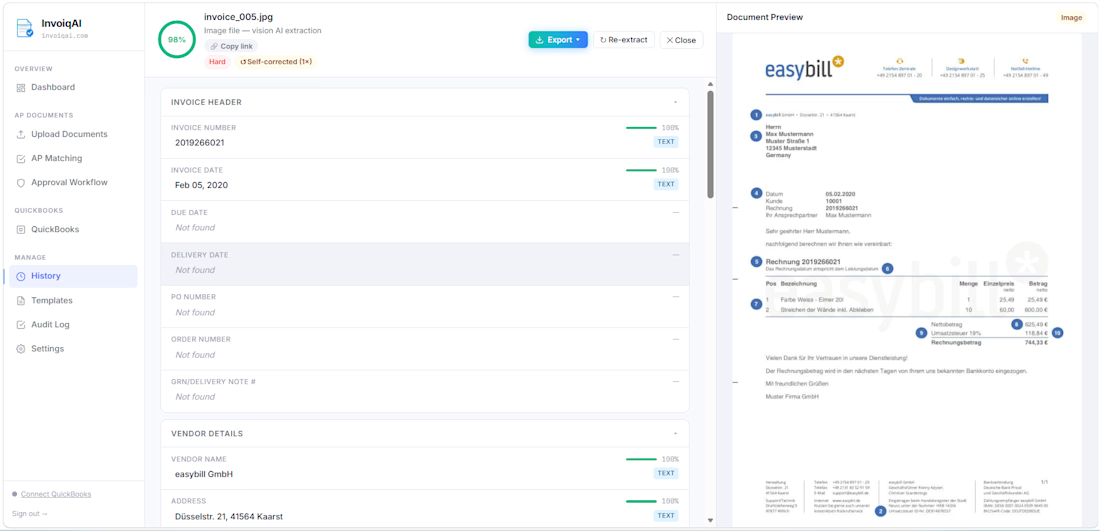
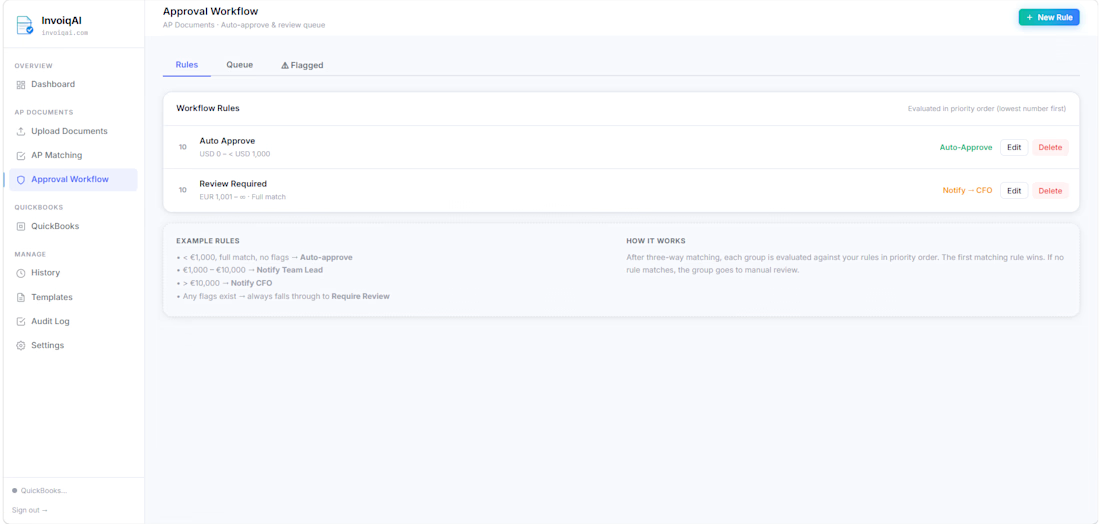
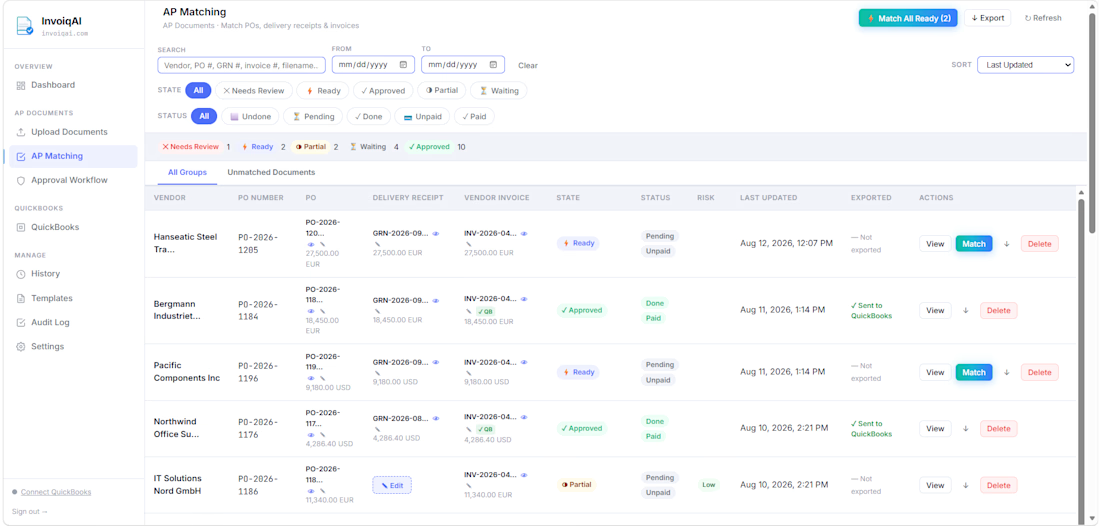
InvoiqAI is an AP invoice automation tool I built that reads invoices, purchase orders, and delivery receipts, cross-checks them against each other, and routes approvals automatically, so AP teams stop manually keying numbers and stop paying invoices nobody actually verified. It runs full three-way matching on every document, flags price or quantity mismatches with plain-English reasoning, and catches duplicate invoices before they get paid twice. Approval rules route small invoices to auto-approve and larger ones to the right person, so nothing sits in a queue waiting on a human unless it actually needs one. Tested across 85+ real documents with a 96.5% extraction pass rate.


The network for creativity
Join 1.25M professional creatives like you
Connect with clients, get discovered, and run your business 100% commission-free
Creatives on Contra have earned over $150M and we are just getting started


Related posts

I haven't posted a proper update here for a little while. I've been busy building a couple of AI applications and a healthcare workflow prototype, and writing about the work kept slipping down the list.
So, a small catch-up. :)
One project is an AI presentation builder for business teams. It starts with information about the business, its audience and the conversation they're preparing for, together with approved source material. From there, it helps create a presentation outline, a talk track, speaking notes and preparation notes.
The person using it can review the material, change it, save it and come back later to export it. That sounds fairly ordinary when written down, but those details are what make it something a team can actually work with. The connected pilot has been accepted, and I'm continuing to refine the content and develop the application.
Another project is a knowledge and planning workspace. Imagine having useful advice buried in hours of coaching transcripts. The application turns that material into a library of teachings that people can review, with links back to the sources.
It also supports a planning workflow: start with a client brief, confirm the details, then build a 90-day roadmap with check-ins and weekly updates. The knowledge foundation has been accepted; the planning workflow is on staging while the remaining integration work continues.
Alongside those, I've been working on a healthcare product prototype. This one is about showing how a complicated business process behaves: someone approves a decision, a member makes a choice, a referral moves forward, a booking happens, and someone needs help when the normal path doesn't fit.
It uses synthetic data and scripted scenarios, so the team can walk through the product without involving real patient records. Both demonstration releases were accepted, followed by a separate piece of work planning the next pilot.
I've kept the client names and interfaces private, but wanted to explain the work a little better than just saying "AI integrations" or listing frameworks.
These are the kinds of projects I'd like to do more of: useful AI features, B2B applications, and consumer products where the interface and the underlying workflow both get proper attention. I enjoy being involved in the whole thing, from figuring out what someone needs to do through to building the application that lets them do it.
I'm also updating my portfolio to make that work easier to find. You can see my public projects at https://nikocodes.com, including ReachLog and ThaiGlow.
If you're building something in this area, feel free to message me here. Happy to talk through what a sensible first version could look like.


Using synthetic data and scripted scenarios for the healthcare prototype is a smart call. Letting stakeholders walk the exception path, not just the happy path, is usually where a pilot earns its trust.

AI Agents, Agentic AI, Generative AI, Conversational AI, AI Automation, LLM Integration, AI Chatbot, Python Development, FastAPI Development, React Development,


The cards sliding over the dark teal glow feel really smooth. Did you build the transitions in Figma or somewhere else?