The network for creativity
Join 1.25M professional creatives like you
Connect with clients, get discovered, and run your business 100% commission-free
Creatives on Contra have earned over $150M and we are just getting started
Back to feedPost

A financial trading engine can be fast and still be dangerously wrong.
That was one of the key engineering lessons from building a low-latency financial order-matching engine in Rust.
In financial systems, performance matters. But incorrect order execution, broken price priority, or inconsistent state can create risks that speed alone cannot solve.
I designed the engine around a single-writer architecture, bounded message passing, integer-based pricing, FIFO order matching, and self-trade prevention.
The implementation also explored cache-efficient memory layouts, lock contention, and predictable execution latency.
The results from local synthetic benchmarks:
• p50 latency: 48 nanoseconds
• p99 latency: 56 nanoseconds
• p99.9 latency: 69 nanoseconds
• All 14 integration tests passed.
These measurements reflect isolated engine operations, not end-to-end trading performance.
One important lesson stood out:
Low latency is a performance characteristic. Financial correctness is a system requirement.
The next challenge is ensuring deterministic recovery, durable execution records, and reliable risk controls.
How do you balance performance and correctness when designing financial systems?

The network for creativity
Join 1.25M professional creatives like you
Connect with clients, get discovered, and run your business 100% commission-free
Creatives on Contra have earned over $150M and we are just getting started



Related posts

🚀 Turning Manual E-commerce Order Processing into an Automated Workflow with n8n
Manual order management may seem simple, but copying customer details, checking information, preventing duplicate orders, and sending confirmation emails can quickly become repetitive and error-prone.
I recently built an end-to-end order processing automation using n8n to solve these challenges for a handmade products store.
Here's what I implemented:
🔹 Automated Order Capture: Receive new orders through a webhook.
🔹 Data Validation & Cleaning: Validate required fields, email formats, quantities, and prices before processing.
🔹 Duplicate Prevention: Detect existing Order IDs to prevent duplicate records.
🔹 Google Sheets Integration: Automatically store valid orders and calculate order totals.
🔹 Email Notifications: Send order updates to the store owner and confirmation emails to customers.
🔹 Error Monitoring: Capture failed executions, log error details in a dedicated Google Sheets tab, and send email alerts.
The goal was simple: reduce repetitive administrative work, improve data accuracy, and make order operations more reliable.
This is what I enjoy about building with n8n — turning complex, repetitive business processes into practical automation systems.
Have a repetitive workflow in your business that could be automated? Let's connect!
#n8n #WorkflowAutomation #EcommerceAutomation #BusinessAutomation #NoCode #Automation


Using AI Automation workflow in business , not only save the time ,also increase work Efficiency

A CPU runs four stages in under a nanosecond. Fetch, decode, execute, write back.
Try explaining that in a paragraph.
So I made a 3D exploration where every scroll is one stage. A piece turns from a technical drawing into 3D and locks into place, until the chip is complete.
When people can see what your product does, they don't need a paragraph to believe it.


Nice!

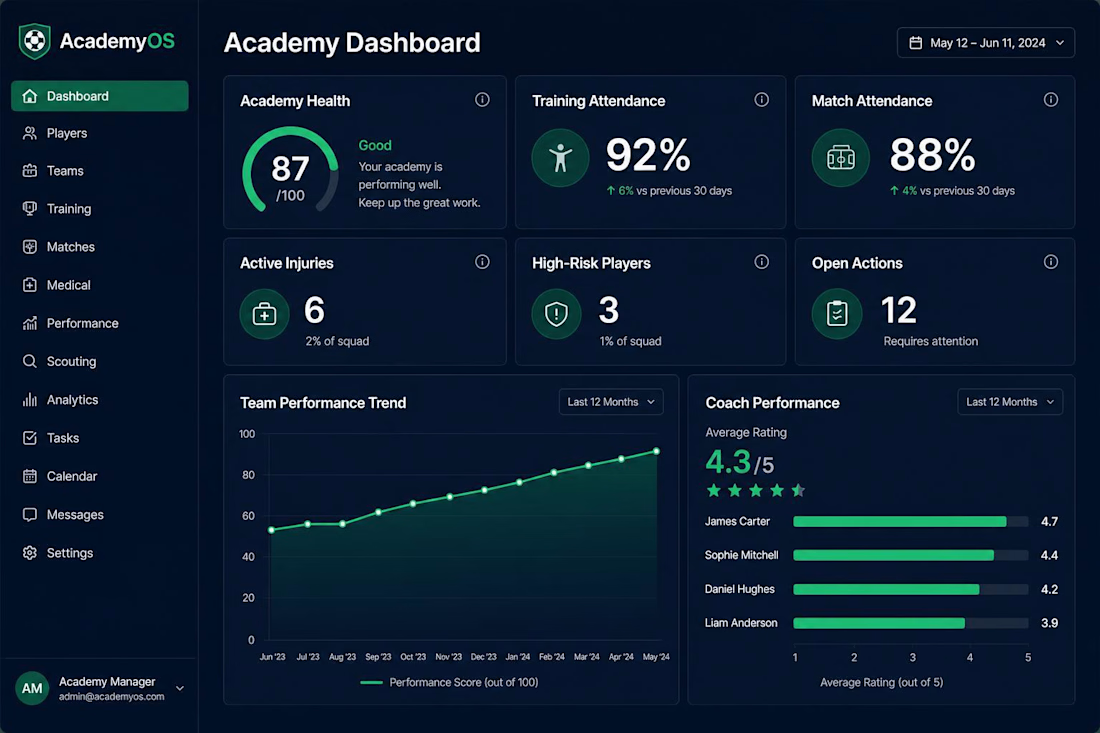
Transforming Sports Club Management with AI Powered Technology
Managing a sports club or academy involves much more than organizing training sessions. From player registrations and coach assignments to attendance, performance tracking, payments, and communication, handling everything manually can become overwhelming.
We designed this AI powered sports club and academy management platform to bring all these operations together in one centralized, intelligent system.
The platform provides administrators with a complete overview of club activities, allowing them to manage multiple teams, register players, assign coaches, schedule training sessions, monitor attendance, track player development, and manage memberships and payments.
With AI-powered insights, coaches can better understand player performance, identify development patterns, monitor progress, and make more informed training decisions.
The platform also features dedicated dashboards for administrators, coaches, players, and parents, ensuring everyone has access to the information they need.
Key Features:
AI-powered player performance analytics
Player registration and profile management
Team and squad management
Coach and staff management
Training and match scheduling
Attendance tracking
Player development and progress reports
Membership and payment management
Parent and player portals
Automated notifications and communication
Centralized club administration dashboard
Our Goal
To simplify sports organization management, reduce administrative workloads, improve communication, and give coaches and administrators better tools to support player development.
The result is a scalable sports management software concept designed to help modern sports clubs and academies operate more efficiently and make smarter, data-driven decisions.



Good idea to bring attendance and scheduling together.