The network for creativity
Join 1.25M professional creatives like you
Connect with clients, get discovered, and run your business 100% commission-free
Creatives on Contra have earned over $150M and we are just getting started
Back to feedPost

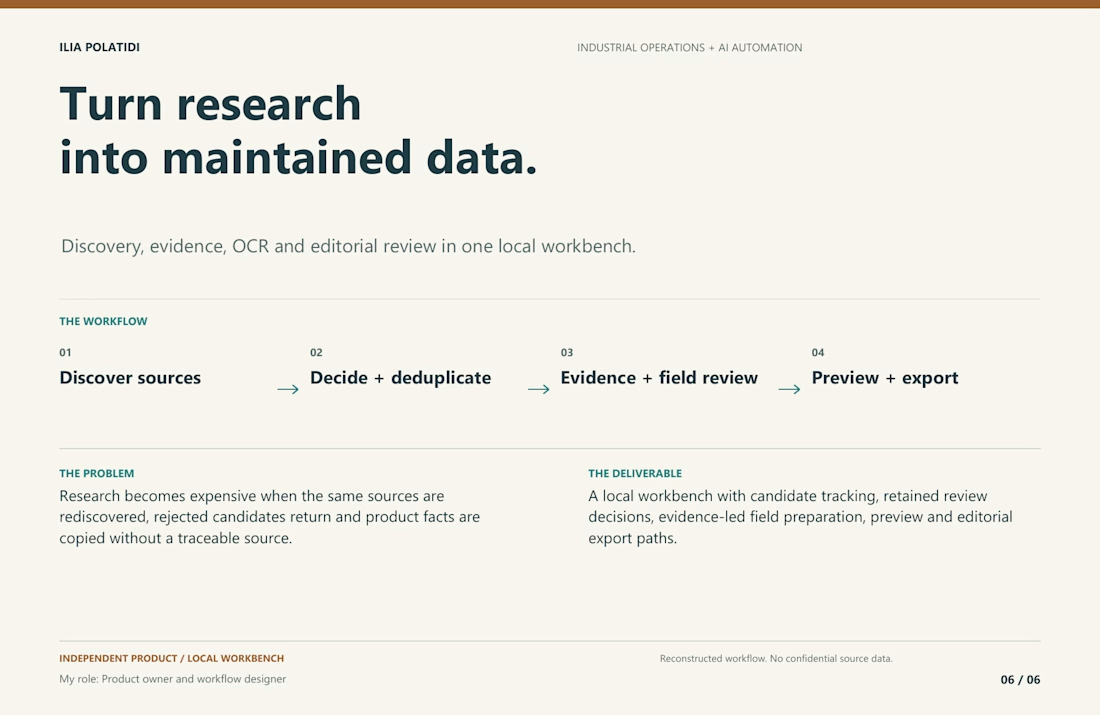
Research-to-catalogue automation — independent local workbench.
I shaped a workflow that takes public-source research through candidate tracking, keep/reject/duplicate decisions, evidence collection, OCR-assisted field entry, preview and controlled export. Review decisions persist so rejected sources do not keep returning.
My role: product ownership, workflow design, AI-assisted implementation and acceptance checks. Originally built for a product-comparison catalogue; the approach also supports supplier directories and structured market research.

The network for creativity
Join 1.25M professional creatives like you
Connect with clients, get discovered, and run your business 100% commission-free
Creatives on Contra have earned over $150M and we are just getting started
Challenges
View all


Related posts


I’ve been razzmatazzing and flibbertigibbeting with Claude Code and somehow ended up with a new yels.dev.
It finally feels like me: simple on the surface, slightly complicated underneath, and very much alive.
You can see who I am, what I do, the work behind Herodot, RaptorLabs, CyberLink Security and Solmint, plus a selection of projects I’ve built across AI, cybersecurity, Web3, product systems, education, archives, and experimental digital spaces.
Built to be explored


The simple-on-the-surface, layered-underneath idea comes through so clearly in the presentation. I especially like how the project archive turns the site into something to explore rather than just a résumé of links.

Built this over a weekend as an experiment with AI-assisted design and development.
Duo Case is an absurd concept for turning two iPhones into a very unofficial foldable iPhone. The goal was to see how far AI could accelerate the process while keeping creative direction, design decisions and final execution in human hands.


A weekend build that looks this polished is wild. Where did AI actually save you the most time here, the concepting or the production grind?

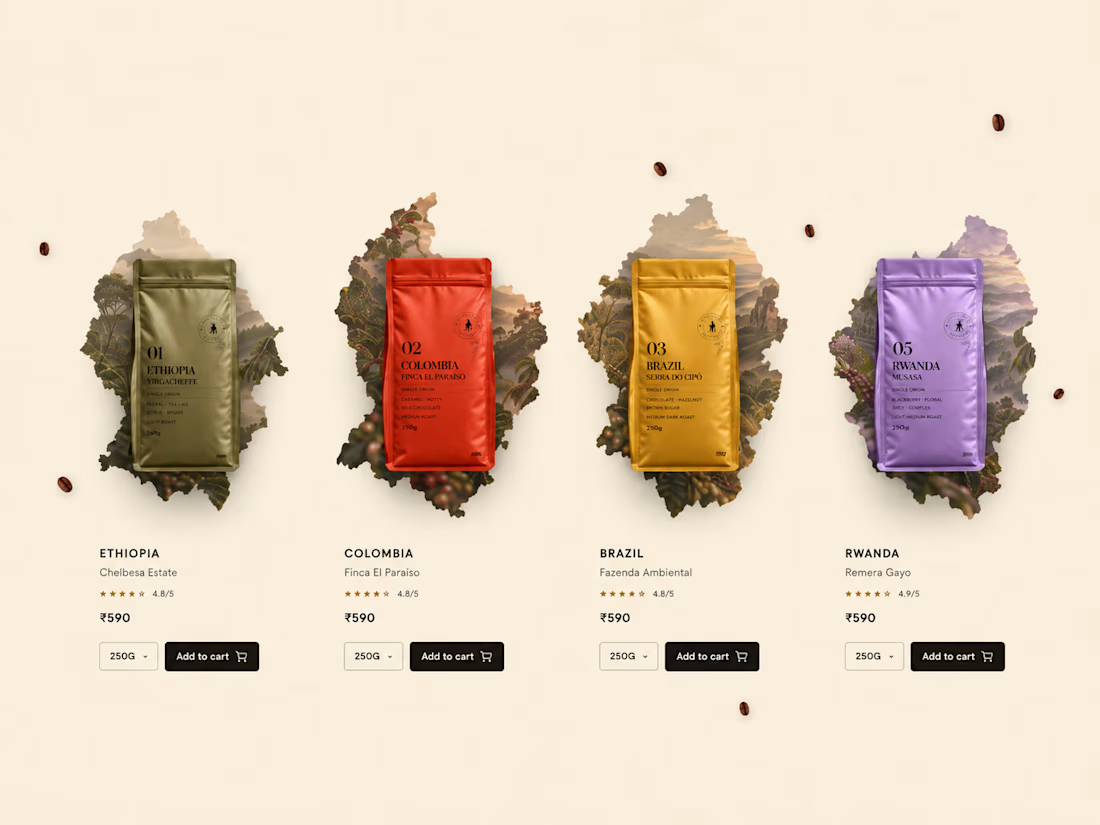
I never believed in staying in one design lane.
Over the last few years, I moved across the full spectrum:
• Branding taught me systems how a mark survives across every medium.
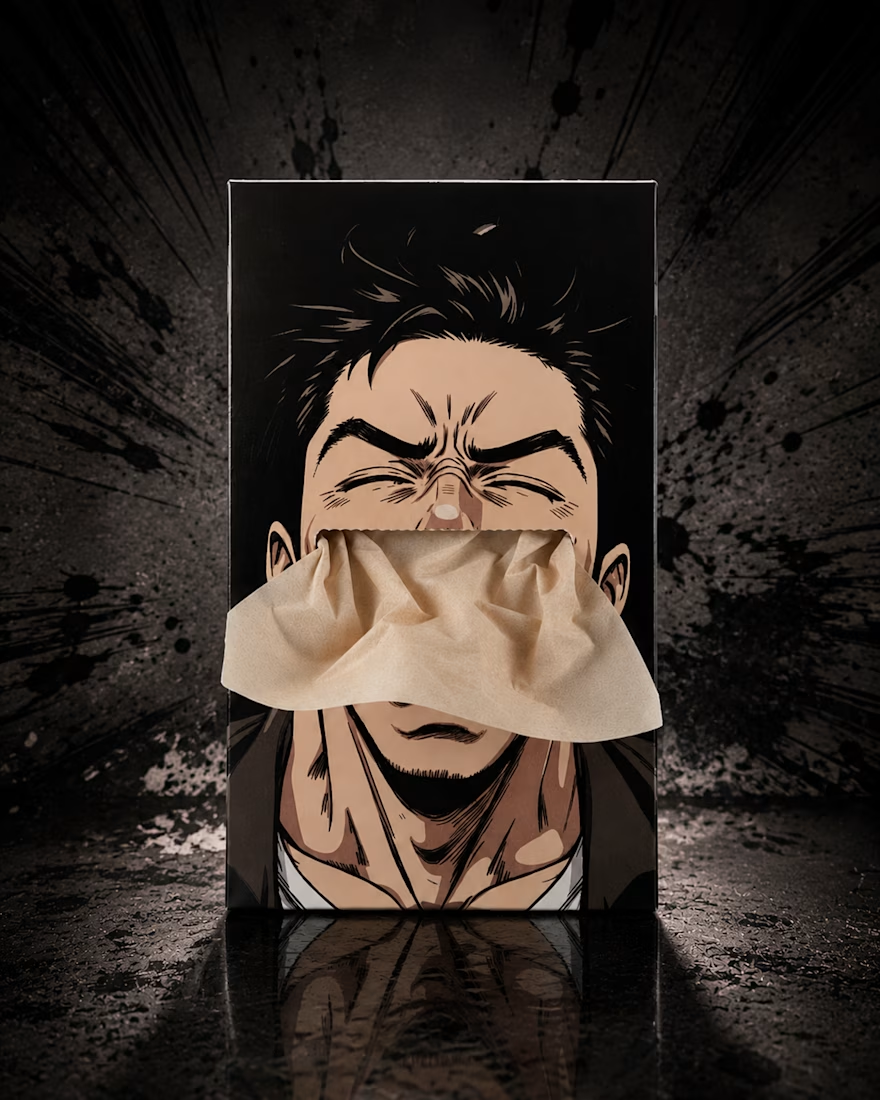
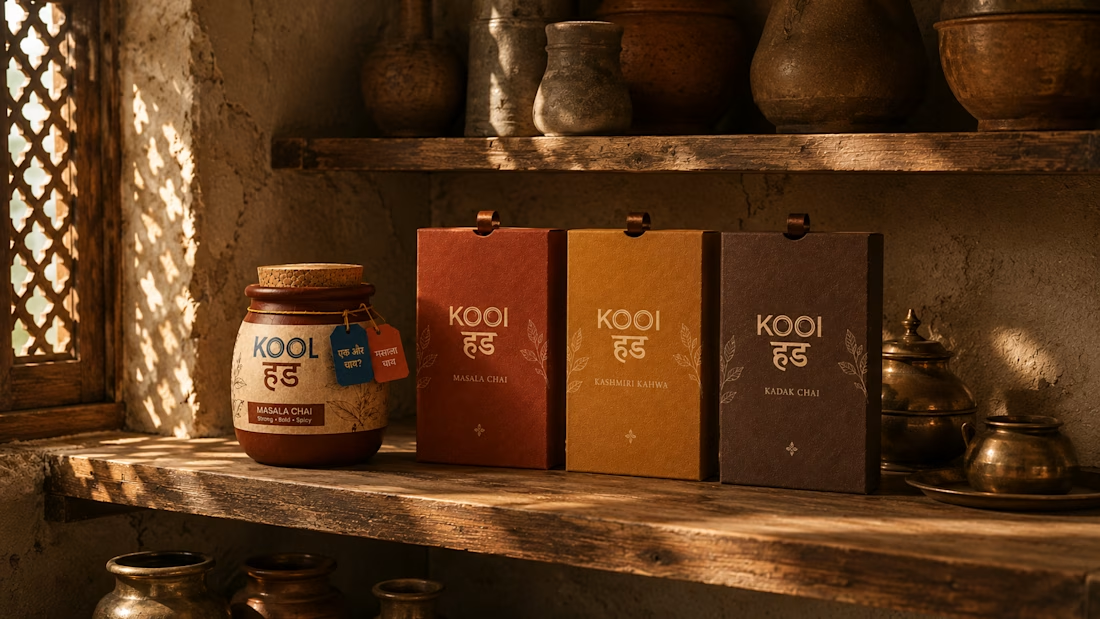
• Packaging taught me physical detail real print constraints, paper stock, and dieline tolerance.
• UI/UX taught me structure frictionless navigation and user behavior.
• Web design taught me how to connect the entire journey from shelf to screen.
Instead of keeping these disciplines in silos, I brought them together into a unified personal archive.
A few years of learning, building, and refining now in one place:
👉 https://saurabhhsharma.netlify.app/
I love how you connect branding to packaging and UX—the idea that a mark has to survive every medium is so true. The case-study grid makes that range feel tangible without losing the thread.