The network for creativity
Join 1.25M professional creatives like you
Connect with clients, get discovered, and run your business 100% commission-free
Creatives on Contra have earned over $150M and we are just getting started
Back to feedPost

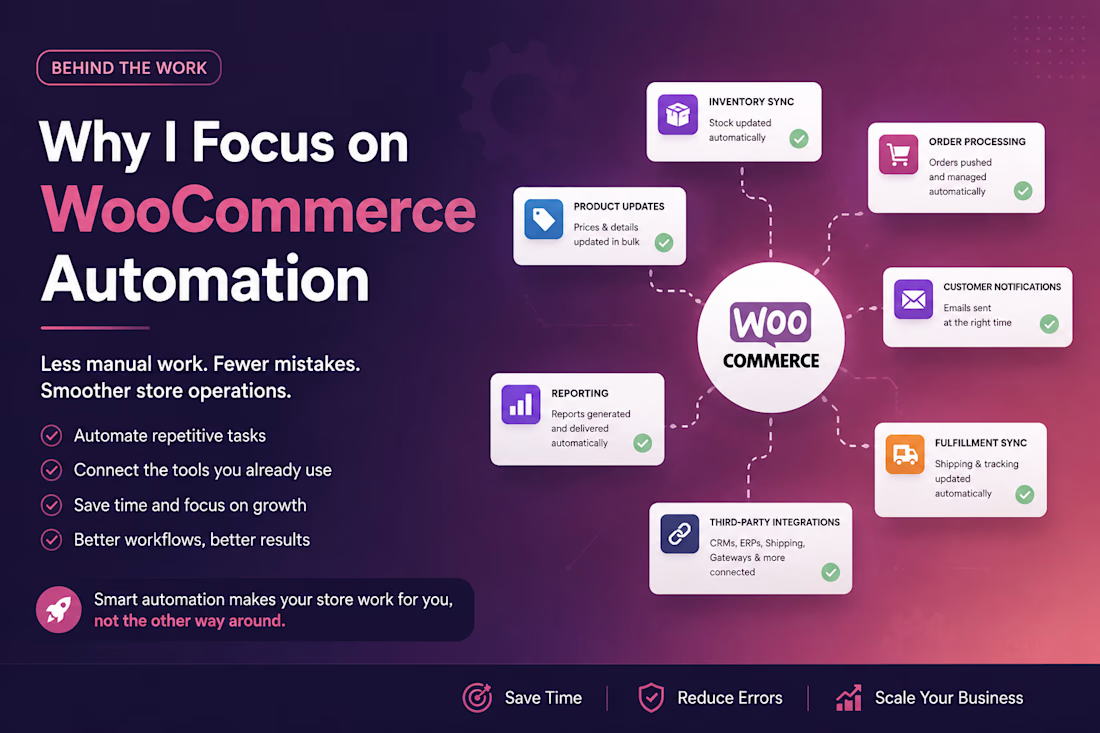
Many growing WooCommerce stores eventually reach a point where manual work starts slowing the business down.
Common examples:
Updating inventory by hand
Exporting product data manually
Checking failed orders one by one
Copying customer/order data between systems
Sending repetitive internal updates
Managing dealer or wholesale pricing manually
These are the types of problems I like solving.
With custom WordPress development, API integrations, webhooks, CSV exports, scheduled tasks, and automation workflows, a store can become much easier to operate.
The goal is simple: less manual work, fewer mistakes, and a cleaner system for the business.
The network for creativity
Join 1.25M professional creatives like you
Connect with clients, get discovered, and run your business 100% commission-free
Creatives on Contra have earned over $150M and we are just getting started





Related posts

The client's inventory wasn't organized. Products weren't consistently recorded, there was no SKU structure, and the system's stock figures didn't match what was physically on the shelves. That made it hard to know what they really had, what it was worth, and what their cost of sales should be.
What I did
Chose the right tool. I recommended QuickBooks Plus, which handles inventory tracking properly, rather than patching up spreadsheets.
Built the product list. I added every product to the system and allocated a clear SKU to each one.
Sorted the inventory. I organized the stock records so each item could be identified and tracked.
Reconciled to a physical count. I compared the system quantities with the actual stock on hand and resolved the differences.


🚨 WordPress Security Alert: This One Deserves Attention
WordPress 7.1.2 was released as a critical security update.
But here's the part developers should pay attention to:
Security researchers have reported active exploitation attempts targeting the vulnerability after the patch was released.
The vulnerability can allow an unauthenticated attacker to include local PHP files under certain conditions, potentially leading to remote code execution.
Patchstack has reported attackers moving beyond basic scanning and attempting to write PHP files to the server.
If you manage WordPress websites, don't just assume your sites are safe because automatic updates are enabled.
✅ Check your WordPress version
✅ Verify the update actually completed
✅ Review recently modified files
✅ Check admin users
✅ Review security logs
✅ Verify your backups
✅ Remove unused plugins/themes
A security patch is only useful if it's actually applied.
For WordPress developers, regular security monitoring should be part of website maintenance — not an afterthought.
#WordPress #WordPressSecurity #WebDevelopment #PHP #CyberSecurity #WordPressDeveloper


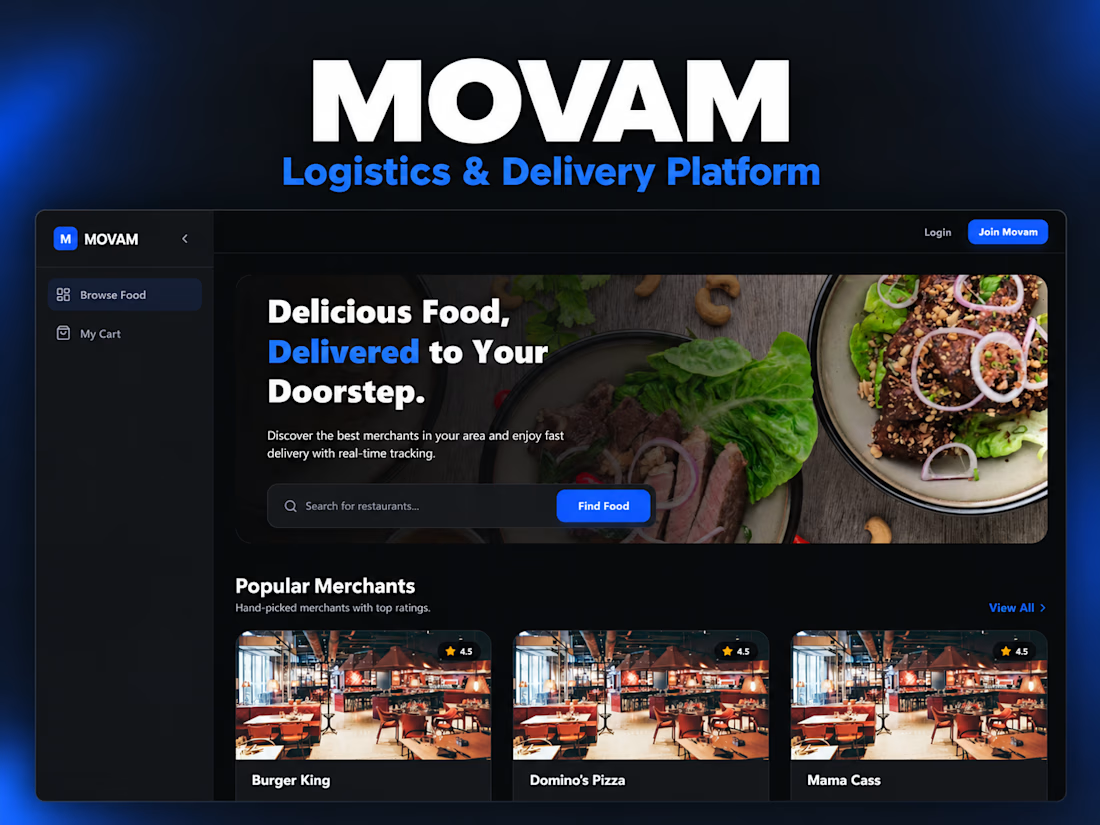
I developed Movam to bring customer ordering, merchant fulfilment, rider dispatch, and platform administration into one application.
I built the backend with Laravel and REST APIs, alongside Vue.js and TypeScript dashboards for customers, merchants, riders, and administrators.
Key features include:
Product browsing, cart, checkout, and order management.
Paystack payment integration, wallets, and OTP-verified withdrawals.
Dispatch logic that assigns deliveries to nearby available riders.
Mapbox integration for location services and delivery-distance calculations.
WebSocket events for order status and rider location updates.
Merchant product management and administrative reporting.
The project demonstrates my ability to translate business workflows into connected interfaces, backend services, and third-party integrations.
Tools: PHP, Laravel, Vue.js, TypeScript, Tailwind CSS, Pinia, Laravel Sanctum, Laravel Reverb, Paystack, and Mapbox.



Combining ordering, fulfilment and dispatch in one app probably trims a lot of manual steps. Laravel APIs feeding Vue TypeScript dashboards keep the data moving smoothly across customers, merchants and riders.