The network for creativity
Join 1.25M professional creatives like you
Connect with clients, get discovered, and run your business 100% commission-free
Creatives on Contra have earned over $150M and we are just getting started
Back to feedPost


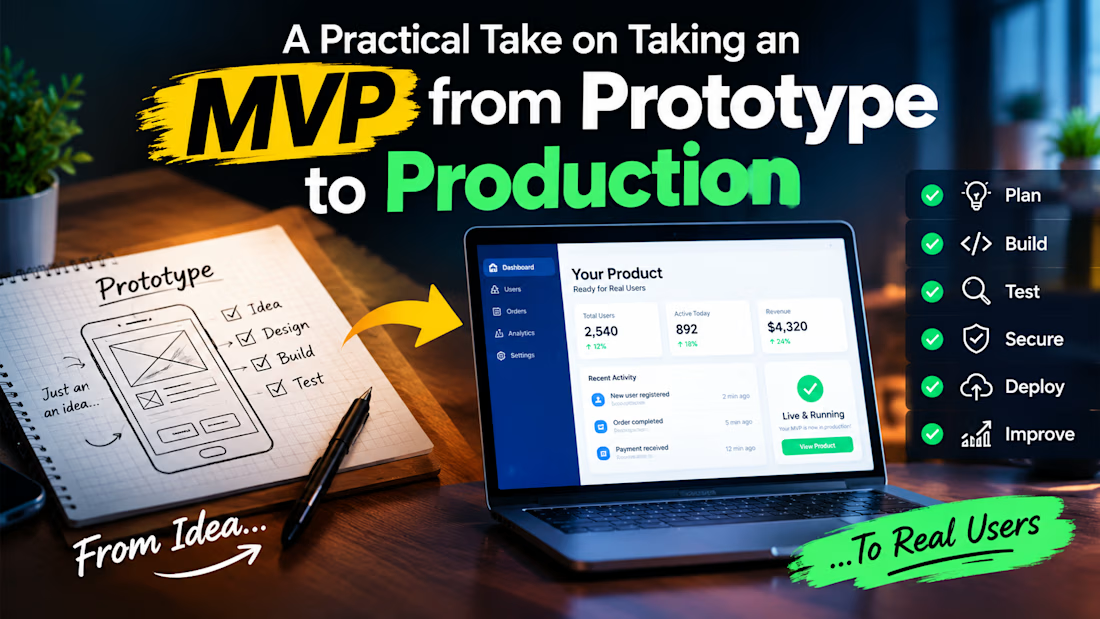
From Prototype to Production: A Practical Guide to Taking Your MVP to the Next Level
Building a prototype is exciting. You take an idea, turn it into something people can interact with, and begin to see your vision come to life. But moving from a prototype to a production-ready Minimum Viable Product (MVP) is where the real work begins.
A prototype demonstrates what a product could do. A production-ready MVP demonstrates that it can deliver real value to real users, reliably and securely.
For startups, founders, and development teams, the goal isn't to build everything at once. It's to transform the most valuable parts of an idea into a product that people can use, trust, and provide feedback on.
Here's a practical approach to making that transition.
1. Define What the MVP Must Prove
One of the most common mistakes founders make is treating an MVP as a smaller version of their final product. In reality, an MVP should be designed to test the most important assumptions behind a business idea.
Before writing more code, ask three questions:
What problem are we solving?
Who experiences this problem most urgently?
What is the smallest useful product that can demonstrate our solution works?
For example, if you're building a food delivery platform, the first MVP might support customer registration, restaurant listings, ordering, payments, and basic order tracking. Advanced loyalty programs, complex analytics, and multiple delivery models can come later.
The objective is to validate the core value proposition without spending months building features that users may never need.
2. Audit the Prototype Before Adding Features
A prototype often contains shortcuts that make sense during experimentation but become liabilities in production.
These might include temporary authentication, hardcoded data, incomplete error handling, unstructured database queries, or third-party integrations that haven't been tested under realistic conditions.
Conduct a technical audit before extending the existing codebase.
Review:
Code quality and maintainability
Database structure and data integrity
Authentication and authorization
API design and error handling
Third-party service dependencies
Performance bottlenecks
Deployment configuration and environment variables
Not every prototype needs to be rebuilt from scratch. Sometimes, improving the existing architecture is the most practical option. In other cases, a targeted refactor—or rebuilding a particularly fragile component—will save time in the long run.
The decision should be based on evidence, not on the assumption that all prototype code is disposable.
3. Prioritize Reliability Over Feature Quantity
A prototype can succeed during a demonstration even when important workflows are incomplete. Production software has to handle real-world behavior.
Users may lose their internet connection, submit a form twice, enter invalid information, abandon a payment, or return to an application after several days.
These situations should be anticipated rather than treated as unusual exceptions.
Start by mapping the critical user journeys and identifying what can go wrong at each step. Then implement appropriate validation, error messages, retries, logging, and recovery mechanisms.
For workflows involving payments or orders, pay particular attention to duplicate requests and inconsistent states. Idempotent operations, transaction handling, and clear status transitions can prevent costly mistakes.
A product doesn't need to be perfect before launch, but its essential workflows should be dependable.
4. Build Security Into the Product Early
Security is much easier to address before a product accumulates users, sensitive data, and complex dependencies.
At a minimum, a production MVP should have secure authentication, server-side authorization checks, appropriate input validation, protected secrets, encrypted connections, and sensible access controls.
Never rely on hiding a button in the frontend to protect an operation. The backend must verify that the requesting user is authorized to perform it.
Teams should also review dependency vulnerabilities, database permissions, file-upload handling, API rate limits, and the amount of personal information being collected.
A useful principle is data minimization: collect only what the product genuinely needs and establish a clear retention policy.
For products handling financial, medical, or other sensitive information, additional security, privacy, and regulatory requirements may apply.
5. Make the Architecture Ready for Real Usage
Production readiness doesn't mean designing a system for millions of users before the first customer arrives.
It means creating an architecture that supports the current requirements while allowing the product to evolve without unnecessary complexity.
A typical MVP might use:
A frontend built with React, Next.js, Flutter, or another suitable framework
A backend API with clear business logic
A relational database such as PostgreSQL when appropriate
Managed authentication and storage services where they reduce operational work
A reliable hosting and deployment platform
Centralized logging and basic monitoring
The best technology choices depend on the product, the team's experience, the expected workload, and the budget.
Avoid introducing microservices, complex orchestration, or multiple databases without a demonstrated need. A well-structured monolith is often sufficient for an early-stage product.
The goal is to minimize unnecessary complexity while preserving maintainability, security, and room for growth.
6. Automate Testing and Deployment
Manual testing is useful, but it becomes increasingly unreliable as a product changes.
Before launch, establish a practical testing strategy that covers the most important failure points.
Unit tests verify individual functions and business rules.
Integration tests check whether components such as APIs, databases, and payment providers work together correctly.
End-to-end tests validate complete user journeys, such as registering, creating an order, and completing a checkout.
Not every feature needs the same level of testing. Prioritize workflows that could cause financial loss, expose sensitive information, corrupt data, or prevent users from accessing the product.
A basic continuous integration and continuous deployment (CI/CD) pipeline can automatically run tests, check code quality, and deploy approved changes.
Use separate development, staging, and production environments where practical. This reduces the risk of testing unfinished changes against live customer data.
7. Prepare for Monitoring and Recovery
Launching a product isn't the end of development. It's the beginning of operating software in an unpredictable environment.
A production MVP should provide enough visibility to answer questions such as:
Is the application available?
Are API response times increasing?
Are requests failing unexpectedly?
Are database connections becoming a bottleneck?
Are payments or external integrations failing?
Are users getting stuck in important workflows?
Set up structured logs, error tracking, uptime monitoring, and alerts for critical failures.
Backups are equally important. Configure them before launch, establish a retention policy, and periodically test restoration. A backup that has never been tested is not a reliable recovery plan.
For higher-risk changes, consider staged rollouts, feature flags, and a documented rollback procedure.
You don't need an expensive observability platform on day one. You do need a way to detect problems and respond before they become larger incidents.
8. Validate Performance Under Realistic Conditions
An application that performs well with five test users may behave differently when dozens or hundreds of users interact with it simultaneously.
Test the areas most likely to become bottlenecks, including database queries, large file uploads, expensive API calls, background jobs, and third-party integrations.
Measure actual response times before optimizing. Caching, database indexing, pagination, and asynchronous processing can help, but each should address a real problem.
Set performance expectations for critical workflows and test against a realistic workload. If the product is expected to support a launch campaign or a large customer onboarding event, plan for that demand in advance.
The objective isn't to achieve impressive benchmark numbers. It's to ensure users can complete important tasks without frustrating delays or failures.
9. Launch With a Feedback Loop
A successful MVP launch should produce more than downloads, sign-ups, or social media attention. It should generate evidence about whether the product solves a meaningful problem.
Start with a controlled group of target users when possible. Observe how they use the product, where they struggle, what they ignore, and what they repeatedly request.
Track a small set of meaningful metrics, such as:
Activation: Do users reach the product's first meaningful outcome?
Engagement: Do they return to use the core functionality?
Retention: Do they continue using the product over time?
Conversion: Do they take the action that supports the business model?
Reliability: Can they complete essential workflows successfully?
Avoid measuring success through vanity metrics alone. A large number of registrations means little if users never experience the product's core value.
Combine quantitative analytics with interviews and direct feedback. Numbers can reveal where a problem exists; conversations can help explain why.
10. Build a Roadmap Based on Evidence
Once the MVP is in production, new ideas will arrive quickly. Customers will request features, stakeholders will propose improvements, and the development team will identify technical opportunities.
Without clear priorities, the roadmap can become a collection of disconnected requests.
Evaluate potential work using a few practical criteria:
Does it solve a demonstrated customer problem?
Will it improve activation, retention, revenue, or another important outcome?
How much effort and risk does it introduce?
Does it address a security, reliability, or operational concern?
What is the opportunity cost of delaying other work?
Some of the most valuable post-launch improvements won't be new features. They may involve simplifying onboarding, fixing a confusing workflow, improving performance, or resolving a recurring support issue.
Let evidence guide the next iteration.
A Practical MVP Production Checklist
Before launching, review the following areas:
Core user journeys work from beginning to end.
Authentication and permissions are enforced on the server.
Critical business logic is tested.
Database migrations and data validation are in place.
Payments and third-party integrations handle failures appropriately.
Secrets and production credentials are protected.
Logging, error tracking, and uptime monitoring are configured.
Backups and recovery procedures have been tested.
Deployment and rollback procedures are documented.
Privacy policies and applicable compliance requirements are addressed.
A feedback process and a small set of product metrics are ready.
The checklist should be adapted to the product's risk profile. A simple productivity tool and a financial services application won't have identical launch requirements.
Final Thoughts
Taking an MVP from prototype to production is not about making everything bigger or more sophisticated. It's about making the essential experience dependable enough for real people to use.
The most effective teams combine focused scope, pragmatic engineering, security, automated testing, operational visibility, and continuous customer feedback.
They resist the temptation to overbuild, but they also recognize that a quick demonstration and a reliable product are two different things.
Build the smallest product that delivers real value. Make its critical workflows reliable. Launch, measure, learn, and improve.
The network for creativity
Join 1.25M professional creatives like you
Connect with clients, get discovered, and run your business 100% commission-free
Creatives on Contra have earned over $150M and we are just getting started



Related posts


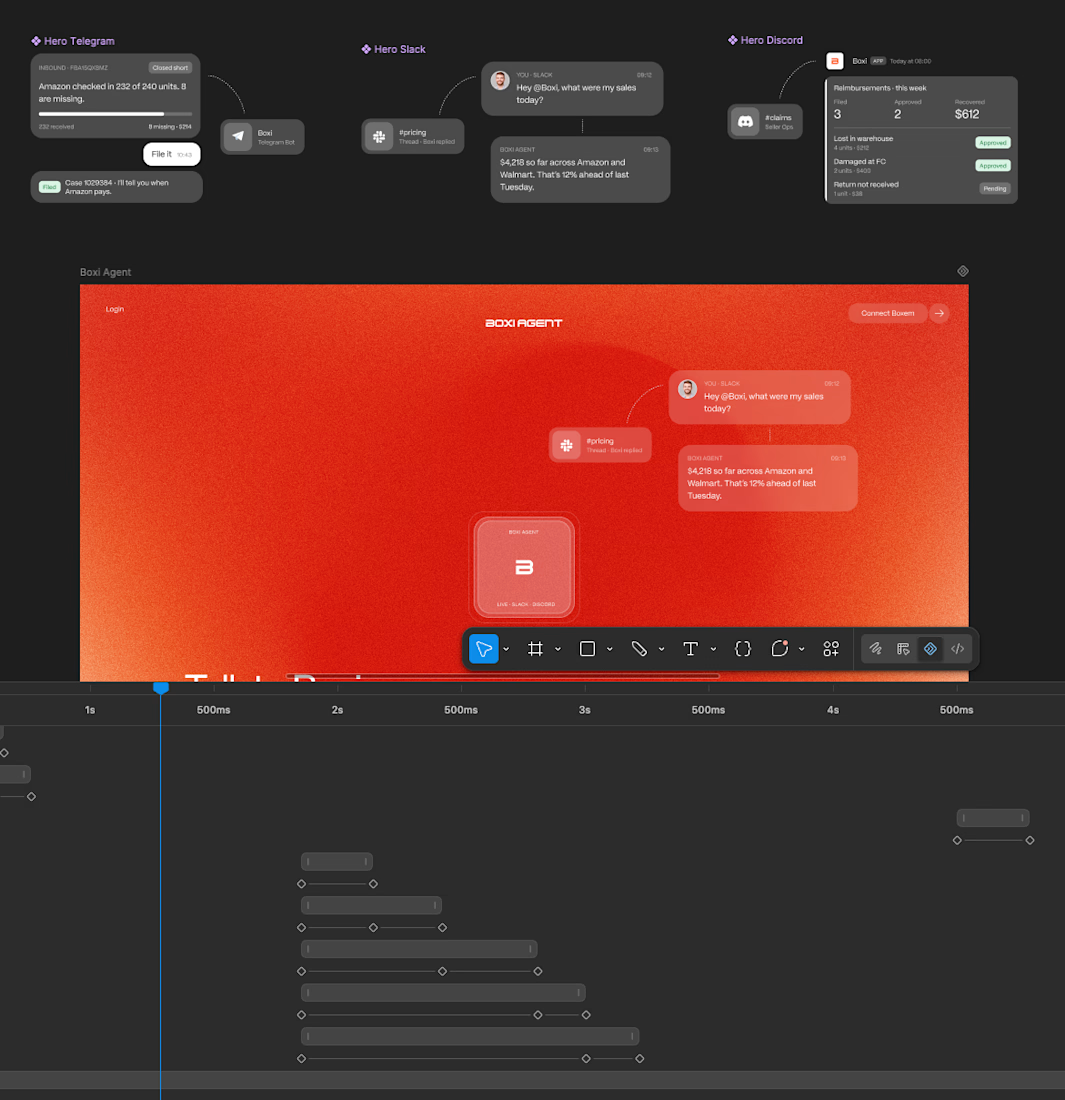
When a section relies on animation, I now prototype it in Figma motion instead of writing it out. A simple prototype gives the client and the developer the same clear reference: less back and forth, more precise feedback and a smoother build. Here’s the hero animation for a recent landing page, shown as a working prototype.


Creative work

Testing doesn't have to slow your team down.
A motion design concept for Hostable focused on simplifying the testing workflow.
A flowing gradient path, glowing UI elements, and smooth transitions turn a technical process into a simple and visually engaging experience.

The gradient path leading the eye to Run workflow works well. Did you build the loop in After Effects?

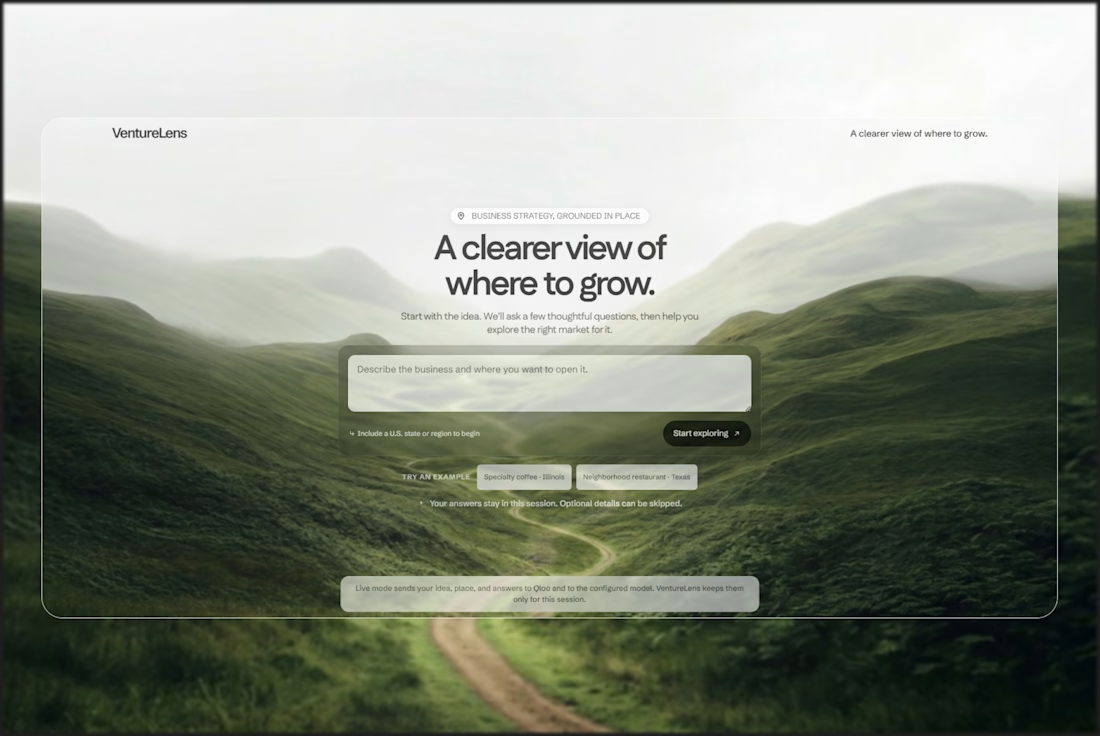
VentureLens — Venture Lens is an AI agent that turns your raw idea into a good investment using evidence-based sparring.
Instead of putting you through a stale 20-questions test, it asks the one question until it gets your usual answer, makes a short list of recommendations, then combines your data with Qloo’s taste intel and place profiles to create a full, top-to-bottom business brief you can read and download right away as markdown.
Check it here- https://devpost.com/software/venturelens-ne53u4


Asking one sharp question at a time instead of a 20-question form is the right call. Curious how it decides an answer is good enough to move on, since that's where most validation agents stall or rubber-stamp.