The network for creativity
Join 1.25M professional creatives like you
Connect with clients, get discovered, and run your business 100% commission-free
Creatives on Contra have earned over $150M and we are just getting started
Back to feedPost

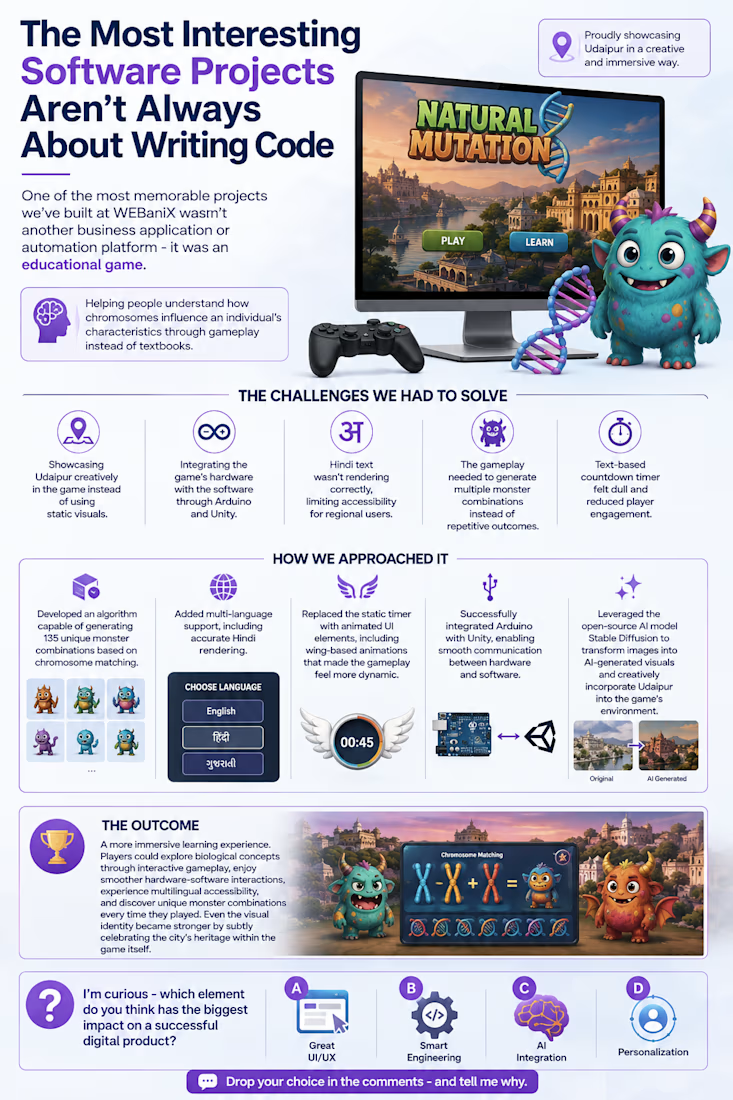
The Most Interesting Software Projects Aren't Always About Writing Code
One of the most memorable projects we've built at WEBaniX wasn't another business application or automation platform - it was an educational game.
At first glance, it looked like a fun, interactive experience. But behind the scenes, it was solving something much bigger: helping people understand how chromosomes influence an individual's characteristics through gameplay instead of textbooks.
Building the game was exciting. Making the experience feel seamless was the real challenge.
The Challenges We Had to Solve
As development progressed, our team encountered a few interesting roadblocks:
The client wanted the game to proudly reflect its roots by showcasing Udaipur in the background - but in a creative, immersive way rather than using static visuals.
Integrating the game's hardware with the software through Arduino and Unity wasn't as straightforward as expected.
Hindi text wasn't rendering correctly, limiting accessibility for regional users.
The gameplay needed to generate multiple monster combinations instead of repetitive outcomes.
Even something as simple as the text-based countdown timer felt dull and reduced player engagement.
Each challenge looked small in isolation. Together, they shaped the overall user experience.
How We Approached It
Rather than applying quick fixes, we focused on making every interaction more engaging.
Our team:
Developed an algorithm capable of generating 135 unique monster combinations based on chromosome matching.
Added multi-language support, including accurate Hindi rendering.
Replaced the static timer with animated UI elements, including wing-based animations that made the gameplay feel more dynamic.
Successfully integrated Arduino with Unity, enabling smooth communication between hardware and software.
Leveraged the open-source AI model Stable Diffusion to transform images into AI-generated visuals and creatively incorporate Udaipur into the game's environment.
The Outcome
The result wasn't just a better game - it was a more immersive learning experience.
Players could explore biological concepts through interactive gameplay, enjoy smoother hardware-software interactions, experience multilingual accessibility, and discover unique monster combinations every time they played. Even the visual identity became stronger by subtly celebrating the city's heritage within the game itself.
Projects like these remind me that great software isn't defined by the technology behind it. It's defined by how naturally technology disappears into the experience.
I'm curious - which element do you think has the biggest impact on a successful digital product?
A) Great UI/UX
B) Smart Engineering
C) AI Integration
D) Personalization
Drop your choice in the comments - and tell me why.
The network for creativity
Join 1.25M professional creatives like you
Connect with clients, get discovered, and run your business 100% commission-free
Creatives on Contra have earned over $150M and we are just getting started




Related posts

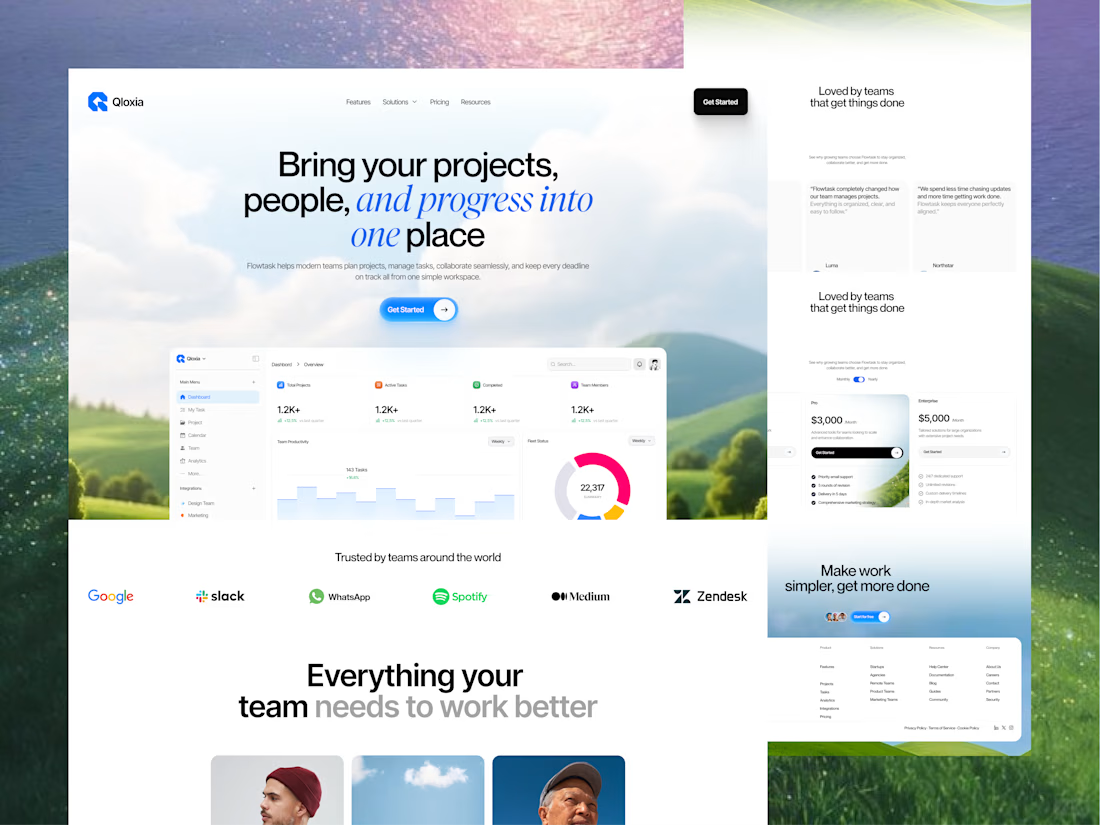
Qloxia - Project Management SaaS Web UI UX Design
Complex workflows deserve clearer interfaces.
Qloxia is a project management and team collaboration SaaS concept designed around a simple product promise:
Bring projects, people, and progress into one place.
The experience combines:
• Project management
• Task management
• Team collaboration
• Planning and analytics
• Progress visualization
• Social proof
• SaaS pricing
• Conversion-focused UX
The design direction uses soft visual environments, editorial typography, rounded components, product-led storytelling, and structured content hierarchy to make the platform feel both professional and approachable.
The goal wasn't to make another dashboard-heavy SaaS website.
It was to create an experience where users can quickly understand the product, explore its capabilities, build confidence, and take action.
Building a SaaS product, dashboard, or web application?
Taqwah can help you transform your product idea into a clear, scalable, conversion-focused UI/UX experience - from strategy and UX to polished interface design.
👉 Send us your product idea and let's discuss how we can design the experience around your business goals.
Project ManagementtaskmanagementsaaswebsiteProduct DesignUX DesignAdobe IllustratorAdobe PhotoshopFigma




🚀 3D Animated Product Website — Built for a Client
Recently designed and developed this interactive 3D website for a client’s product, combining modern UI/UX with smooth animations and an engaging user experience.
✨ 3D Product Animation
✨ Smooth Interactive Experience
✨ Premium UI/UX
✨ Responsive Design
🔗 Live Demo: https://www-juicydrop.netlify.app/
Have a product or business that needs a modern 3D animated website?
📩 Feel free to reach out — I’d love to work on your next project.
💬 What do you think of the design? I’d love to hear your feedback!
#3DWebsite #3DAnimation #WebDevelopment #WebDesign #UIUX #FrontendDeveloper #FreelanceDeveloper #Contra


🚀 How I Use AI in UX/UI Design: 7 Real Workflows from My Projects
There’s a lot of hype right now around AI replacing designers.
I don’t think that’s the case. In the right hands, AI can complement a good designer and make them stronger and more efficient.
In this article, I want to share my experience using AI in UX/UI design.


Good read! ❤️