The network for creativity
Join 1.25M professional creatives like you
Connect with clients, get discovered, and run your business 100% commission-free
Creatives on Contra have earned over $150M and we are just getting started
Back to feedPost

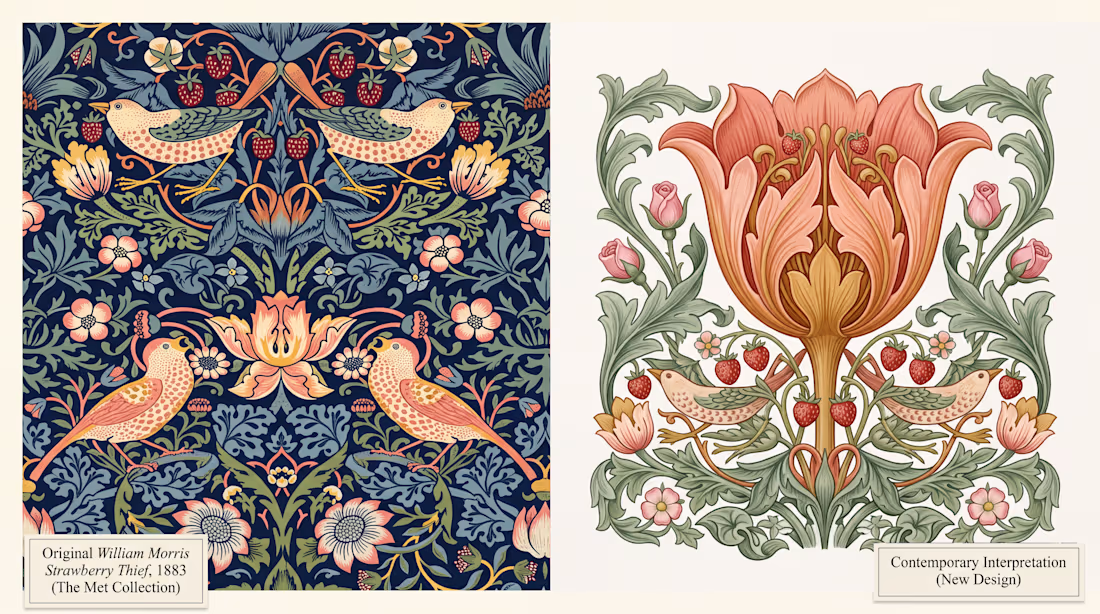
I selected this work because of my ongoing textile design practice for fashion brands. Morris’s approach to transforming natural forms into structured, repeatable patterns directly informs my own process of developing surface designs that balance organic inspiration with the technical demands of fabric production.
Source Work
William Morris, Strawberry Thief textile, design registered 1883, printed 1917–23, Merton Abbey Tapestry Works. Held in the collection of The Metropolitan Museum of Art.
Morris’s work is fundamentally concerned with systematising nature into repeatable, decorative form. His patterns distil botanical observation into structured motifs that can be tiled infinitely while retaining a sense of organic life.
Conceptual Approach
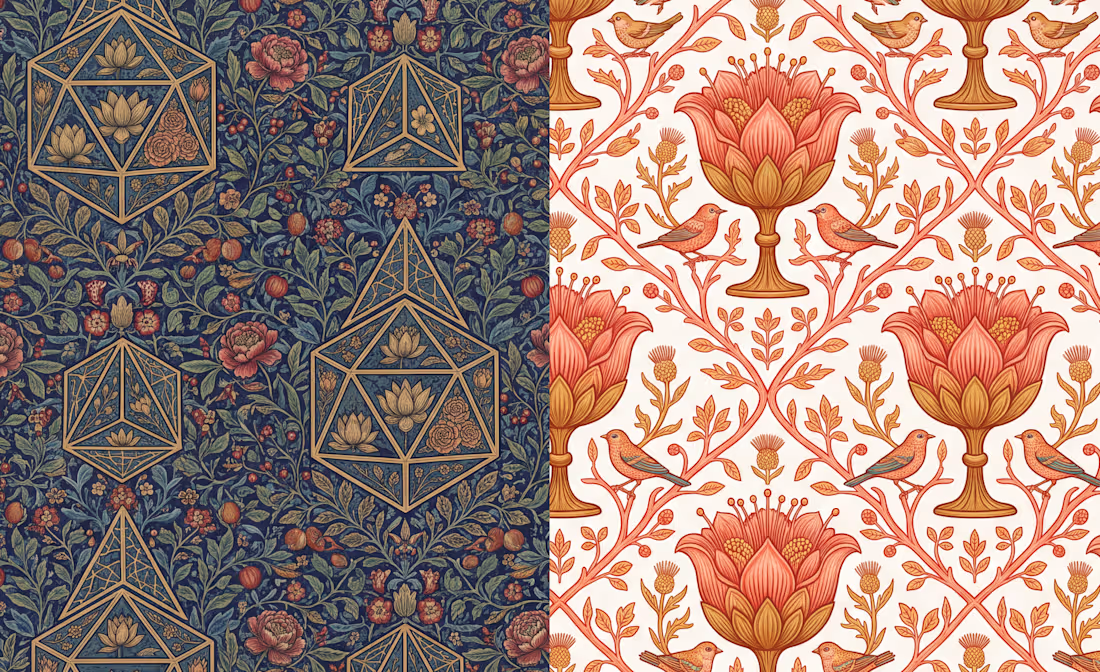
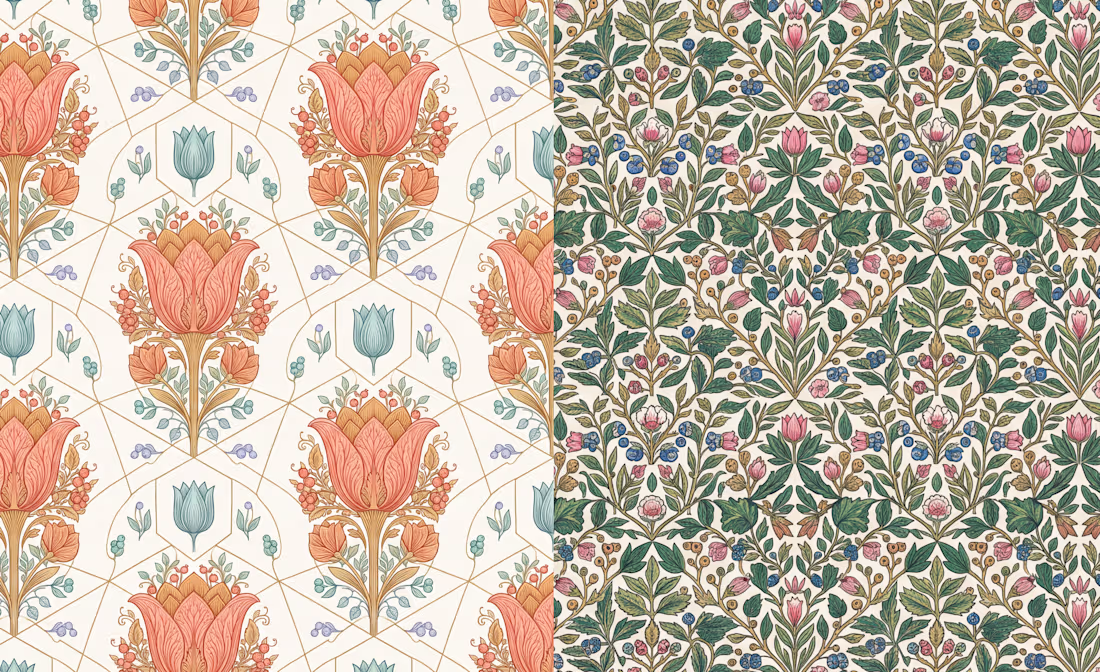
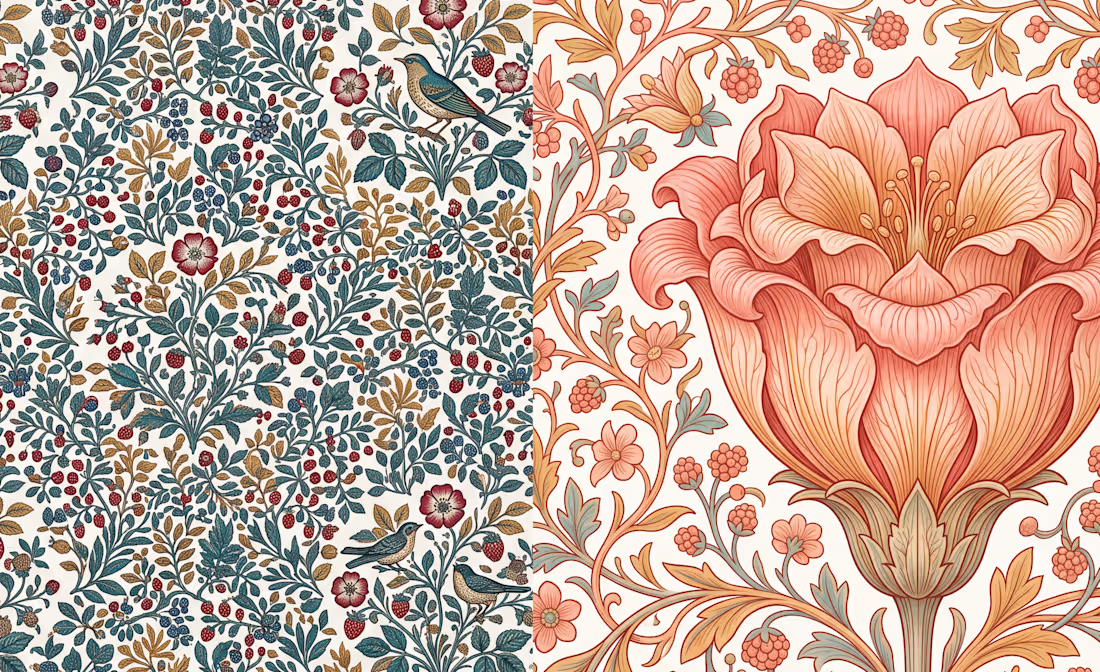
My approach is to deconstruct and analyse the image in order to extract the underlying visual logic of the design. By identifying and codifying the rules that govern Morris’s pattern, it becomes possible to generate new work that remains faithful to the spirit and structure of the original, while allowing for variation and reinterpretation. In effect, the pattern is treated as a rule-based system that can be re-applied to create related but distinct compositions.
Prompt
After deconstructing the pattern into its botanical components and analysing the work, create a prompt that:
Lists 5–7 visual rules that define this system (for example: “organic curves,” “dense overlapping,” “naturalistic but stylised forms”).
Describes the overall composition: layout, density, rhythm, and symmetry of the pattern.
Identifies the main motifs (strawberries, leaves, birds, stems, background fields).
Explains how these motifs repeat and interlock to form a seamless textile pattern.
The output should be a concise design brief (6–10 bullet points) that could guide the creation of a new pattern derived from this work.
I've created a technique called "Reusable System-Thinking Workflow"
The network for creativity
Join 1.25M professional creatives like you
Connect with clients, get discovered, and run your business 100% commission-free
Creatives on Contra have earned over $150M and we are just getting started
Trending
retrofuturism
Share your favorite designs from the past exploring the distant future. Or your own take on the aesthetic 🚀
halftone
Dots. Texture. Grain. Let's see your designs using the halftone technique.

Midjourney
Creatives are showing off what they're making with Midjourney.
colorgrade
Video editors sound off: How do you enhance the mood of your video in color grading?
Related posts

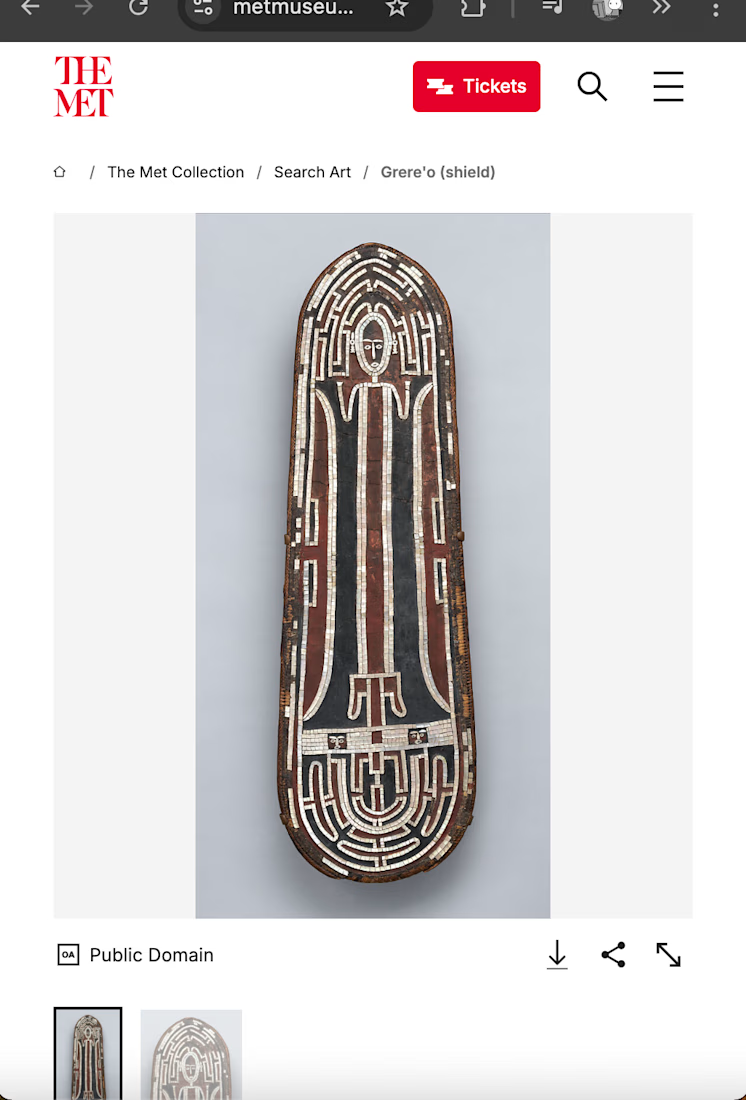
Inspired by: Grere'o (Shield), Solomon Islands, early-to-mid 19th century, from The Met's open archive.
Link to Original Art : https://www.metmuseum.org/art/collection/search/310073
I liked this shield because of its beautiful pattern and shine. It has a detailed design with a human figure in the middle, made from woven cane and shiny shell pieces. It looked like something made to be seen, not just used.
What I made: I turned the shield into a surfboard, but kept its design exactly the same, same pattern, same shine, same figure. I only changed its shape into a board. I picked a surfboard because its long shape already matches the shield's shape, so it felt like a natural change.
How I made it: I downloaded the Sheild image from Met's open archive, then imported the sheild picture in flora , connected picture with text prompt node, then I connected both picture and text prompt node to the video node and I selected the seedance 2.5 model with 30sec clip, I kept the work flow simple because I am new to flora and I was afraid maybe I may use all the credits before even creating good video, add this in how I made it
Why I made this: I wanted to take this design out of the museum and give it a new life in something people can use and see in motion. I think the shield's pattern is still beautiful enough to belong in The Met today, just now on a different object.
Instagram post link: https://www.instagram.com/p/Dc3Nn8IAT2O/
Twitter(X) post link: https://x.com/AhmadSauleh/status/2095827847915163648?s=20

Such a clean fusion of culture and modern sport! Did you encounter any issues getting FLORA to keep the intricate shell pattern consistent across different camera angles

Our entry for the @FLORA Museum Challenge!
We picked Eirene, the personification of Peace, from The Met.
The idea was simple: when we look at a piece of art, we all imagine something different.
So we played with that. Different people looking at the same sculpture, each one creating their own version of it in their head!


This is great!! Don't forget to include your Met reference link too!

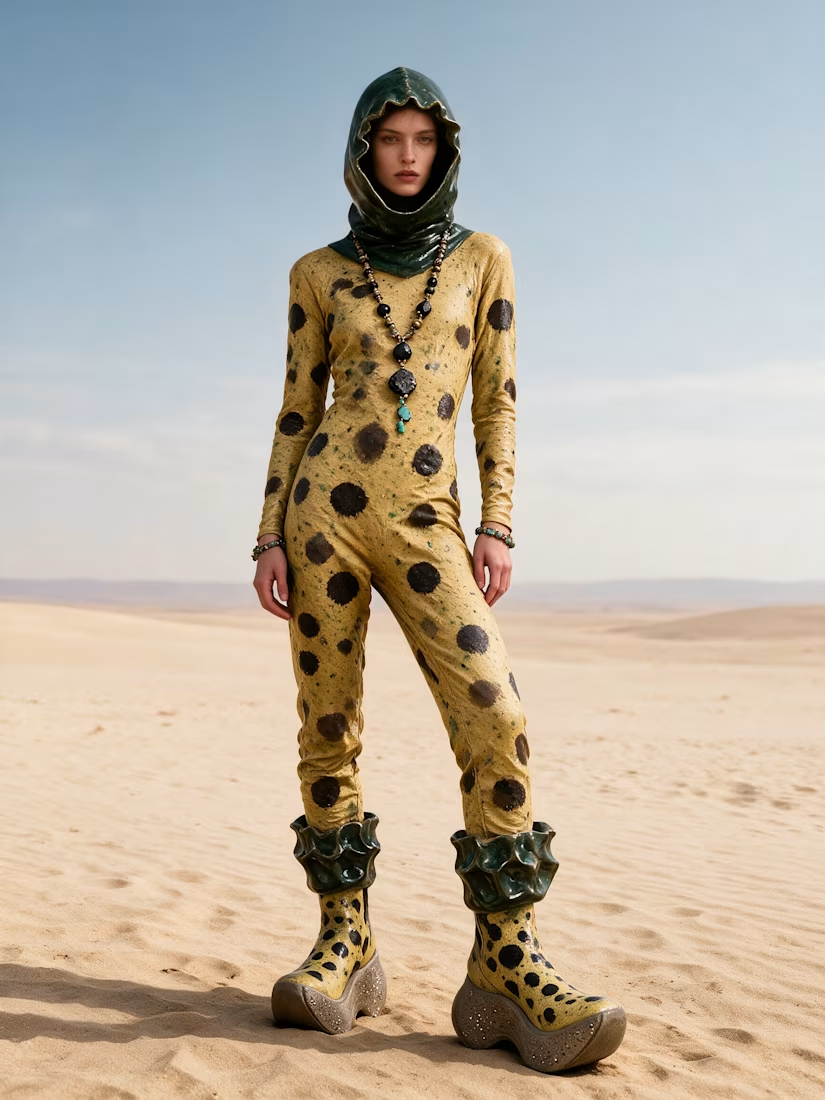
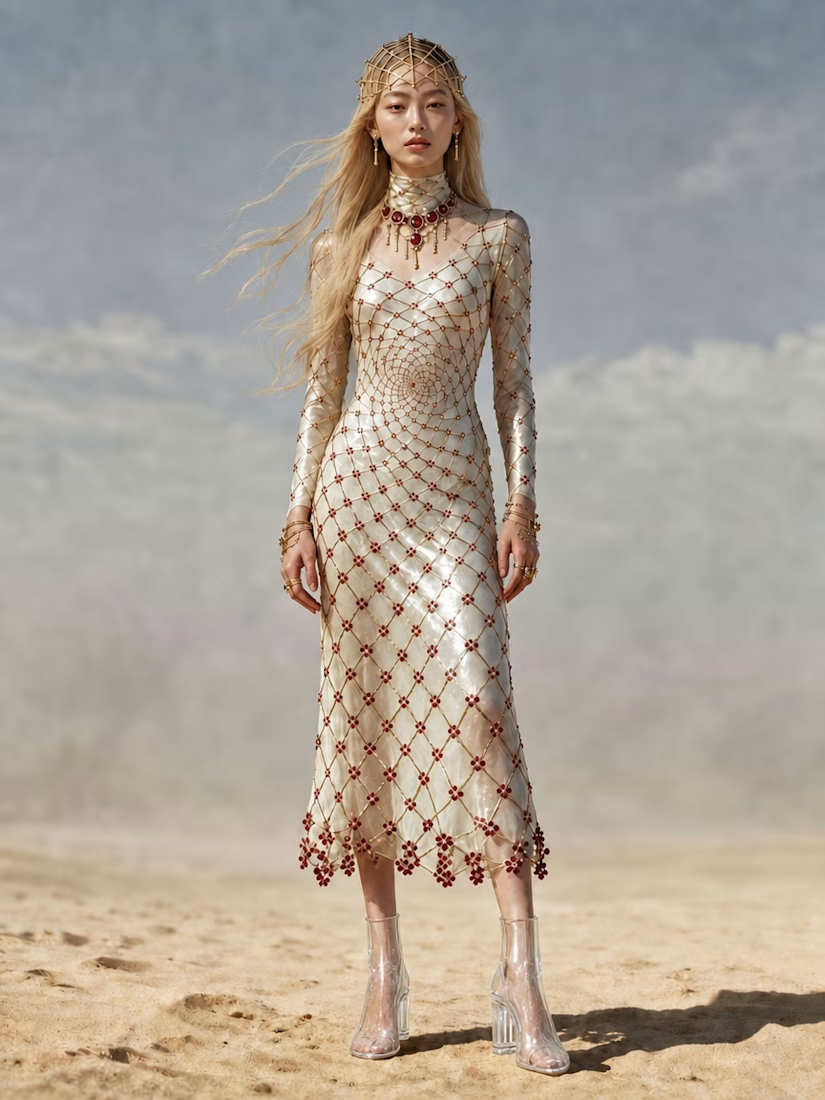
Weird, magnificent, captivating. Welcome to the Met Museum Challenge runway, where I reimagined 11 items from the archive as a fashion show.
*Please turn your sound on when watching*
The looks
I. Vase, George E. Ohr, 1897–1900
https://www.metmuseum.org/art/collection/search/19874
II. Plate, Imperial Porcelain Manufactory, St. Petersburg, 1755–60
https://www.metmuseum.org/art/collection/search/204533
III. Feathered panel, Wari artist(s), 650–1000 CE
https://www.metmuseum.org/art/collection/search/312677
IV. Marble head of an athlete, Roman, ca. 138–192 CE
https://www.metmuseum.org/art/collection/search/248579
V. Studies of Fruits, Insects and Shells, attributed to Georg Flegel, late 16th–mid-17th century
https://www.metmuseum.org/art/collection/search/334930
VI. Seated Buddha, Gandhara, 1st–mid-2nd century
https://www.metmuseum.org/art/collection/search/72381
VII. Vase with Molded Diamond Pattern, 10th–11th century
https://www.metmuseum.org/art/collection/search/453244
with Red jasper amulet of the sun on the horizon, Egyptian, 664–334 BCE
https://www.metmuseum.org/art/collection/search/243717
VIII. Miniature broad collar, early Ptolemaic, 332–246 BCE
https://www.metmuseum.org/art/collection/search/547900
IX. Irises, Vincent van Gogh, 1890
https://www.metmuseum.org/art/collection/search/436528
X. Manuscript Leaf, from a Book of Hours, French, 15th century
https://www.metmuseum.org/art/collection/search/475399
XI. Inlay, feather pattern, Ptolemaic–Roman, ca. 200 BCE–CE 100
https://www.metmuseum.org/art/collection/search/551583
How I built it
Honestly, it took many, many iterations. I started with a completely different idea. It was going to be a post-apocalyptic world, and the outfits would represent the new world that came after. But the more I built it on the FLORA canvas, the more it leaned toward a fashion show, so at some point I stopped fighting it back and started creating.
Every object came onto the canvas as its own starting point and branched out from there (silhouette, material, styling). Having all 11 chains on the same board is what kept it feeling like one collection instead of eleven separate experiments.
Then I built each look magazine style, so you can see the object and the outfit side by side, the way you'd meet it in the gallery. And the runway show at the end.
I hope you'll enjoy it, and let me know which one you like the most.

This is the best I've ever seen! It's a creative idea and a work of art. I love it!