The network for creativity
Join 1.25M professional creatives like you
Connect with clients, get discovered, and run your business 100% commission-free
Creatives on Contra have earned over $150M and we are just getting started
Back to feedPost

Your app can pass every planned test and still fail real users.
That’s where exploratory QA comes in.
I test beyond the happy path, looking for broken flows, edge cases, inconsistent states and issues users will actually hit.
Building something? Let me try to break it before your users do.
The network for creativity
Join 1.25M professional creatives like you
Connect with clients, get discovered, and run your business 100% commission-free
Creatives on Contra have earned over $150M and we are just getting started






Related posts


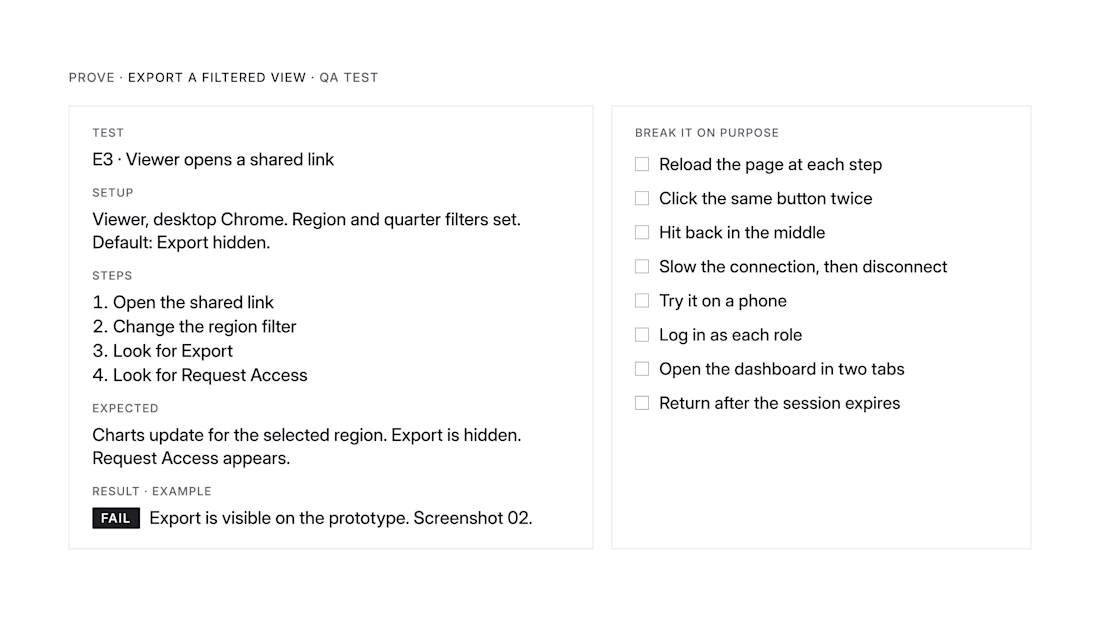
I've found writing QA tests before features are built is a cheat code for building quality software design.
Before you build, try testing what yours does when you:
- Interrupt it: reload, hit back, let the login expire. It should keep the user's progress.
- Repeat it: double-click, open two tabs. It should run once.
- Feed it bad input: the wrong file, a huge one, an empty one. It should say what's wrong and how to fix it.
- Change who or where: a different role, a phone, no internet. It should show only what that user can do, with a way back.

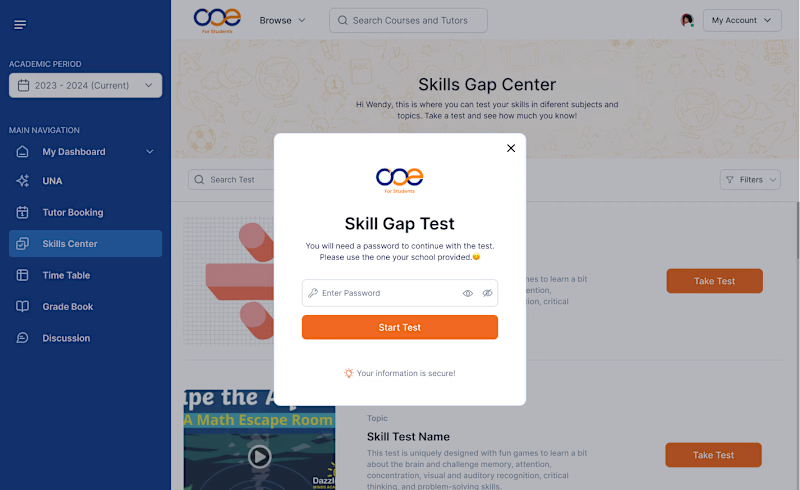
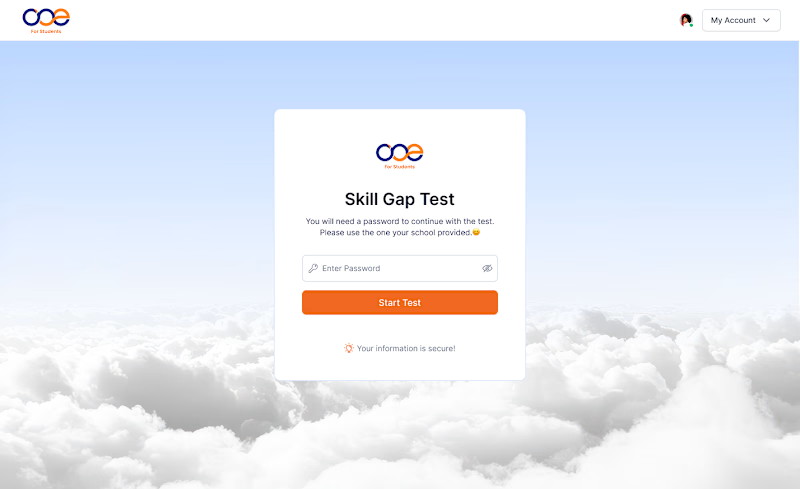
Which Skill Gap Test experience would you choose? 👀
I designed two different experiences for the same Skill Gap Test.
Option A: A modal inside the dashboard — users stay in context.
Option B: A dedicated page — a cleaner, distraction-free experience.
If you were using this platform as a student, which experience would you prefer?
A or B? Why? 👇
#UIDesign #UXDesign #ProductDesign
10 votes
Ends in 17h

Dedecated Page is more professional and minimalistic ❤️


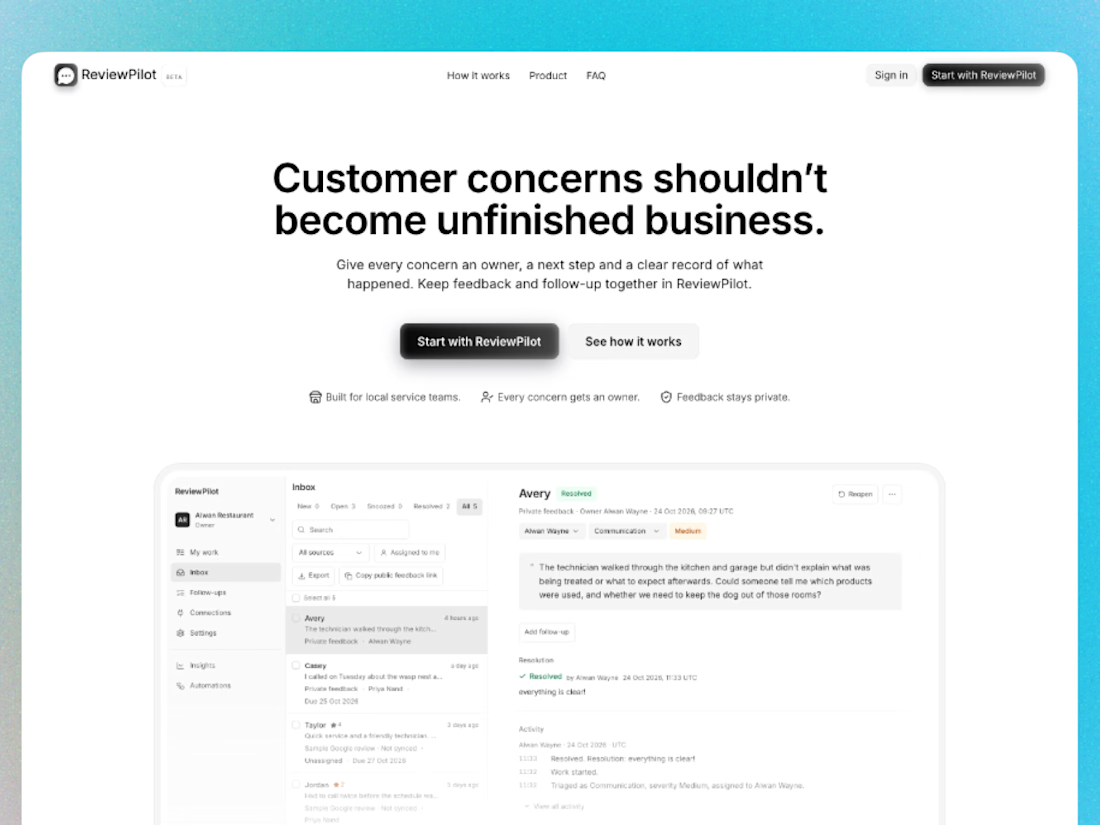
I built ReviewPilot with @Base44 to help small businesses keep track of what happens after a customer leaves feedback.
Using a restaurant demo, the app brings private feedback, assigned follow-ups, due dates, response approval, and resolution history into one workspace. In-app notifications let the person responsible know when follow-up work is assigned.
A big part of the process was simplifying the experience: reducing competing buttons, making ownership clearer, and refining typography, spacing, and mobile layouts.
The goal was practical—help a team understand the concern, identify the next step, and record how it was handled.
Here’s a one-minute walkthrough using fictional sample data. 👇