The network for creativity
Join 1.25M professional creatives like you
Connect with clients, get discovered, and run your business 100% commission-free
Creatives on Contra have earned over $150M and we are just getting started
Back to feedPost
Not another LLM wrapper.
We tested the same AI model on 25 business cases involving refunds, missing orders, and risky payments.
→ Model alone: 28% accuracy, 3 rule violations
→ Model inside VoraX: 92% accuracy, 0 rule violations
The model didn’t get smarter. The controls around it did.
Three things made the difference:
The agent retrieves company policies instead of making up the rules.
Money doesn’t move until an authorized person approves.
Risky cases, such as refunds to newly added cards, are blocked and escalated.
The demo walks through a missing-order refund from start to finish, along with a risky case. You can also see the supporting evidence and AI usage costs.
I’m working on more demos based on real business problems, with plans to let people test VoraX themselves on a small scale.
As a founder building VoraX, I’d really appreciate the support of the LinkedIn community as I work to get this in front of the right people.
Please watch the demo, share your feedback, and help spread the word if you find the idea useful. Every comment, share, and constructive suggestion helps.
What business process would you like to see an AI agent handle next?

28% to 92% with the same model says it plainly — the win is the control layer, not a smarter model. Policy retrieval instead of invented rules, approval before money moves, risky cases blocked and escalated: that's the stack that makes an agent usable in a real business. To your...

Thanks, that’s a good point. Intake and triage is a natural extension of what we’re building with VoraX. The goal is to make agents reliable in real workflows, with the right context, controls, and human oversight built in from the start.
The network for creativity
Join 1.25M professional creatives like you
Connect with clients, get discovered, and run your business 100% commission-free
Creatives on Contra have earned over $150M and we are just getting started








Related posts

You have a point but a time is coming when that manual work will be fully automated with Ai.
As most of us are still doing manual work some people are busy training Ai to take over that activities in nearby future

Manual work is always better than ai slop you can use ai for some clips but full video made with ai is unprofessional and a waste of money and resources

The point about people quietly training AI on today's manual tasks is the part most of us underestimate. Do you think the craft shifts to directing and curating those models, rather than disappearing entirely?

Most AI builds break at the wiring, not the model: no retries, no log of what the model actually did, and no clear line for what the agent may do without a human.
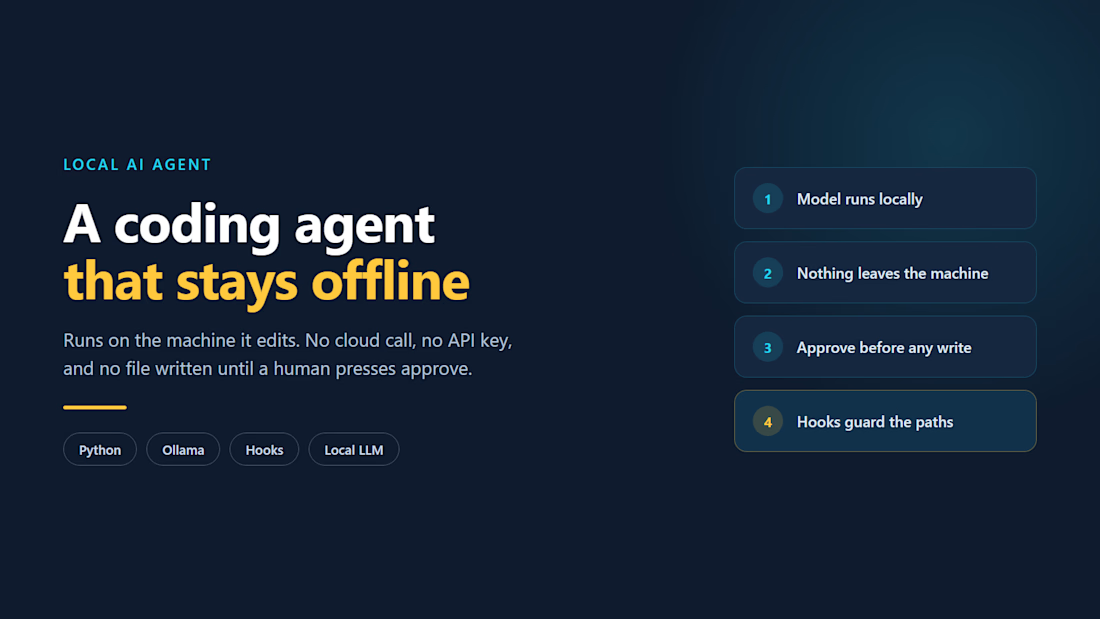
I build that layer. My own products run on it -- an ordering platform where an AI agent handles real orders, and a coding agent that writes no file until someone approves the change.
The question worth answering first is what your agent should never decide on its own.


Muse AI on the free plan is INSANE. 🤯
I asked Muse AI to review my portfolio website, and what happened next genuinely surprised me.
It visited my website, explored the pages, checked the details, and provided a complete website audit.
And honestly? I was shocked by how accurately it identified and evaluated everything.
The funny part? These are exactly the kinds of productivity workflows I've always wanted to explore with Claude and ChatGPT. But getting this level of hands-on website analysis can be difficult with free-tier limitations.
With Muse AI, I got to experience this kind of workflow without paying for a premium plan.
This is what excites me most about AI—not just generating text or answering questions, but actually doing the work, inspecting real things, and helping us get things done.
We're moving beyond AI that simply tells us what to do toward AI that can help us do it.
And if this is what Muse AI can do on its free plan, I'm genuinely curious to see what comes next.
Have you tried Muse AI yet? What's your experience been like?
#MuseAI #ArtificialIntelligence #AITools #Productivity #Automation

To answer your question — yes, and the audit is exactly where the shift shows. An AI working from a screenshot gives opinions. One that actually visits the site, explores the pages and checks the details is doing a real first pass of QA. Your line is the right one: from telling...