The network for creativity
Join 1.25M professional creatives like you
Connect with clients, get discovered, and run your business 100% commission-free
Creatives on Contra have earned over $150M and we are just getting started
Back to feedPost

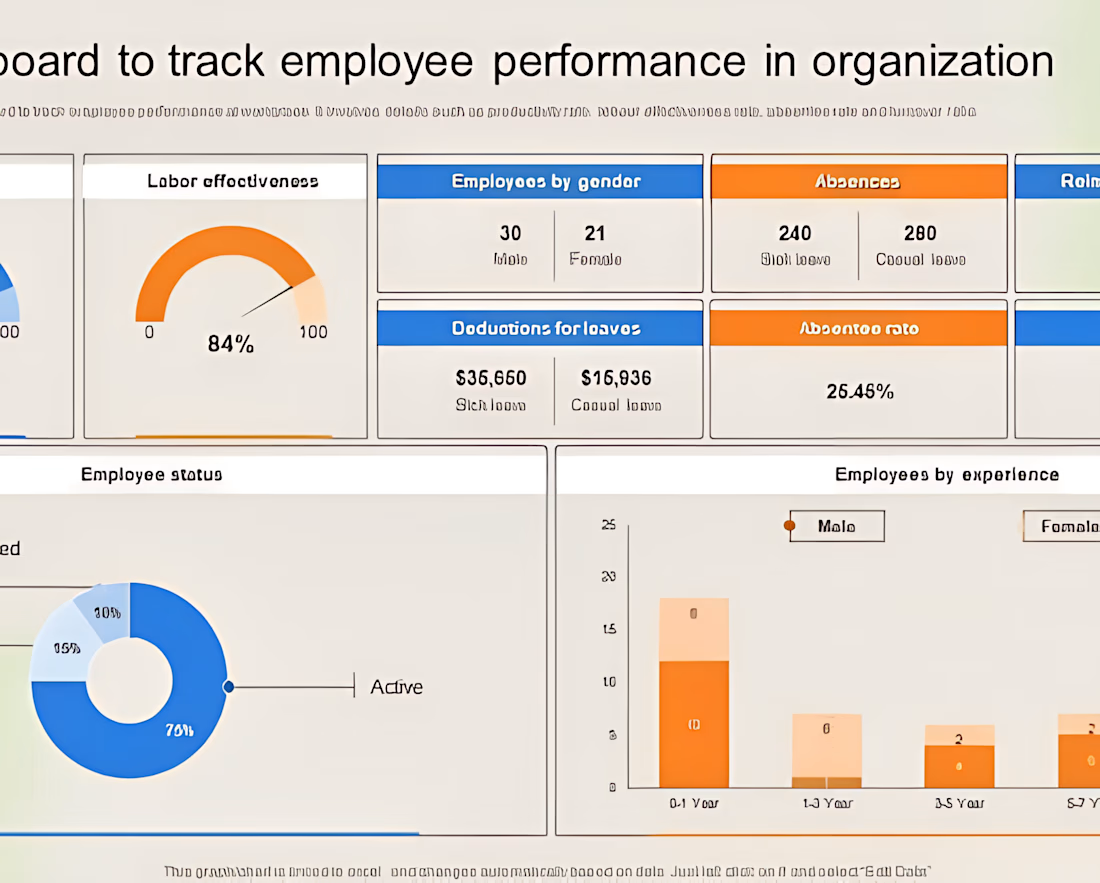
Internal Business Process & Efficiency Scorecard Matrices


The network for creativity
Join 1.25M professional creatives like you
Connect with clients, get discovered, and run your business 100% commission-free
Creatives on Contra have earned over $150M and we are just getting started




Related posts

AI Assistant Using Your Business Knowledge Base — RAG on Your Documents
THE PROBLEM
Q&A bots break down when knowledge lives in documents: a 100-page manual has no "questions" to match, it can't fit into a prompt, and generic chatbots hallucinate instead of admitting what they don't know.
THE SOLUTION
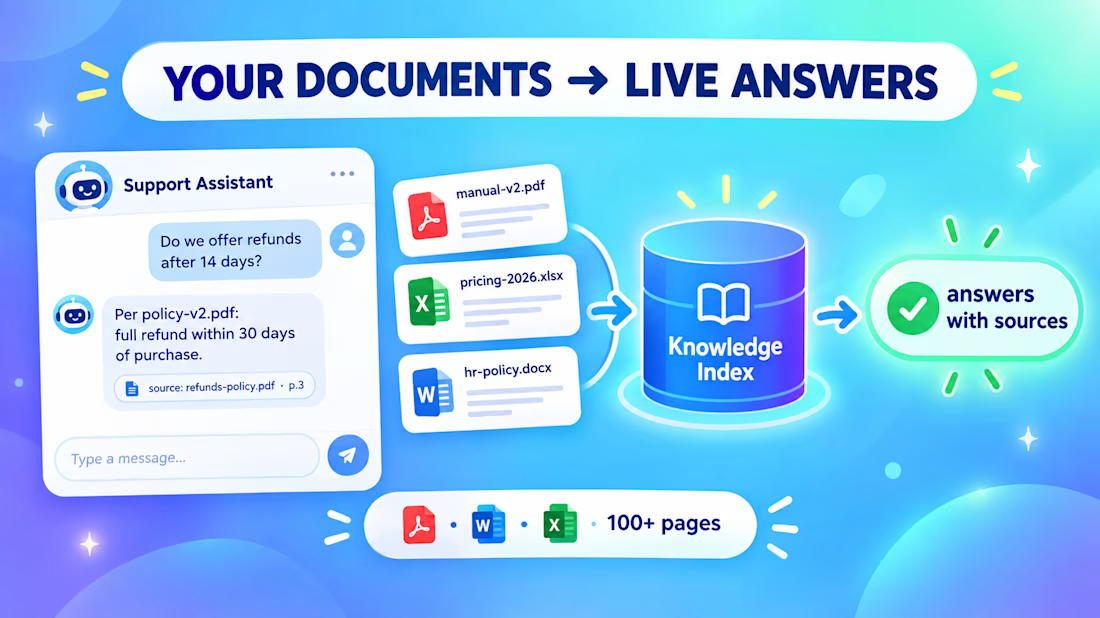
A RAG (Retrieval-Augmented Generation) knowledge base: documents are split into meaningful chunks, embedded into a vector index, and the assistant answers from the right sections — by meaning, not keywords.
Any format as-is: PDF, DOCX, TXT, Markdown — 100+ pages is fine
Answers grounded in YOUR documents — it says "I don't have that information" rather than inventing
Source references — every answer shows which document and section it came from
Runs on your infrastructure — documents never leave your control
One command to re-index after updating documents — documented, no programmer needed
LIVE DEMO
Ask it about my products, pricing, deployment and support — it answers from 6 real documents with sources:
https://kb-assistant-demo.dvc-ai.workers.dev



The 'I don't have that information' line is the part most RAG builds skip, and it's the one that matters. How do you set the cutoff? On mine, a fixed similarity threshold broke once I filtered results by user role. Scores shifted and it refused questions it could answer.

Excel PivotTable — Sales Summary
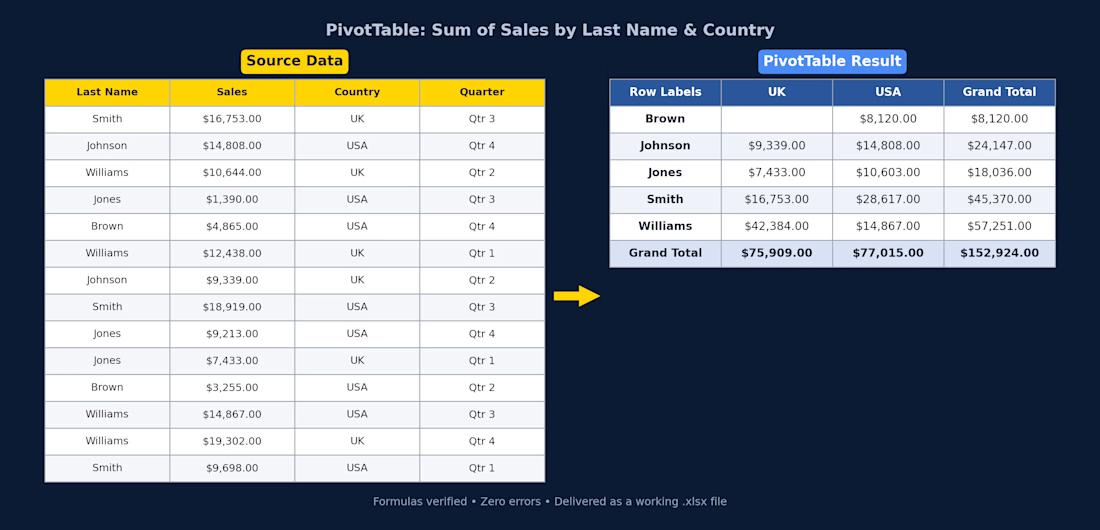
Client had raw sales data (14 rows across UK/USA, split by quarter) and needed it turned into something actually usable. I cleaned it up and built a PivotTable that breaks total sales down by rep and country, with grand totals for both.
What I did:
Structured the raw data into a proper table (consistent headers, currency formatting)
Built a PivotTable summarizing Sum of Sales by Last Name and Country
Used SUMIFS so the totals update automatically if the source data changes — nothing hardcoded
Checked every formula for errors before delivery
Delivered as a working .xlsx file, ready to plug into a bigger report or dashboard.
If you've got messy sales/ops data sitting in a spreadsheet and need it turned into something you can actually read at a glance, this is exactly the kind of thing I can help with.


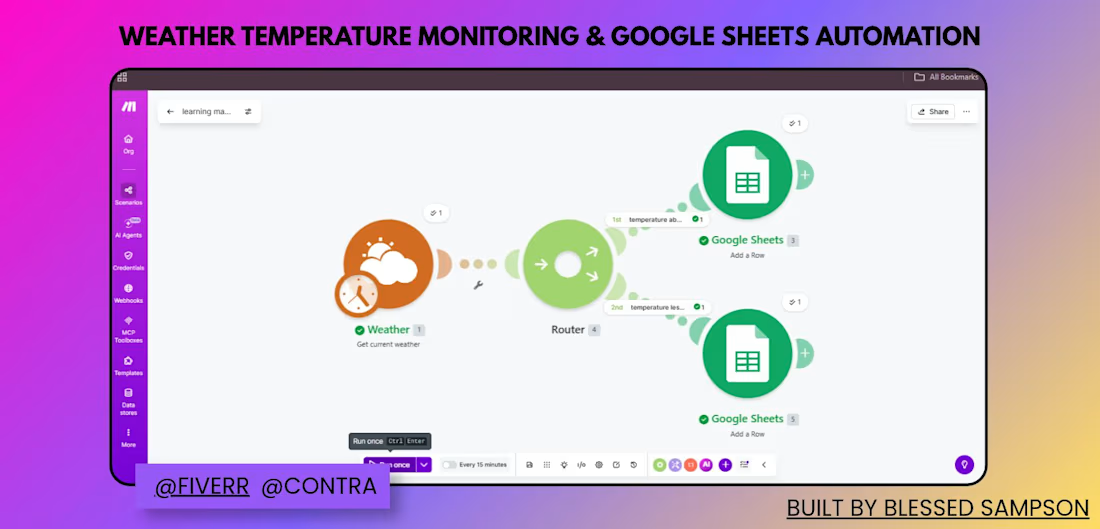
Built an automated weather monitoring system that logs conditions to Google Sheets based on temperature thresholds.
Instead of manually checking weather data and logging it, I built a Make.com scenario that:
Pulls current weather data on a schedule (Weather module)
Routes the data based on temperature conditions
Logs the results into different Google Sheets tabs/rows depending on which condition is met
Result: Weather data is now tracked automatically and organized by condition — no manual checking or data entry required, and the log stays consistently up to date.