The network for creativity
Join 1.25M professional creatives like you
Connect with clients, get discovered, and run your business 100% commission-free
Creatives on Contra have earned over $150M and we are just getting started
Back to feedPost

yo!
earlier this month i joined a hackathon where we worked on an accessibility challenge for the Pushkin Museum!
The interesting part is that the museum itself is already quite accessible. They have adapted programs, navigation, and support for different visitors. The problem was that none of this was obvious when buying a ticket online
For most people, buying a ticket takes around 1–1.5 minutes. For visitors with disabilities - or anyone who needs extra support, it can take much longer and be genuinely confusing, and it's really sucks!
Here's what we came up with:
• Reduced almost 30 benefit categories to 6 clear ones, so people can quickly understand which option applies to them
• Thought about accessibility beyond disabilities. We added better search, filters, and options for people who speak different languages, are sensitive to sound, have trouble concentrating, or simply want more context. My teammate Masha also designed a low-vision version
• Made group bookings easier. One account can buy up to 8 tickets, and anything larger automatically switches to a group booking flow. We also designed a simple admin panel to help museum staff manage these requests
• Added helpful tools for staff, like highlighting when visitors may need assistance and making accessibility settings part of event creation
• After checkout, users can create an account with the information they've already entered, so their tickets are saved without filling everything out again
Our prototype reduced the purchase flow to around 17–40 seconds, cutting the time by about half
If we'd had more time, the next step would definitely have been testing everything with people from different accessibility groups. That's where the most valuable insights come from. Project was created by 1.5 day, of course we used AI for prototypes and frontend
If u like accessibility too
- In our world we have several museums like museums in the dark/silence. You're guided through complete darkness by a blind guide. You navigate the space, identify objects by touch, and learn to rely on your other senses instead of vision or you explore what communication feels like without sound and learn more about Deaf culture and non-verbal interaction
The network for creativity
Join 1.25M professional creatives like you
Connect with clients, get discovered, and run your business 100% commission-free
Creatives on Contra have earned over $150M and we are just getting started

Challenges
View all


Related posts

Supported — Connecting Families with Trusted Autism Care
PROJECT OVERVIEW
Supported is a platform designed to make finding autism support easier, clearer, and less overwhelming for parents. It brings trusted professionals, relevant services, and essential information together in one place, helping families explore their options, compare providers, and make informed decisions with confidence. The experience is built around simplifying every step of the journey, so parents can spend less time searching and more time focusing on their family’s needs.
THE PROBLEM
Finding the right autism support can be an overwhelming journey for parents. Information about professionals, services, and available support is often scattered across different platforms, making it difficult to compare options and understand which services best fit their child’s needs. Parents need a simpler, more organized way to explore trusted professionals and make informed decisions with confidence.
THE SOLUTION
Designed a clean, accessible, and user-focused digital experience that brings professional discovery into one place. The website highlights credential-focused profiles, intuitive filtering, and clear service information while helping professionals communicate their expertise and connect with families more effectively.


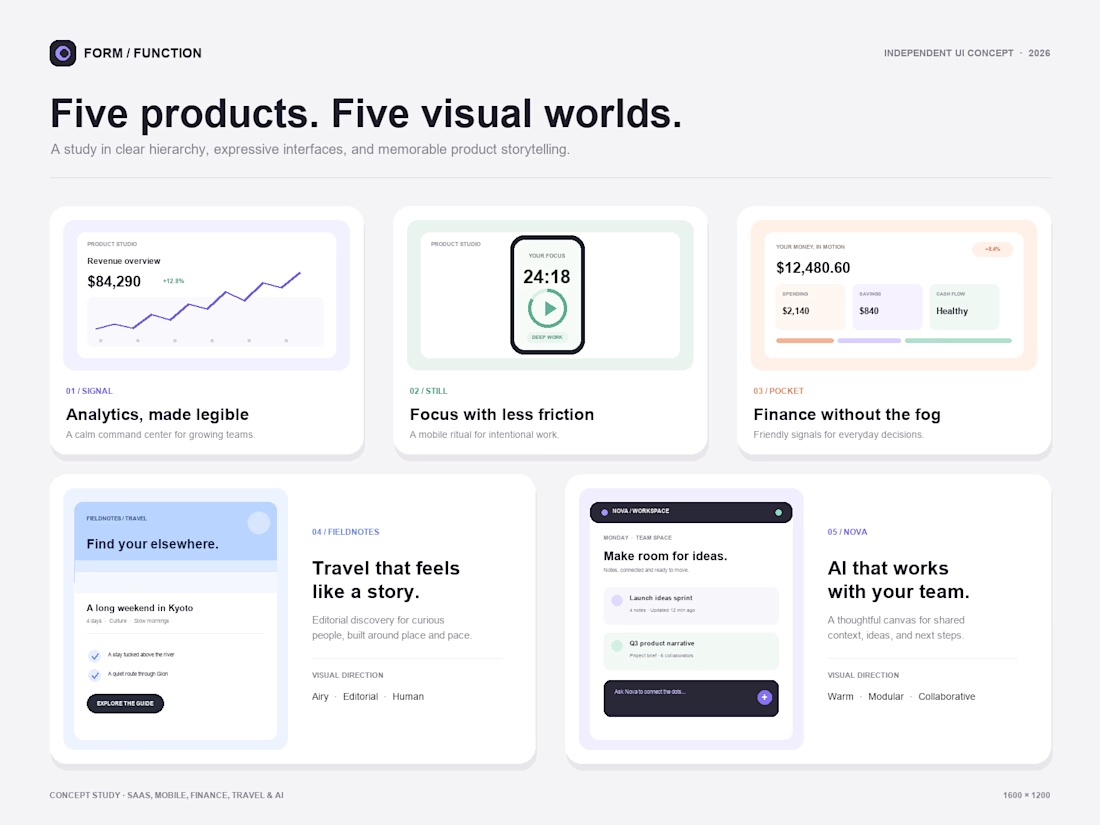
A self-initiated UI showcase exploring five distinct digital product directions across SaaS analytics, focus tools, personal finance, travel, and collaborative AI. Each concept uses its own visual language while prioritizing clear hierarchy, thoughtful layouts, and engaging product storytelling.


Great work

Vera Sanctuary — Designing a Dual-Theme Luxury Spa & Wellness Experience
An editorial, production-ready brand and web platform built for an exclusive thermal wellness retreat specializing in hydrotherapy, bespoke skin rituals, and meditative spaces.
Project overview
Vera Sanctuary was conceptualized and developed to bridge the gap between atmospheric luxury design and frictionless digital hospitality. Designed from the ground up, the platform targets high-end wellness travelers seeking an unhurried, serene digital journey before stepping foot into the physical sanctuary.
As the sole designer and Framer developer, I structured the hybrid visual system, dual-theme architecture, interactive booking workflows, and production deployment.
The challenge
Luxury wellness and hospitality websites face a unique UX challenge: balancing complex transactional features—such as multi-tier membership billing, real-time date and guest selectors, global currency conversion, and instant reservation modals—with an airy, serene, and uncluttered aesthetic.
The challenge was to engineer a hybrid visual system that alternates seamlessly between deep obsidian dark-mode sections and crisp, botanical light-mode containers without compromising loading speed, responsiveness, or emotional calm.
Research and exploration
The visual direction began by analyzing high-end hospitality layouts, thermal spa architecture, and balanced high-contrast UI patterns. I explored a refined color palette pairing deep charcoal/obsidian bases (#0B0D10) with warm champagne gold accents (#D4AF37) for evening/night sequences, transitioning into warm alabaster light containers (#FAF8F5) with sage green highlights (#7A8B7B) for daytime treatment directories.
A central focus was translating booking utilities and membership calculators into intuitive, elegant web components that feel bespoke rather than corporate.
The visual identity & web system
The resulting platform combines structured bento grids, glassmorphism containers, and custom micro-interactions to create a cohesive digital experience:
Hybrid Dark/Light Theme System: Fluid visual transitions alternating between immersive dark obsidian sections and clean botanical light-mode containers.
Cinematic Hero & Booking Engine: Immersive header integrated with a live availability check bar supporting flexible date selection, guest counts, and ritual filtering.
Curated Rituals Bento Grid: A light-mode 3-column interactive gallery featuring signature treatments complete with transparent pricing and modal reservation triggers.
Membership & Day Pass Engine: A sleek obsidian pricing architecture featuring an interactive billing toggle switch (Monthly, Annual, and VIP Day Passes) with dynamic discount calculations.
The Secret Botanical Key: An interactive engagement component near the footer that expands with a glowing gold particle effect upon interaction, unlocking a seasonal guest perk and redemption code.
