The network for creativity
Join 1.25M professional creatives like you
Connect with clients, get discovered, and run your business 100% commission-free
Creatives on Contra have earned over $150M and we are just getting started
Back to feedPost

A video reel of my TouchDesigner generative design artworks from some time back!

The network for creativity
Join 1.25M professional creatives like you
Connect with clients, get discovered, and run your business 100% commission-free
Creatives on Contra have earned over $150M and we are just getting started







Related posts


Dan Holdsworth and Luke Allen ship brands as a code ready repo.
The handoff includes global CSS, a clip JSON file, an agent file, and a human-readable README. Clients drag and drop it into their codebase and the brand is operable from day one.
They started doing this because clients kept improvising after handoff. A PDF gets opened once and forgotten. A repo stays in the codebase as a source of truth.
The thinking matters. The handoff is the start of the brand's life in production. If the system breaks the first time someone extends it, the design work didn't finish.
They also talked about taking only two projects at a time, catching a logo that sat too close to a Pinterest reference and redoing it the same day, and the difference between cheap and affordable when you raise prices.
Full episode: https://www.youtube.com/watch?v=Gl0Q2Xjw1Ao

AI is an analytical tool it doesn't have tast or creative intelligence or emotional intelligence it will never be better than humans in that because it has no emotions or creativity

Generative design.
I'm not in the AI-for-everything camp. If you've used it to do what you are knowledgeable about, you'll know how badly it can miss the nuances.
But I am interested in what happens when AI lets us make things we couldn't make before.
If the first two dimensions of design are usability and beauty, and the third is delight, the fourth is generative.
I believe great artists, designers, and engineers have always been much closer than we make them out to be. Each component (pixel, brushstroke, or line of code) is part of a larger system. Success is often dependent on consistency, talent, and the ability to discern the grey areas.
In art, everything matters, or nothing does. If one part of a Picasso cubist painting broke the visual logic of the rest, would it still work?
So I experimented with that idea this weekend.
We have so many tools to remember what things, people, memories looked like. But what about what they sounded like? Your child's first laugh. Or the voicemail you have saved from a loved one who is no longer with us.
I had a visual in my head dictated by sound. I can't manually disassemble audio into hundreds of variables, identify markers, and translate those into a consistent coded system.
But AI can.
So instead of asking AI to design it, I reverse-engineered the idea for it. What to measure, how those measurements should behave visually, what rules the system should follow, and where its limits should be.
AI wrote the algorithm.
I designed the system.
See what you sound like → leeannpica.com/soundprint


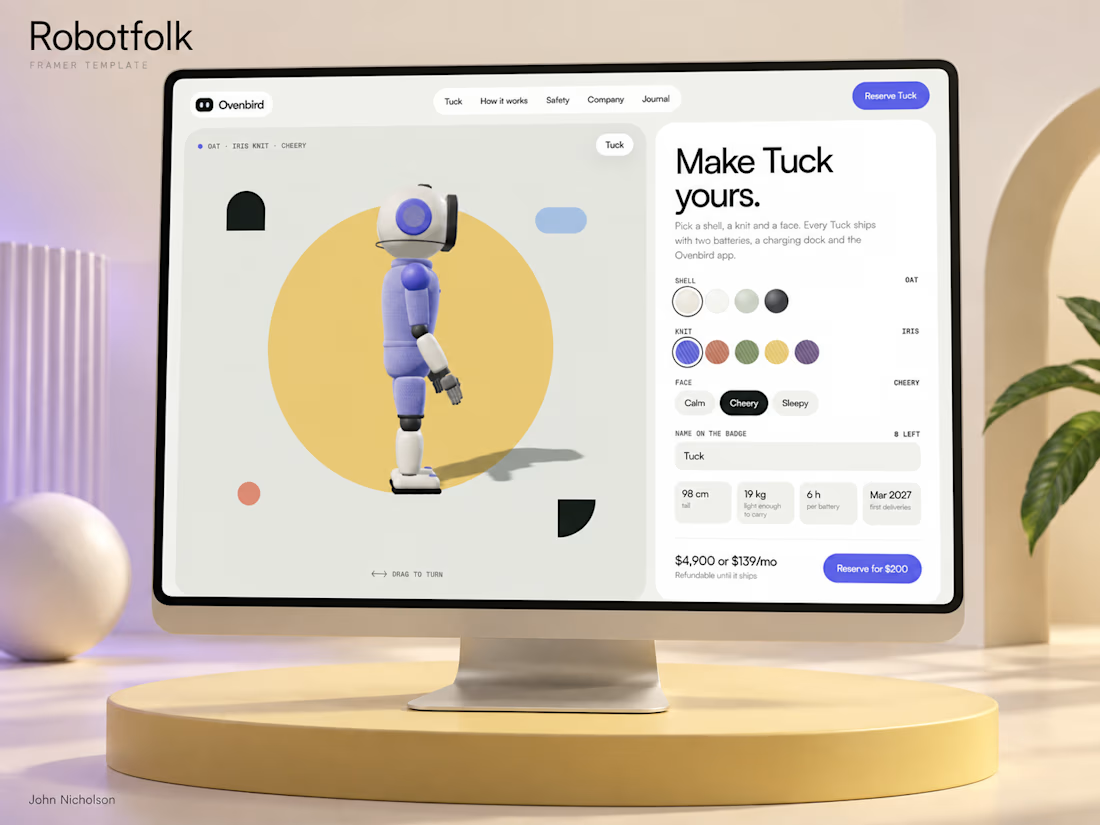
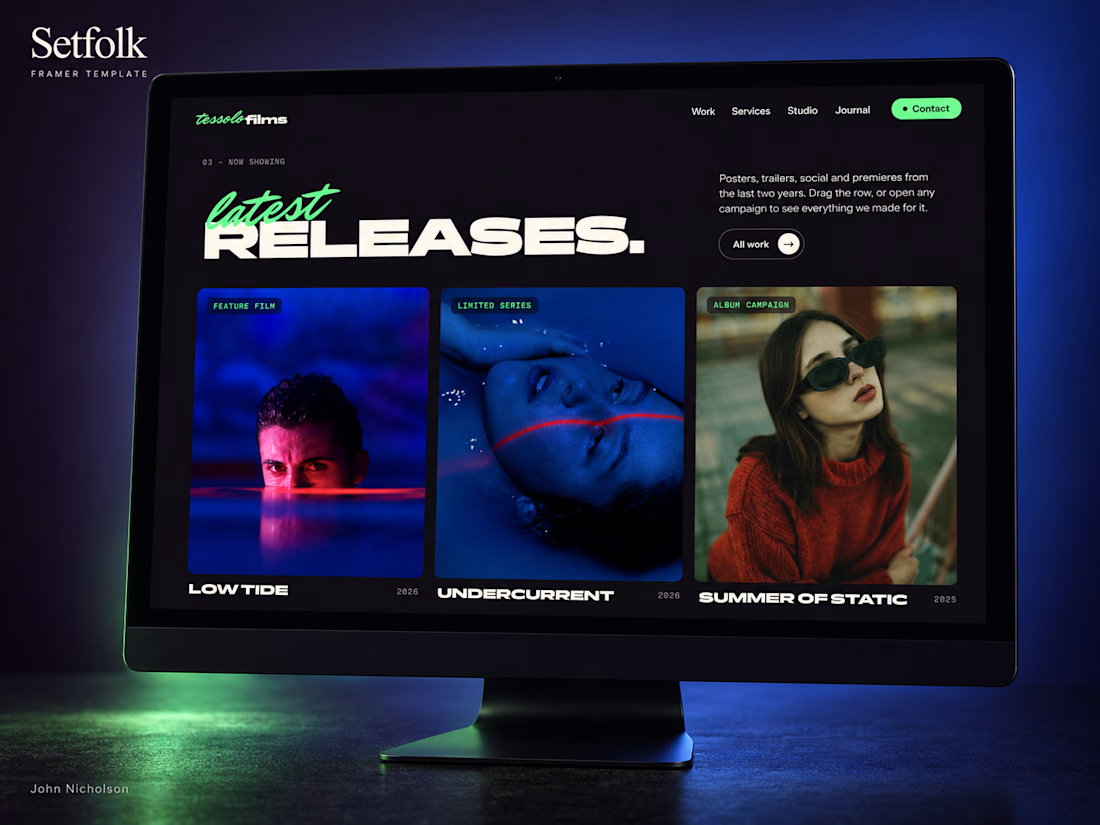
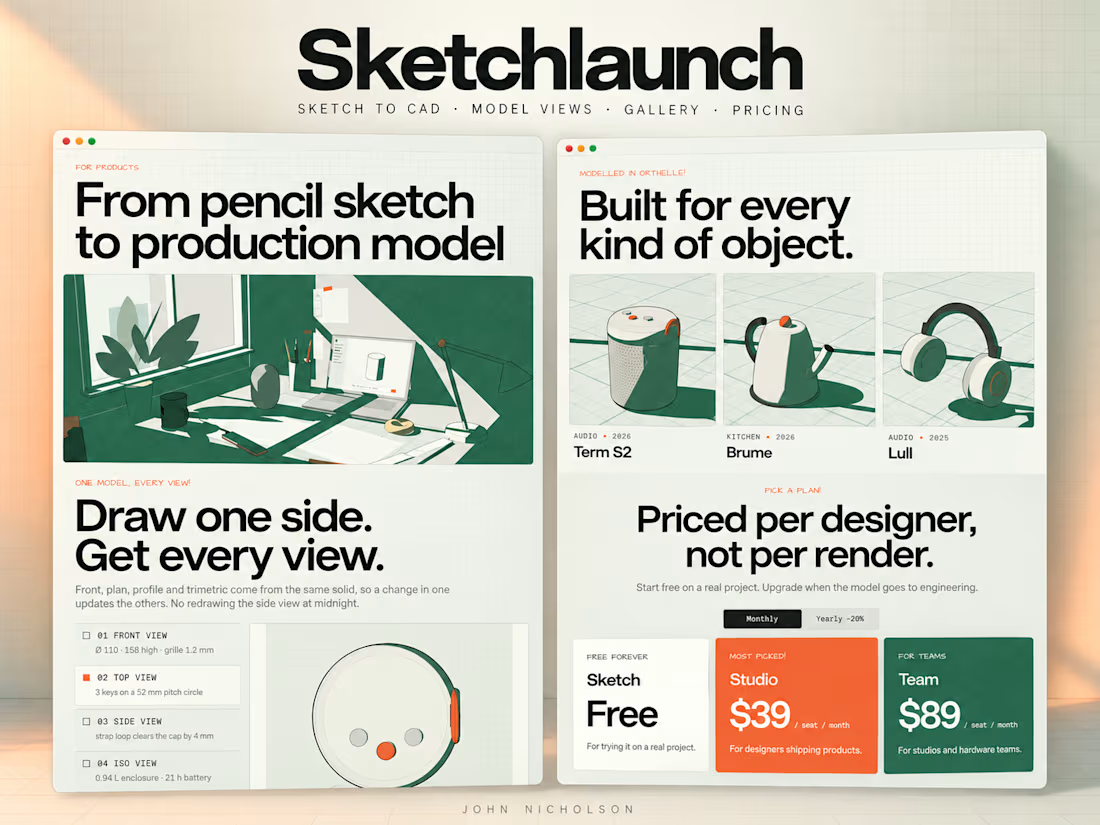
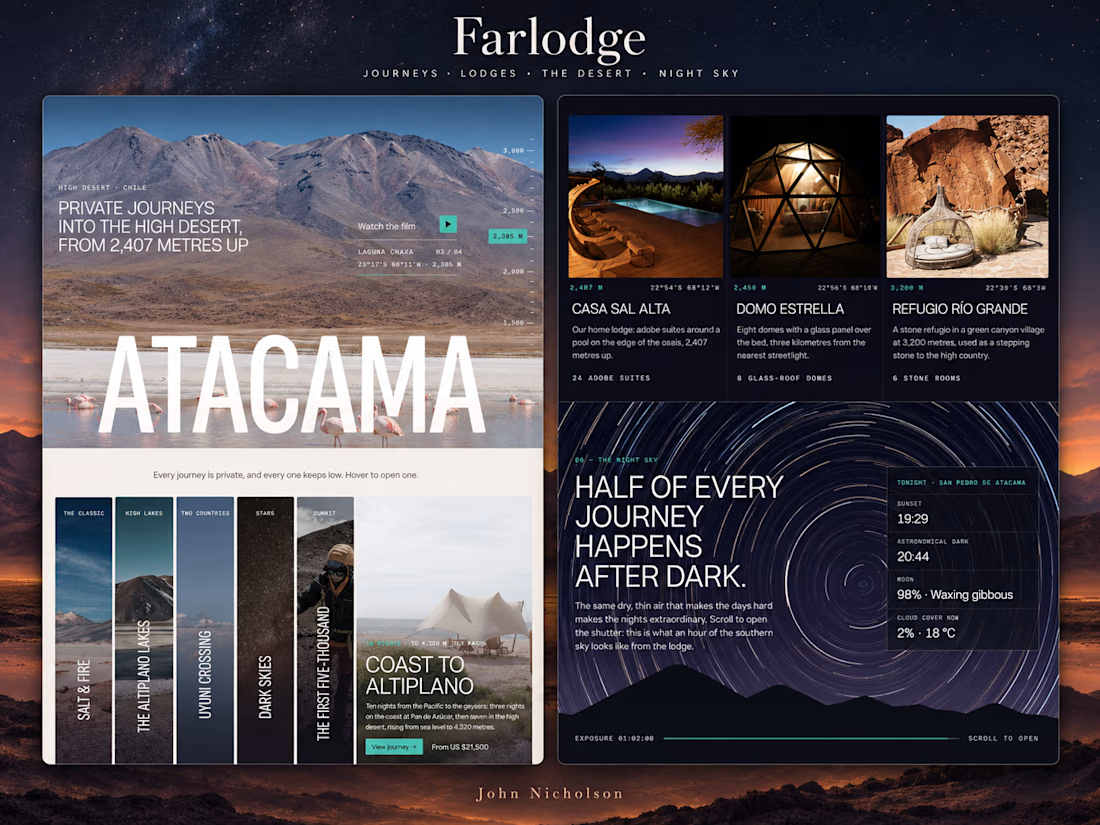
Some recent designs I've been working on - i'm committed to releasing high-quality templates on the Framer marketplace for free at https://www.framer.com/@john-nicholson/
If any of my work can be of help to you, please feel free to remix on Framer!