The network for creativity
Join 1.25M professional creatives like you
Connect with clients, get discovered, and run your business 100% commission-free
Creatives on Contra have earned over $150M and we are just getting started
Back to feedPost

Stop guessing. Start scaling. 🚀
Most marketers hit a ROAS ceiling because they’re still optimizing at human speed. In 2026, manual is the new "obsolete."
AI doesn't just manage your ads; it out-thinks the competition by:
Hyper-Personalization: Serving the right creative when the intent is highest.
Predictive Budgeting: Shifting spend to winners before the trend peaks.
Infinite Iteration: Testing hooks and visuals in real-time to kill high CPAs.
The result? Zero waste. Maximum scale.
The future isn't digital—it's intelligent. If you aren't using AI to handle the heavy lifting, you’re just subsidizing your competitor's growth.
Level up your strategy here Contact me
Are you scaling with AI, or just watching your margins shrink? Let’s settle it in the comments. 👇
#ROAS #AI #PerformanceMarketing #GrowthHacking #Fiverr


The network for creativity
Join 1.25M professional creatives like you
Connect with clients, get discovered, and run your business 100% commission-free
Creatives on Contra have earned over $150M and we are just getting started
Related posts

Production-ready, yes. Strategy-ready, not yet. AI can generate the clip, but someone still has to know what the product needs to say.
I don’t lead with how much AI was involved, but I never hide it if asked.

Is AI finally good enough to shoot a product demo on its own, or human touch is still needed?
I generated a 20s product demo with Seedance 2.5 in a single take providing it with one product image reference and an example video transcript (posted in the comments).
Do you disclose...

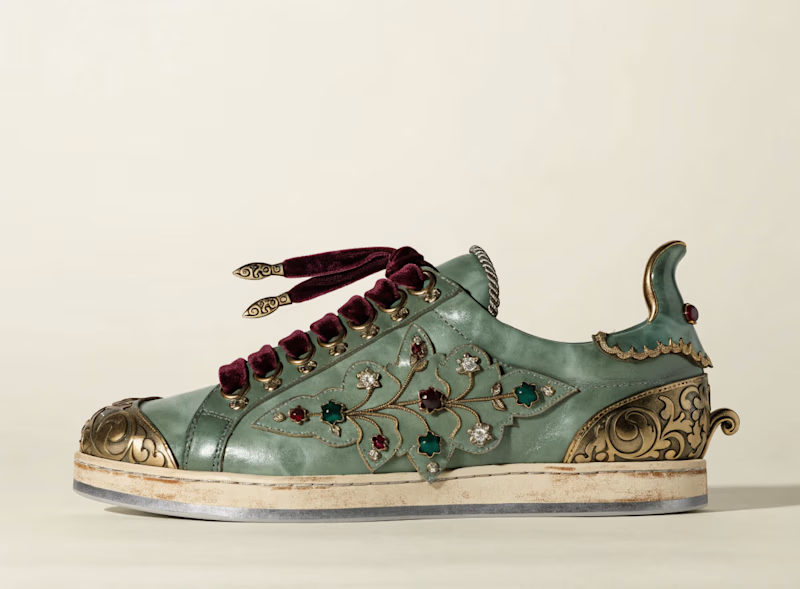
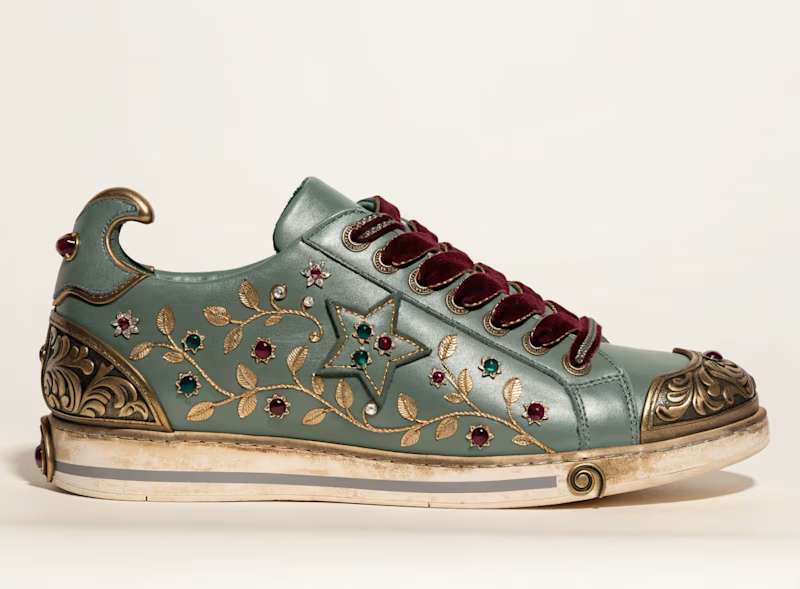
Which one you guys prefer.
A or B
I used recraft.ai today, and I have to say it’s the best AI tool for cohesive, pleasing designs. From just a prompt, I got such clear visuals. I was amazed! Check this out- this is my creation for a collection I’m working on.
3 voted
38%
5 voted
62%
8 votes
Closed


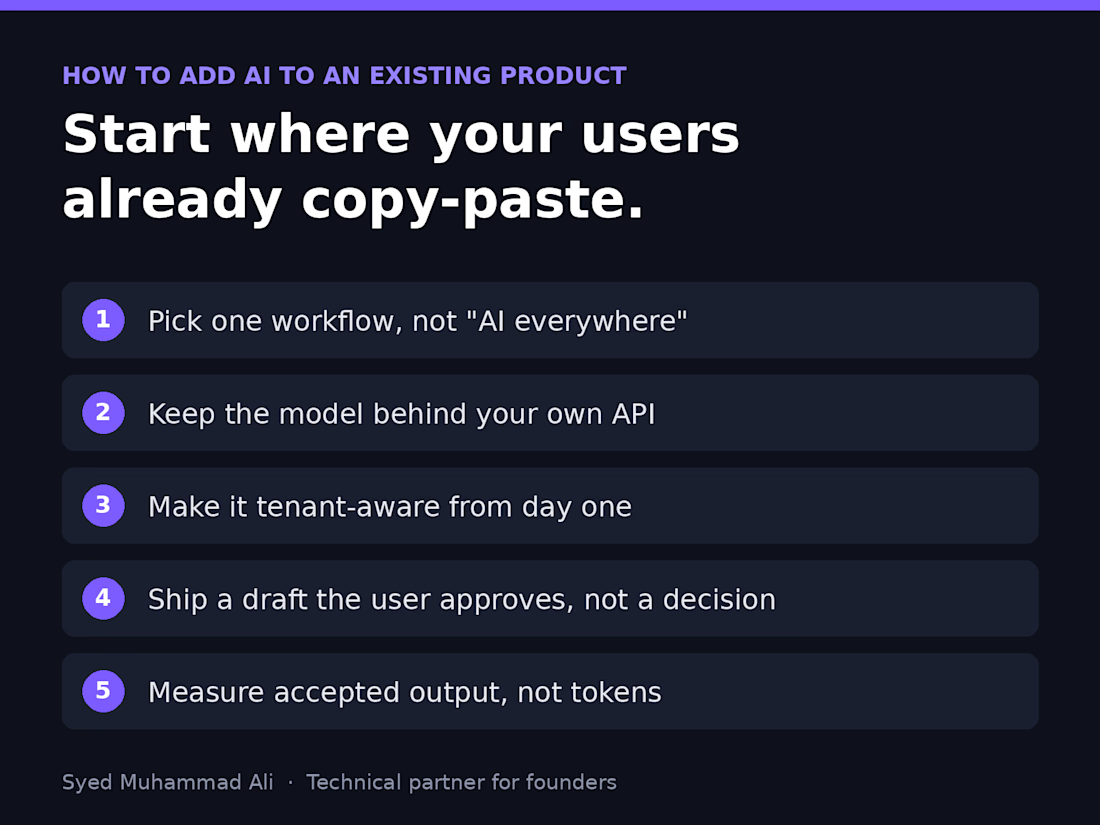
Before you add AI to your product, find the screen where your users already copy and paste.
That's usually where the real AI feature lives. Not a chatbot in the corner, but a step people already do by hand: summarising a ticket, drafting a reply, tagging an upload, pulling fields out of a PDF.
Here's the order I follow when a founder asks me to add AI to an existing SaaS:
1. Pick one workflow, not "AI everywhere." Watch where users leave your app to paste something into ChatGPT and come back. That round trip is your feature.
2. Keep the model behind your own API. One service owns prompts, retries, logging and cost limits, so you can switch providers without touching the frontend.
3. Make it tenant-aware from day one. Each customer's data, prompts and usage stay scoped to their account, or the first enterprise security review will stop you.
4. Ship a draft, not a decision. Let the AI suggest and the user approve. You earn trust and get real feedback before you automate anything.
5. Measure accepted output, not tokens. If users rewrite most of what it produces, the prompt or the context is wrong, and that's your real roadmap.
Most AI features that flop didn't fail because of the model. They were bolted onto the wrong step.
What's the one task your users still copy into ChatGPT?

Watching where users paste into ChatGPT and come back is such a practical way to find the real feature. Most teams start with the chatbot instead.