The network for creativity
Join 1.25M professional creatives like you
Connect with clients, get discovered, and run your business 100% commission-free
Creatives on Contra have earned over $150M and we are just getting started
Back to feedPost

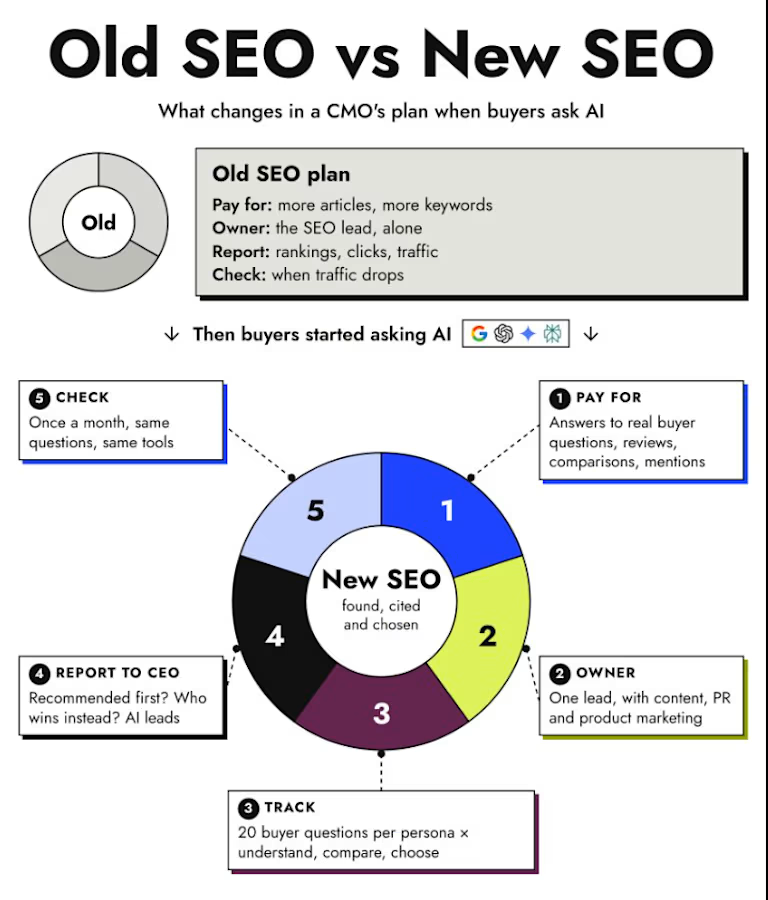
Old SEO: rank, get the click, count the traffic.
New SEO: get found, cited and chosen. Here's what it changes in a CMO's plan ↓
The goal used to be page one.
Now a buyer asks Google's AI Mode or ChatGPT one question and gets a shortlist of brands. Often they don't need to click.
So a report built on rankings and traffic can look healthy while you lose deals.
What I'd change, line by line:
1. What you pay for
Old: more articles for more keywords.
New: fewer pages, each answering a real buyer question, plus reviews, comparison pages and mentions on sites your buyers trust.
2. Who owns it
Old: the SEO lead, alone.
New: one owner, with content, PR and product marketing on the same monthly plan.
3. What you track
Old: a keyword list.
New: 20 buyer questions per persona (founder, CMO, head of marketing), across three buying stages: understand, compare, choose.
4. What you report to the CEO
Old: rankings, clicks, traffic.
New: keep those, and add how often AI recommends you first, who it picks instead, and leads from AI visits.
5. How often you check
Old: when traffic drops.
New: once a month, same questions, same tools.
The common mistake: cutting SEO to fund "AI".
The new work sits on top of the old one. AI answers still lean on pages search engines can find and trust.
Test this week: ask ChatGPT 5 "compare" questions your buyers ask. If you rank on Google but AI recommends a competitor, your report shows half the picture.
Which line of your SEO plan would you change first?
I go deeper on SEO budgets for the AI era in The AI Marketer, my free weekly newsletter.

The network for creativity
Join 1.25M professional creatives like you
Connect with clients, get discovered, and run your business 100% commission-free
Creatives on Contra have earned over $150M and we are just getting started



Related posts

"Great rigor." "The operating systems behind resilient organizations."
None of it means anything, to people or to AI.
Compare: "We help security teams find threats faster." It's plain, and it's obvious what they do. Then the page shows how they do it.
AI has to understand a company to recommend it. Vague copy gets skipped.


Built a lead list workflow in n8n for a US cleaning company targeting dental practices.
Google Maps → smart filters → AI reads each team page to find the owner → verified emails → a buying signal from Google reviews → ranked Google Sheet.
Every list is built fresh. No old databases.
Need verified leads for your ideal customer? Send me a message.


Using Google reviews as the buying signal is a smart touch, since a practice with recent cleanliness complaints is a warmer lead than any firmographic filter. How often does the AI pick the wrong person as owner?

Your AI has a good track record. What should it be allowed to do next?
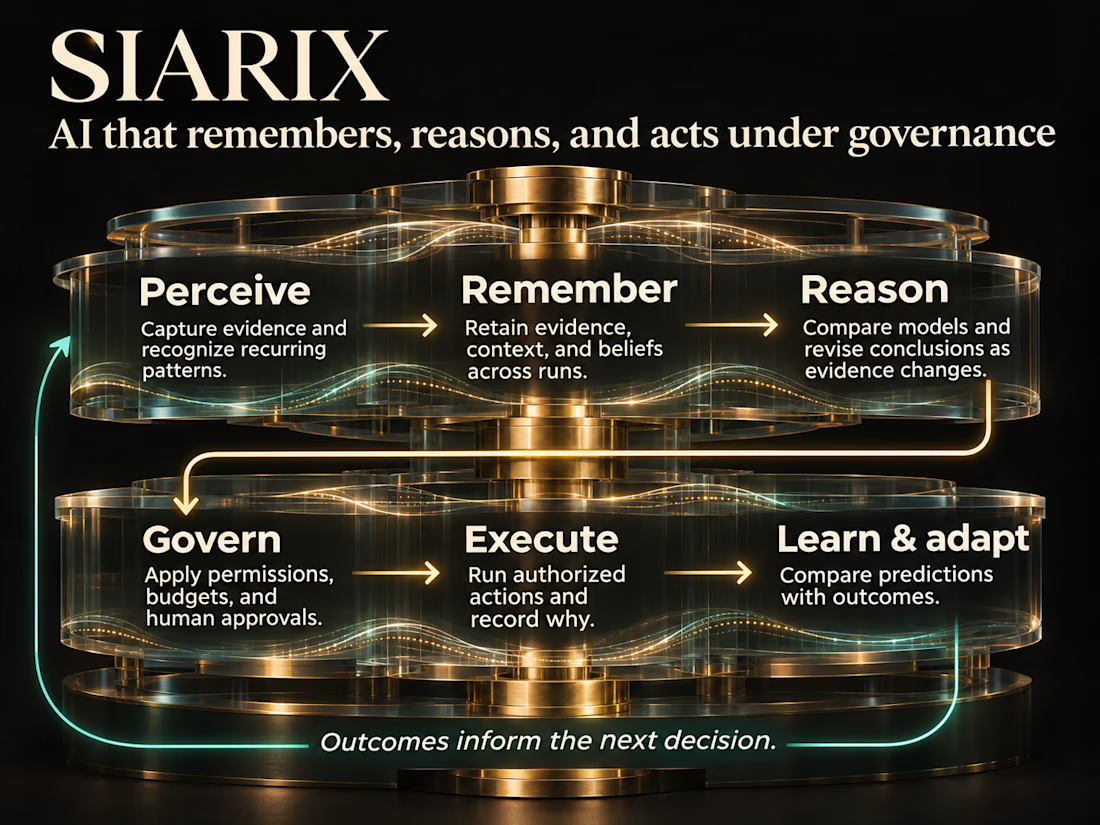
I’m working on Siarix, the software I built to help businesses give AI agents more responsibility without making their teams review every action.
Here’s a question I keep coming back to. If an AI agent correctly reviews 99 invoices, should it be able to change where the 100th payment goes?
Imagine the same agent keeps spotting a mismatch caused by how one supplier formats its invoices. That pattern can improve how it reviews the next batch. A request to change the supplier’s bank details calls for a different decision. The agent can gather the evidence and recommend a response. A person still authorizes the change.
That’s the work I’m doing with Siarix. Its Mind Twin engine carries evidence, patterns, and past outcomes across runs, so new information can change the next recommendation. Its governance layer sets what the agent can access, change, or spend, which actions need approval, and what gets recorded after it acts.
I’m now offering this as a founder-led AI governance assessment. Bring me one workflow your team wants to trust with more responsibility. I’ll help you decide what can run on its own, what still needs a person, and what evidence would justify giving the agent more room.
What’s one task you’d trust an AI agent to handle today? Where would you draw the line?

Bank detail changes would stay with a person for me, no matter how good the track record is. That's exactly what scammers go after