The network for creativity
Join 1.25M professional creatives like you
Connect with clients, get discovered, and run your business 100% commission-free
Creatives on Contra have earned over $150M and we are just getting started
Back to feedPost

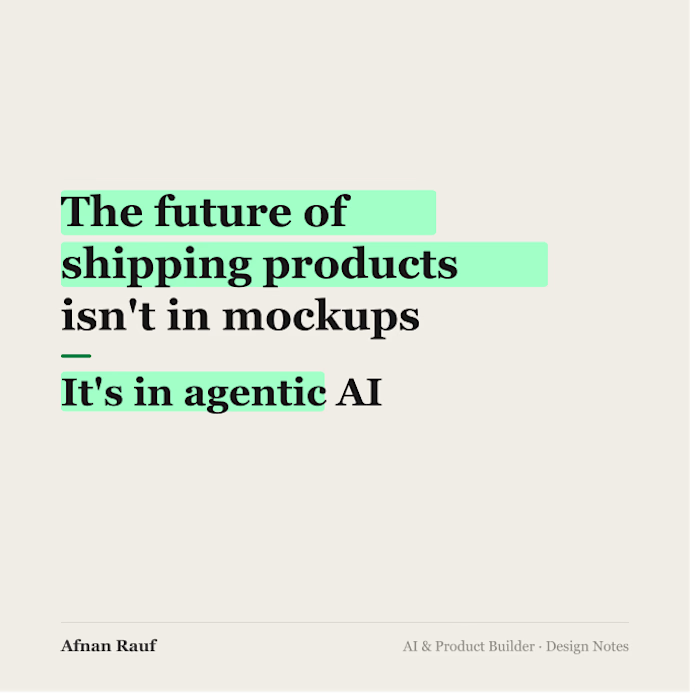
Most Product Designers are still living in frames.
I'm building directly in the product.
Not because I'm a developer.
But because the tools changed and I changed with them.
Here's my actual workflow right now:
→ Clone the existing product's repo
→ Create a branch (safe to experiment, nothing breaks)
→ Run a UX audit on what's already there
→ Identify exactly where an agentic AI layer adds real value
→ Use Claude Code to ship the enhancement directly
I'm not redesigning things in Figma first.
I'm going straight into the codebase and making the product smarter.
This is what "agentic AI layer" actually means not a new product built from scratch. Your existing product, with AI that thinks and acts on behalf of your user.
The result for businesses?
Faster time-to-value. No need to rebuild.
Your current product becomes dramatically more intelligent without throwing away what already works.
The biggest shift for product teams right now isn't hiring AI developers.
It's working with someone who understands both
the user experience AND how to inject AI that serves it.
Frames were never the final product anyway.
If you have an existing product and want to explore
where an agentic AI layer could make the biggest impact
DM me. Let's talk.
The network for creativity
Join 1.25M professional creatives like you
Connect with clients, get discovered, and run your business 100% commission-free
Creatives on Contra have earned over $150M and we are just getting started

Challenges
View all


Related posts

Designed a clean, premium website concept for Arave — a modern digital watch brand. Focused on strong visuals, product storytelling, and a minimal, technical feel.
Would love to hear your thoughts — what do you think I could improve in this project?


"Built to be taken apart" reframes repairability as the premium feature, not a compromise - most watch sites hide the mechanism, this one leads with it.

Apparently, I got tired of introducing myself with screenshots. 😂
So I made an explainer instead
A quick story about what I do, the products I’ve worked on, what clients say, and where I can help across product design, UX/UI, and Framer.
Also my first proper experiment with motion.
Press Play


Turning the usual case-study intro into a small story is a smart move—the motion makes the product-design and Framer angle feel much more memorable.


Some designers are obsessed with removing friction. Usually, they’re wrong.
When it comes to high stakes fintech "invisible" is a bug, not a feature.
We designed the Tithe onboarding with a mandatory slide to confirm. One second of friction to ensure a lifetime of trust.
Don't just make it fast but rather feel right.
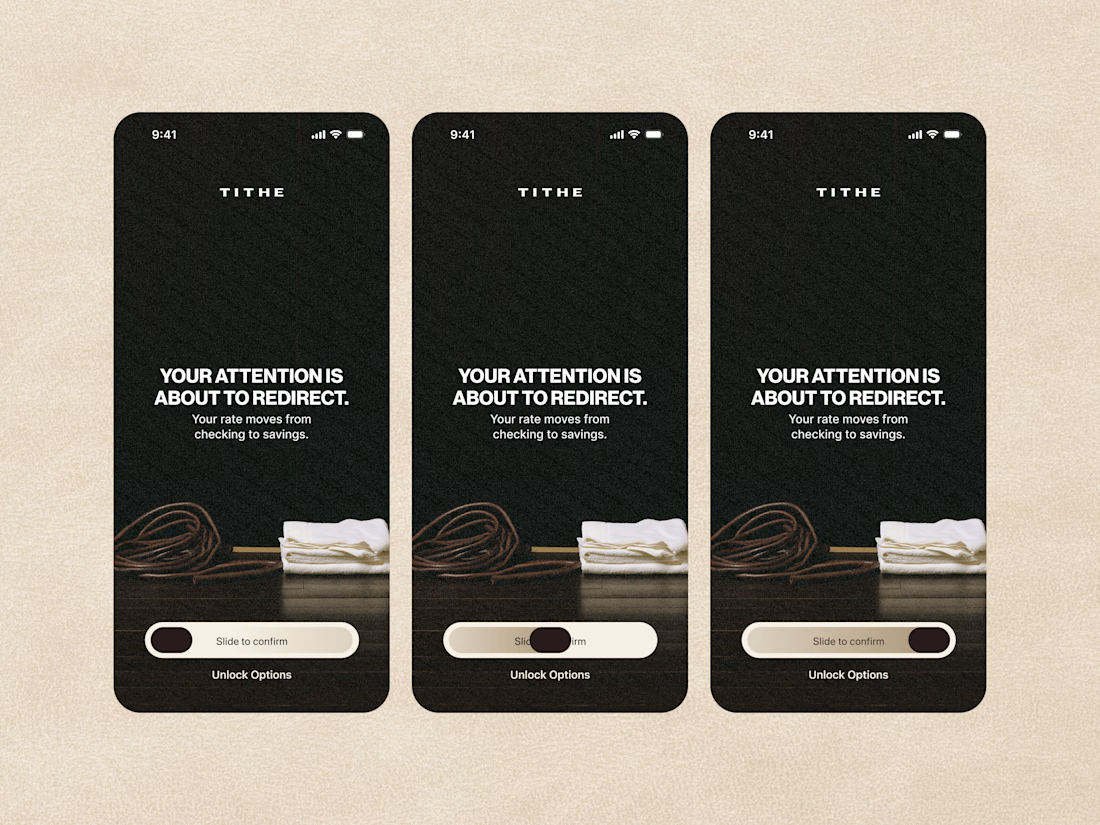

The slide-to-confirm is a nice touch. For financial decisions, that extra moment of intention makes sense.