The network for creativity
Join 1.25M professional creatives like you
Connect with clients, get discovered, and run your business 100% commission-free
Creatives on Contra have earned over $150M and we are just getting started
Back to feedPost

I fixed messy Books for Small Businesses (Excel & QuickBooks)
The challenge I see Every Day:
Most small business owners I talk to have the same 3 problems:
1. Bank balance doesn’t match QuickBooks
2. Expenses are not categorized, so they don’t know their real profit.
3. Month-End reports are late and confusing.
My solution:
I build a simple 3 step cleanup system:
Step 1. Reconcile & Organize: I reconcile all accounts and organize 3-6 months of transactions in QuickBooks.
Step 2. Track Clearly: I create a clean Excel dashboard to track Income vs Expenses in real-time.
Step 3. Report Simply: I deliver a 1-page clear P&L report every month-end, so you know exactly where your money went.
Result: You save 10+ hours a month, know your true profit, and are ready for tax season.
I help busy founders get their books audit-ready without the stress. Open to remote, part-time roles.
Tools: QuickBooks | Excel | Bookkeeping | Reconciliation | Financial Reporting
The network for creativity
Join 1.25M professional creatives like you
Connect with clients, get discovered, and run your business 100% commission-free
Creatives on Contra have earned over $150M and we are just getting started



Related posts

I worked with a small business that needed a clearer picture of its profitability.
The challenge wasn't just recording transactions. It was making sure purchases, direct costs, and operating expenses were classified correctly.
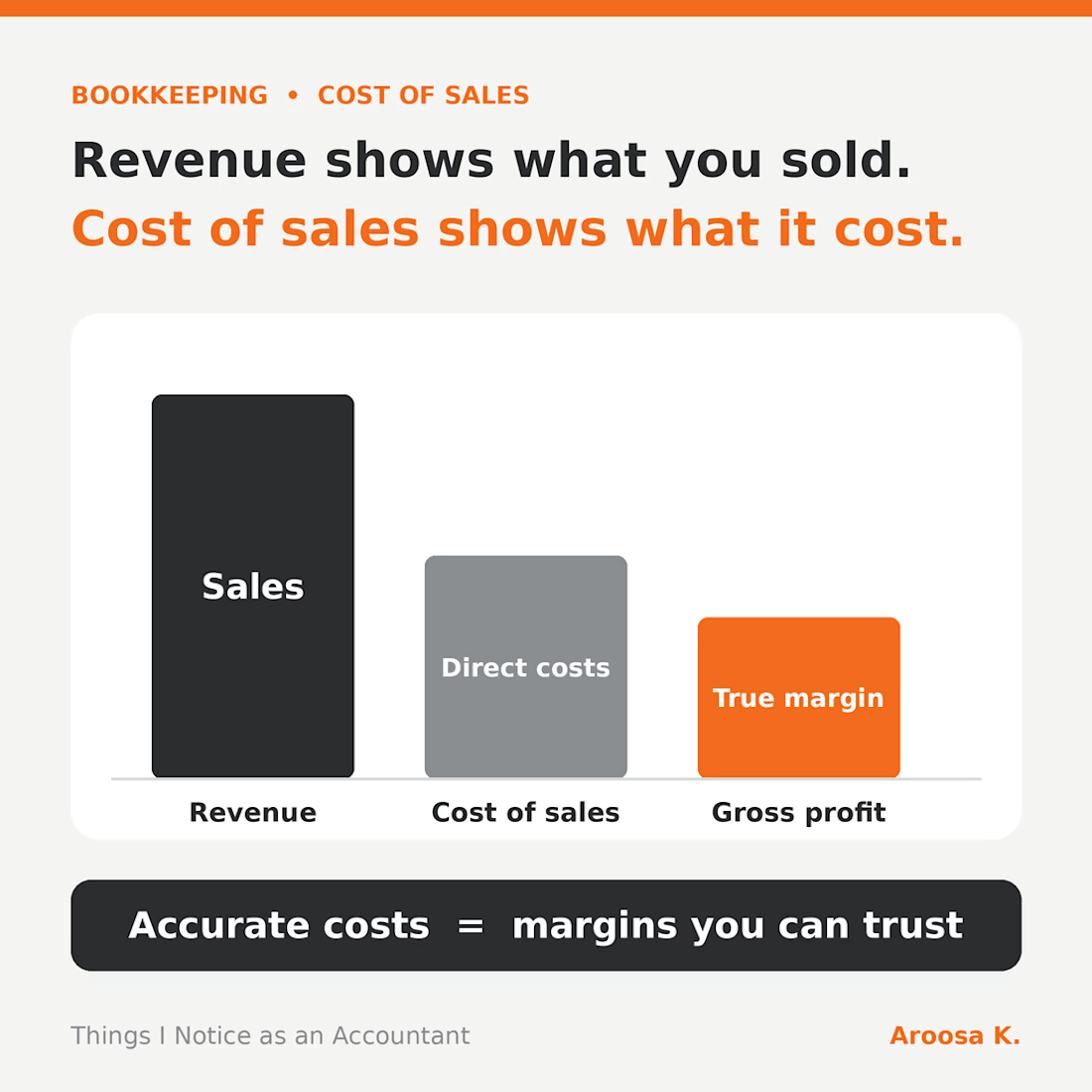
When cost of sales isn't calculated accurately, gross profit can be misleading — and business owners may make pricing and purchasing decisions without knowing their true margins.
Here's what I focused on:
✅ Reviewing purchase transactions and cost classifications
✅ Separating direct costs from operating expenses
✅ Checking inventory and cost of goods sold, where applicable
✅ Improving the accuracy of gross profit reporting
✅ Making financial reports easier to understand and use
The biggest takeaway?
Revenue tells you how much you sold. Cost of sales helps you understand what those sales actually cost your business.
Accurate bookkeeping isn't just about keeping records up to date. It's about giving business owners numbers they can confidently use to make decisions.
If you're a small business owner struggling to understand your cost of sales or gross profit, let's connect.
I can help you turn confusing financial records into clear, meaningful reports.
#Bookkeeping #Accounting #CostOfSales #FinancialReporting #SmallBusiness


So true! You can’t really understand your profit until you know what it actually costs to make those sales. 🙌

Business owners, be honest: which money task do you dread most? 👀

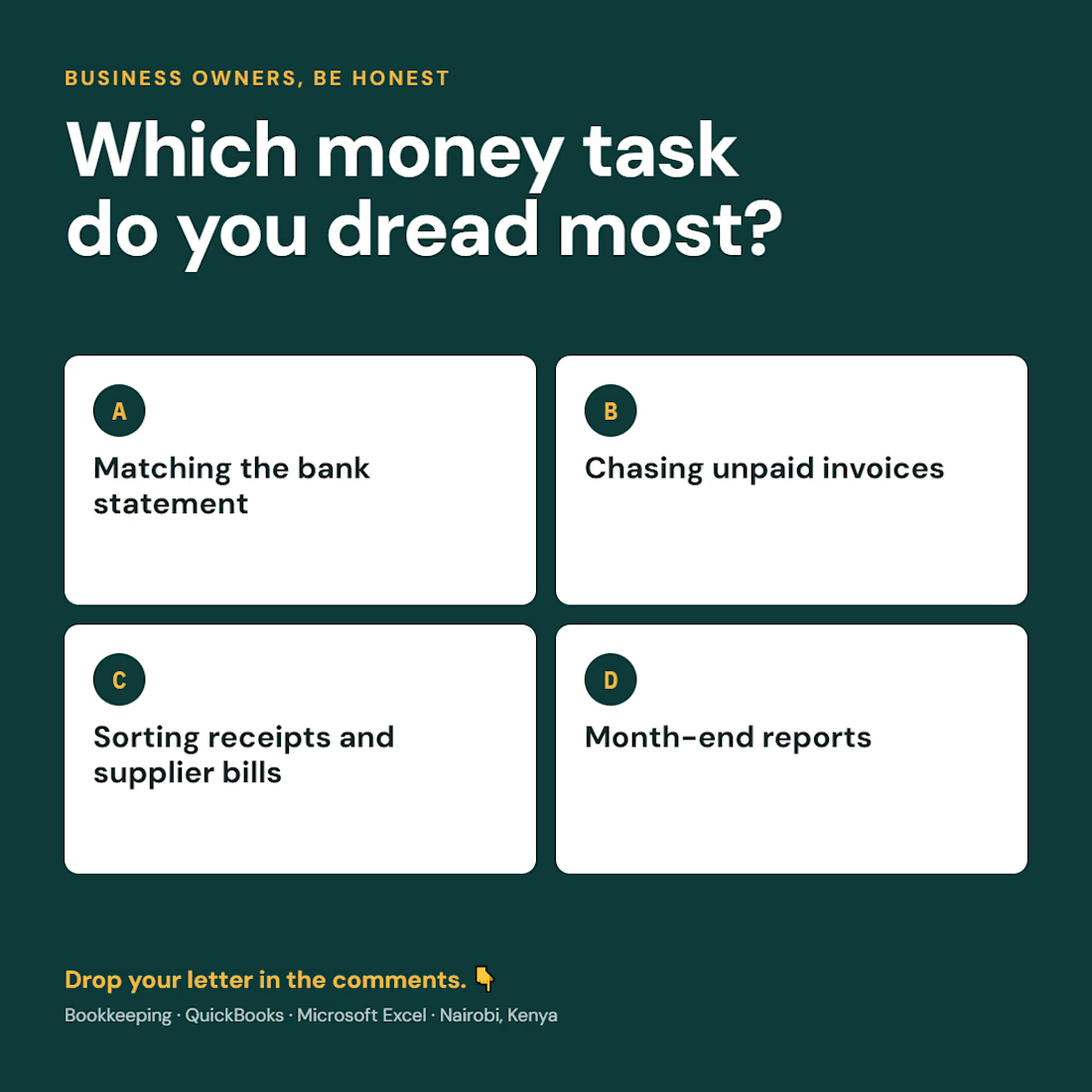
Chasing unpaid invoices 😟
A client asked me last week: “Why is there still a balance sitting in prepaid? I already paid all of it.”
Fair question. Honestly, it’s one of the most common things business owners get confused about.
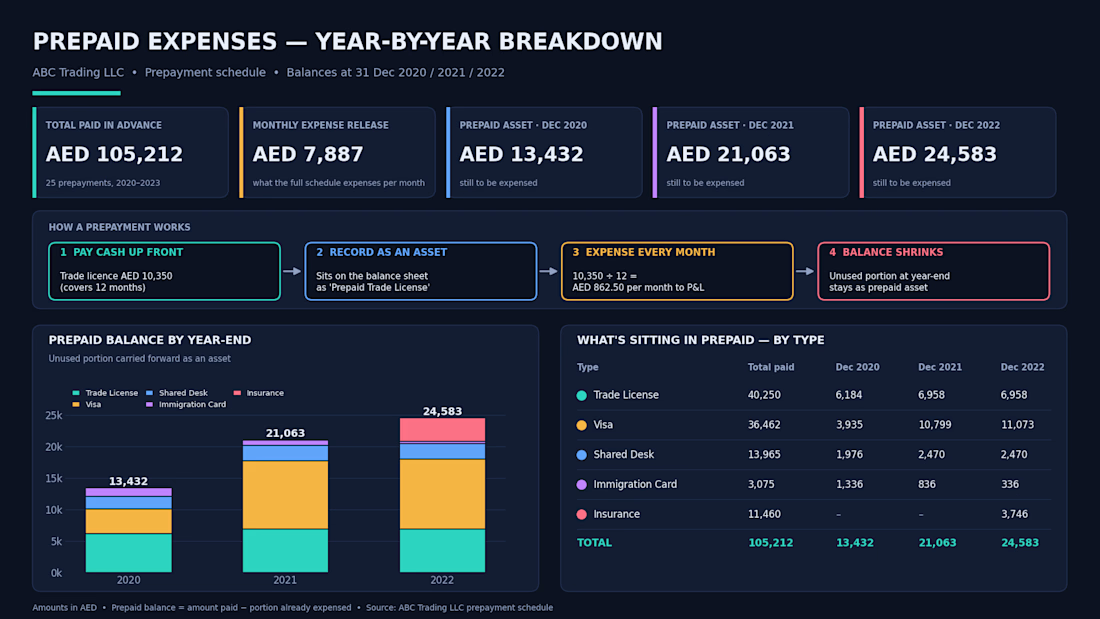
Here’s how I explained it. When you pay your trade licence for the year, that money has left your bank. But you haven’t used the whole year yet. So the unused part isn’t an expense yet. It’s something you’ve paid for and still own, like a credit waiting to be used.
Say you pay 10,350 for a 12 month licence. Each month, 862.50 moves into expenses. Whatever hasn’t been used by 31 December stays on the balance sheet as prepaid.
The client still wasn’t fully getting it from the schedule alone, so I broke it down year by year. 2020, 2021, 2022. Same prepayments, just showing how much was used and how much was still left at each year end.
That’s when it clicked for them.
The visa, shared desk, insurance and licence costs all work the same way. Pay now, use over time, expense a little each month.
If your accountant keeps saying “prepaid” and you nod along, ask them to show you a schedule like this. It’s your money, you should be able to see where it is.
This is part of my contra series, where I explain accounting without the jargon.
#accounting #prepaidexpenses #smallbusiness #UAE

Great explanation! Breaking prepayments down year by year makes it much easier for business owners to understand how their money is accounted for and why balances remain on the balance sheet.