The network for creativity
Join 1.25M professional creatives like you
Connect with clients, get discovered, and run your business 100% commission-free
Creatives on Contra have earned over $150M and we are just getting started
Back to feedPost

A schema rename passed every unit test. It still broke a revenue dashboard.
The query changed from order_total to gross_amount; the schema was valid, but downstream models still expected the old field.
The fix isn't another linter. Before merge, ask four questions:
Which assets depend on this field?
Is the change additive, rename, type change, or removal?
Can we generate compatibility SQL and dbt YAML before touching production?
Is there a decision receipt reviewers can reproduce?
I built a bounded public replay of that workflow. Start with the CRITICAL case: it blocks a lossy decimal-to-integer change when an ML consumer sits downstream, then exposes the lineage, affected queries, compatibility artifacts, and deterministic run ID.
Demo: https://schema-shield.vercel.app
Source/evidence: https://github.com/ceodaradigu/schema-shield
What schema operation should the next fixture cover?
AI-assisted analysis, reviewed before publication by RELAUNCH DEPT.


schema-shield.vercel.app
SchemaShield | Evidence-first schema change preflight
Catch breaking schema changes before downstream models, dashboards, and ML systems fail.
The network for creativity
Join 1.25M professional creatives like you
Connect with clients, get discovered, and run your business 100% commission-free
Creatives on Contra have earned over $150M and we are just getting started





Related posts

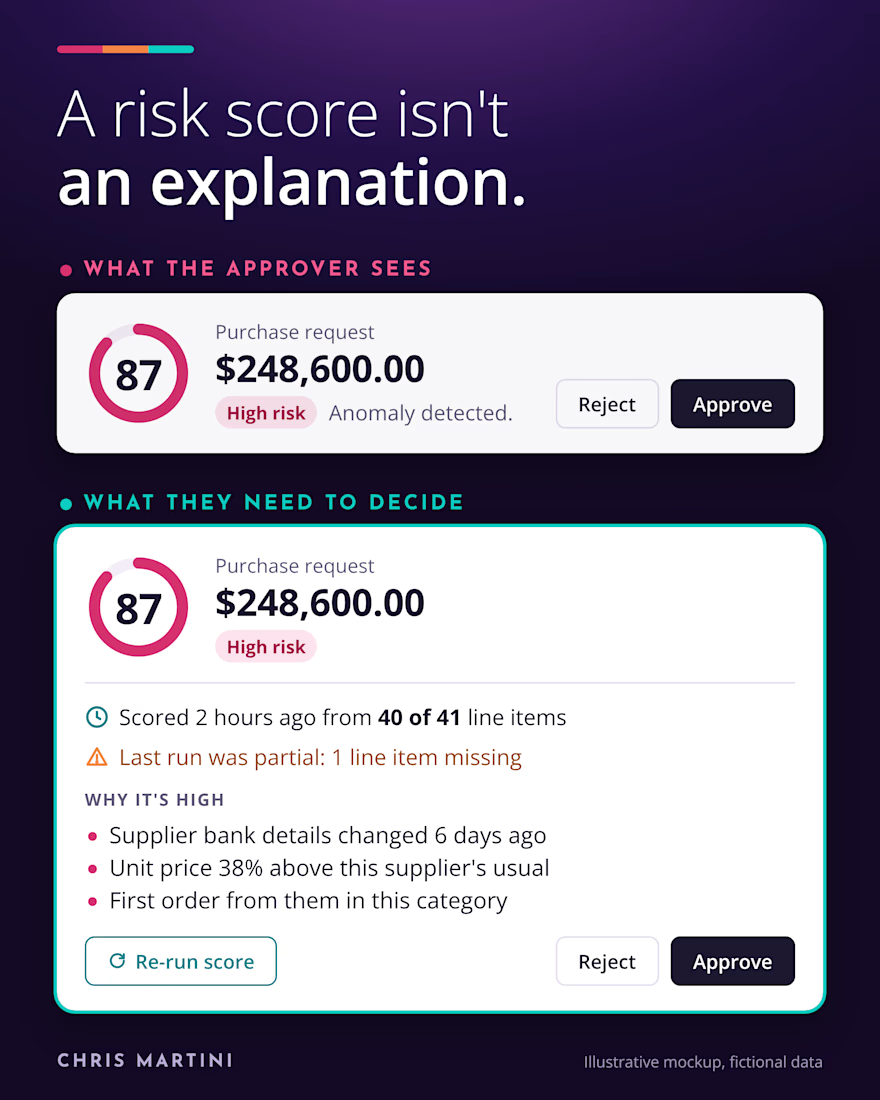
An AI risk metric/score of 87 tells an approver almost nothing.
It says the model is worried. It doesn't say why, how fresh the number is, or whether the data behind it was complete. If the pipeline failed 17 times this month, the 87 looks exactly the same.
That's a design problem, not a model problem. The fix is mostly disclosure: say where the number came from, show the signals behind it, put partial runs on the decision screen, and let the approver re-run it before signing off on $248,600.
The person clicking Approve owns the decision. The interface owes them the evidence.

Chris, this is spot on. On a payments agent we built, approvers only started trusting the flags once each one showed the reason behind it and when it last ran. A bare number just made people click Approve faster, which is the opposite of what you want.

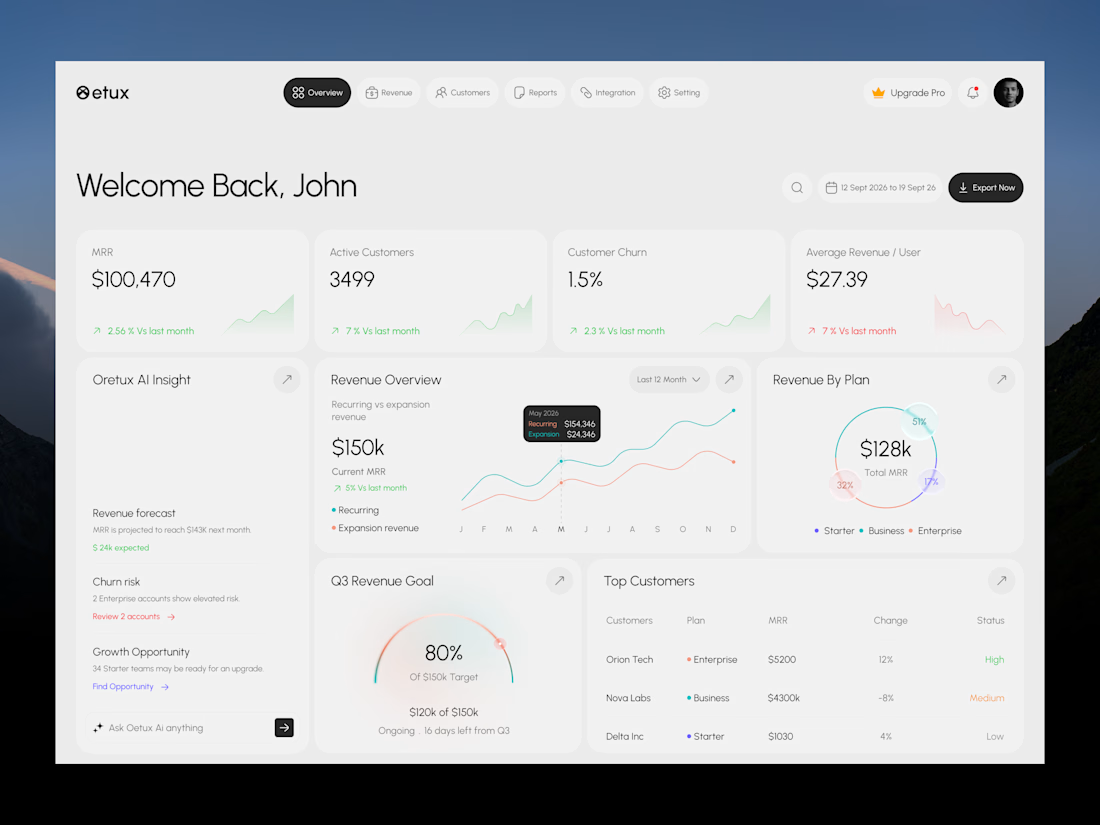
Oetux – SaaS Revenue Analytics Dashboard
The client had a lot of data, but the real problem was making sense of it.
MRR, revenue, churn, active customers, growth, customer performance, goals. Every metric was important, but when everything gets the same attention, users don’t know where to look first.
The existing experience made users spend too much time switching between information and trying to connect the numbers.
So we focused on how SaaS teams actually read their business data. We structured Oetux around the questions that matter most.
How is revenue performing?
Are we growing?
Are customers staying?
Where are we losing revenue?
What needs attention right now?
Then we organized KPIs, revenue trends, customer performance, churn insights, goals, and AI powered insights into one clear experience.
The goal wasn’t to remove data.
It was to organize the data so users could understand it faster.
That’s what we solved with Oetux.
Turning a data heavy SaaS dashboard into an experience that helps teams see their business clearly and make better decisions.



Love the clean layout.

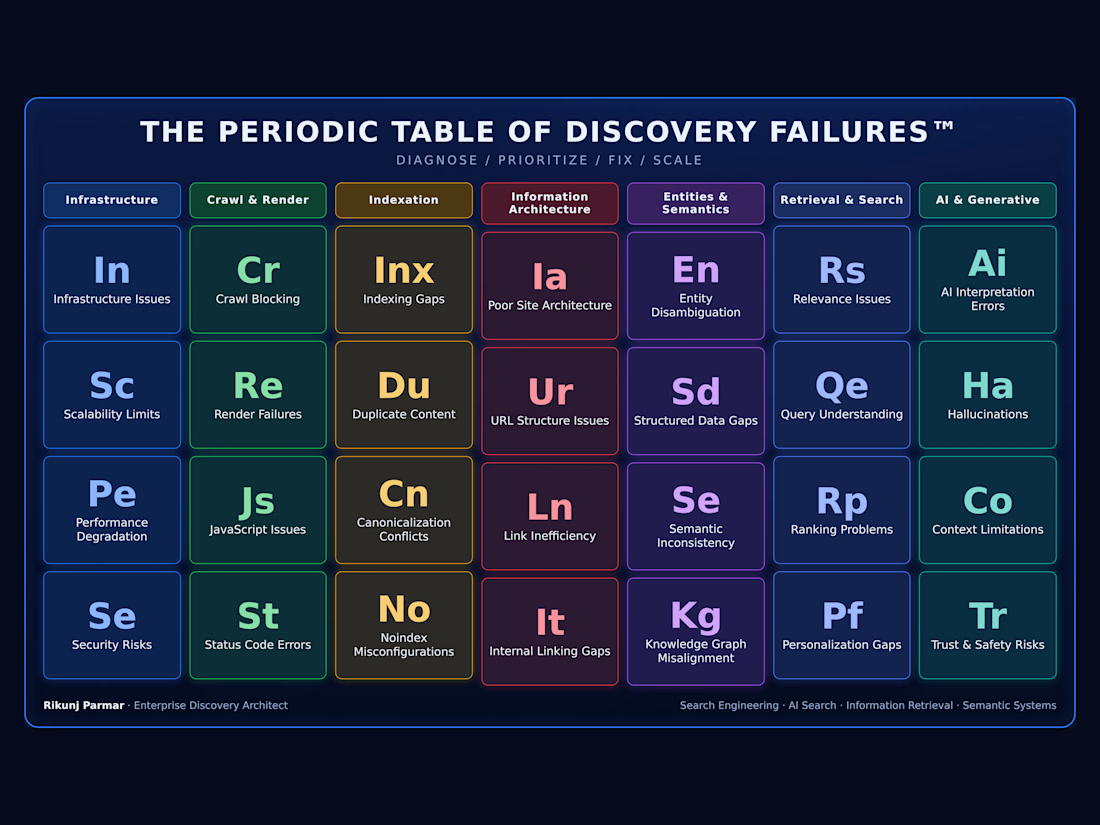
Most enterprise websites aren't broken because of poor content. They are failing silently because of deep architectural, crawl, and entity-level debt.
When search engines and AI models can't accurately parse your semantic infrastructure, you lose visibility where it matters most.
I’ve formalized my entire diagnostic methodology into The Periodic Table of Discovery Failures™—a rigorous 7-layer framework designed to isolate structural bottlenecks and future-proof digital discovery.
My Upwork Project Catalog for the Enterprise Discovery Resilience Audit is officially live. If your high-growth tech, finance, or retail platform needs an exhaustive system audit, let's connect.
#TechnicalSEO #EnterpriseSEO #AEO #SemanticSearch #Architecture #DigitalDiscovery